
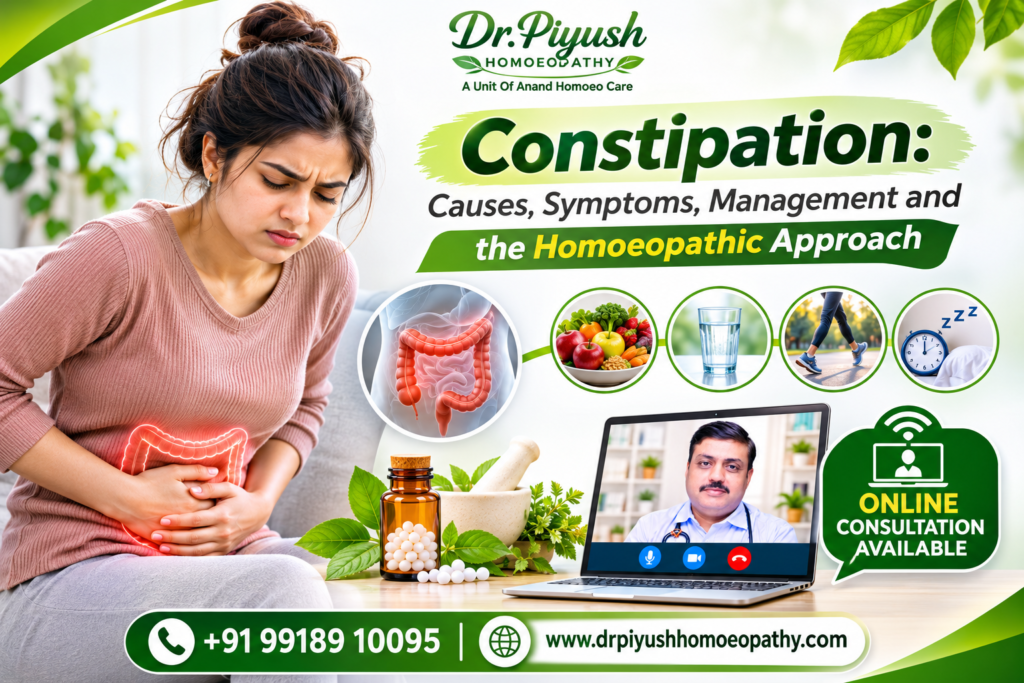
Constipation is a common digestive problem that can affect daily comfort and quality of life. It occurs when bowel movements become less frequent or stools become hard, dry and difficult to pass. Some people may also experience bloating, abdominal discomfort and a feeling that their bowels have not emptied completely.
Although occasional constipation is common, persistent symptoms should not be ignored. Dietary habits, lifestyle, stress, medications and certain medical conditions can all affect bowel movements.
Understanding these factors is the first step towards better digestive health. This article explains the symptoms, causes, management and traditional homoeopathic approach to constipation.
What Is Constipation?
Constipation is generally described as having fewer than three bowel movements per week, along with symptoms such as hard stools, straining or difficulty passing stools.
However, normal bowel habits vary from person to person. Some people pass stools several times a day, while others may have bowel movements less frequently.
Constipation may be:
- Acute constipation: A short-term problem that may develop due to changes in diet, routine, travel or medication.
- Chronic constipation: A persistent problem that continues for several weeks or longer and may require medical evaluation.
If constipation occurs frequently, it is important to identify the possible cause rather than relying only on temporary relief.
Common Symptoms of Constipation
The symptoms of constipation may differ depending on the person and the underlying cause.
Common symptoms include:
- Fewer than three bowel movements per week.
- Hard, dry or lumpy stools.
- Straining while passing stools.
- Difficulty or pain during bowel movements.
- A feeling of incomplete bowel emptying.
- Bloating and abdominal discomfort.
- Excessive gas.
- Reduced appetite in some individuals.
- A feeling of heaviness in the abdomen.
Some people may also experience discomfort, irritability or difficulty concentrating because of ongoing digestive problems.
Persistent symptoms should be discussed with a healthcare professional.
What Causes Constipation?
Constipation can develop due to several dietary, lifestyle, medical and psychological factors.
A. Dietary and Lifestyle Factors
Daily habits have an important role in maintaining healthy bowel movements.
Common contributing factors include:
- Low fibre intake: Not eating enough fruits, vegetables and whole grains can make stools harder.
- Inadequate fluid intake: Not drinking enough fluids may contribute to hard stools.
- Lack of physical activity: A sedentary lifestyle may affect normal bowel activity.
- Processed foods: Diets high in processed foods and low in fibre can increase the risk of constipation.
- Ignoring the urge: Regularly delaying bowel movements may make it harder to maintain a healthy bowel routine.
- Changes in routine: Travel, irregular meal timings and changes in daily habits can affect digestion.
B. Medical Conditions
Certain health conditions can contribute to persistent constipation.
These include:
- Irritable bowel syndrome (IBS), particularly IBS with constipation.
- Hypothyroidism.
- Diabetes.
- Neurological conditions such as Parkinson’s disease and multiple sclerosis.
- Pelvic floor disorders.
- Certain intestinal conditions or structural problems.
Persistent constipation may sometimes indicate an underlying health problem and should be properly assessed.
C. Medication-Induced Constipation
Some medicines and supplements can affect bowel movements.
Examples include:
- Opioid pain medicines.
- Certain antidepressants.
- Antacids containing calcium or aluminium.
- Iron supplements.
- Some medicines used to control blood pressure.
- Certain medicines with anticholinergic effects.
Do not stop prescribed medication on your own. Speak with your doctor if you think a medicine is causing constipation.
D. Psychological Factors
Mental and emotional health can also influence digestive function.
Possible contributing factors include:
- Stress and anxiety.
- Depression.
- Changes in sleeping habits.
- Travel-related stress.
- Irregular daily routines.
The digestive system and nervous system are closely connected. Stress may affect bowel habits in some individuals.

How Can Constipation Be Managed?
Managing constipation often involves a combination of dietary changes, physical activity and healthy daily habits.
The treatment approach depends on the duration, severity and underlying cause.
A. Dietary Modifications
A fibre-rich diet can help support regular bowel movements.
Include the following foods in your daily meals:
- Fruits: Papaya, apples, pears, oranges and prunes.
- Vegetables: Spinach, carrots, broccoli and other green vegetables.
- Whole grains: Oats, whole wheat and brown rice.
- Legumes: Lentils, beans and chickpeas.
- Seeds: Chia seeds and flaxseeds, introduced gradually with adequate fluids.
Increase fibre gradually to reduce gas and bloating.
B. Drink Enough Water
Adequate fluid intake helps maintain normal stool consistency.
Practical tips include:
- Drink water regularly throughout the day.
- Increase fluid intake when exercising or spending time in hot weather.
- Include water-rich foods such as fruits and vegetables.
- Follow your doctor’s advice if you have a medical condition that requires fluid restriction.
There is no single water requirement that suits everyone.
C. Follow an Active Lifestyle
Physical activity can support normal bowel function.
Helpful activities include:
- Daily walking.
- Light stretching.
- Yoga.
- Cycling.
- Other regular physical activities suited to your health and fitness level.
Even a regular walking routine can be a useful step towards better digestive health.
D. Establish a Regular Bowel Routine
Healthy toilet habits can help improve bowel regularity.
- Try to use the toilet at a consistent time each day.
- Do not ignore the urge to pass stool.
- Avoid excessive straining.
- Take enough time without rushing.
- Consider placing your feet on a small footstool while sitting on the toilet.
E. Manage Stress and Improve Sleep
Stress management is another important part of digestive wellness.
Consider:
- Meditation and breathing exercises.
- Regular sleep timings.
- Relaxation activities.
- Mindfulness practices.
- Professional counselling when needed.
These habits support general well-being and may help people whose bowel habits are affected by stress.
The Homoeopathic Approach to Constipation
Homoeopathy is a traditional system of medicine that uses an individualised approach to understanding health complaints.
In traditional homoeopathic practice, a practitioner may consider a person’s bowel habits, stool consistency, associated symptoms, general health, lifestyle and medical history.
The aim of this consultation is to understand the individual’s overall health picture.
Some remedies are traditionally mentioned in homoeopathic literature for different patterns of constipation. However, these traditional descriptions should not be interpreted as scientific proof of effectiveness.
Commonly Mentioned Homoeopathic Remedies
1. Nux Vomica
Traditionally described in homoeopathic literature for constipation associated with:
- Frequent but ineffective urges to pass stool.
- A feeling of incomplete evacuation.
- Hard stools and straining.
- Digestive discomfort.
2. Bryonia Alba
Traditionally associated with:
- Hard and dry stools.
- Dryness of the mouth.
- Increased thirst.
- Abdominal discomfort.
3. Alumina
Traditionally mentioned in relation to:
- Very slow bowel movements.
- Reduced urge to pass stool.
- Hard, dry stools.
- Difficulty with evacuation.
4. Silicea
Traditionally described for certain patterns involving:
- Difficulty passing stools.
- Straining during evacuation.
- A feeling of incomplete bowel emptying.
5. Opium
Traditionally mentioned in homoeopathic literature for constipation associated with:
- Reduced desire to pass stool.
- Infrequent bowel movements.
- Hard stools.
6. Lycopodium Clavatum
Traditionally associated with:
- Constipation accompanied by bloating.
- Excessive gas.
- Abdominal fullness.
- Changes in stool consistency.
7. Sulphur
Traditionally mentioned for certain digestive complaints involving:
- An urge to pass stool without satisfactory evacuation.
- Irregular bowel habits.
- Associated digestive discomfort.
Important Note About Homoeopathic Remedies
The descriptions above reflect traditional homoeopathic literature. There is currently no reliable scientific evidence establishing these remedies as effective treatments for constipation.
No remedy or potency should be selected solely from an online symptom list. Self-medication may delay the diagnosis of an underlying condition.
People experiencing persistent constipation should consult a qualified healthcare professional. Evidence-based management may include dietary changes, appropriate laxatives, medication review, pelvic floor treatment or further investigations, depending on the cause.

Can Homoeopathy Prevent Constipation?
Homoeopathy has not been scientifically established as a method of preventing constipation.
However, people interested in homoeopathy may discuss their digestive concerns and general health with a qualified practitioner. Such consultations should not replace proven preventive measures.
The most reliable ways to reduce the risk of constipation include:
- Eating enough dietary fibre.
- Drinking adequate fluids.
- Staying physically active.
- Maintaining regular meal timings.
- Responding to the natural urge to pass stool.
- Reviewing medicines that may contribute to constipation with a doctor.
- Managing stress and maintaining healthy sleep habits.
A personalised healthcare discussion may help identify lifestyle concerns, but prevention should be based on measures supported by medical evidence.
When Should You Consult a Doctor?
Occasional constipation may improve with suitable dietary and lifestyle changes. However, certain symptoms require medical attention.
Consult a healthcare professional if you experience:
- Constipation that continues for several weeks.
- Severe or persistent abdominal pain.
- Blood in the stool or bleeding from the rectum.
- Unexplained weight loss.
- Repeated vomiting.
- A sudden and unexplained change in bowel habits.
- Persistent bloating or abdominal swelling.
Seek urgent medical attention if constipation occurs with severe abdominal pain, vomiting, marked abdominal swelling or an inability to pass gas, as these may indicate an intestinal obstruction.
Older adults and people with existing medical conditions should seek appropriate advice for persistent bowel changes.
Simple Daily Habits for Better Digestive Health
Good digestive health begins with consistent daily habits.
Here are some practical steps to include in your routine:
| Daily habit | How it supports digestive health |
| Eat fibre-rich foods | Helps improve stool bulk and regularity |
| Drink enough water | Supports normal stool consistency |
| Walk regularly | Encourages physical activity and bowel function |
| Maintain meal timings | Helps establish a consistent routine |
| Avoid delaying bowel movements | Supports natural bowel habits |
| Get adequate sleep | Supports overall health and well-being |
| Manage stress | May help reduce stress-related digestive discomfort |
Small lifestyle changes, when followed consistently, can make a meaningful difference to digestive health.
Key Takeaways
- Constipation is a common digestive problem involving hard stools, infrequent bowel movements or difficulty passing stools.
- Low fibre intake, inadequate fluid intake, inactivity, stress and certain medicines may contribute to constipation.
- A balanced diet, regular physical activity and healthy toilet habits can support normal bowel movements.
- Homoeopathic literature describes several remedies for different constipation symptoms, but reliable scientific evidence has not established their effectiveness.
- Persistent constipation, bleeding, unexplained weight loss or severe abdominal pain requires medical assessment.
- Identifying the underlying cause and following appropriate medical advice are important for long-term digestive health.
Conclusion
Constipation can affect comfort, daily activities and overall quality of life. Although it is often associated with dietary and lifestyle habits, it may also develop due to medication use or underlying medical conditions.
A fibre-rich diet, adequate fluid intake, regular exercise and healthy bowel habits are important steps towards maintaining digestive health.
Homoeopathy offers a traditional individualised approach to discussing digestive complaints, but it has not been established as an effective treatment or preventive method for constipation. It should never replace appropriate medical evaluation or evidence-based care.
At Dr. Piyush Homoeopathy, we encourage health awareness, responsible healthcare choices and professional guidance to support better overall well-being.
Healthy digestion starts with healthy daily habits.