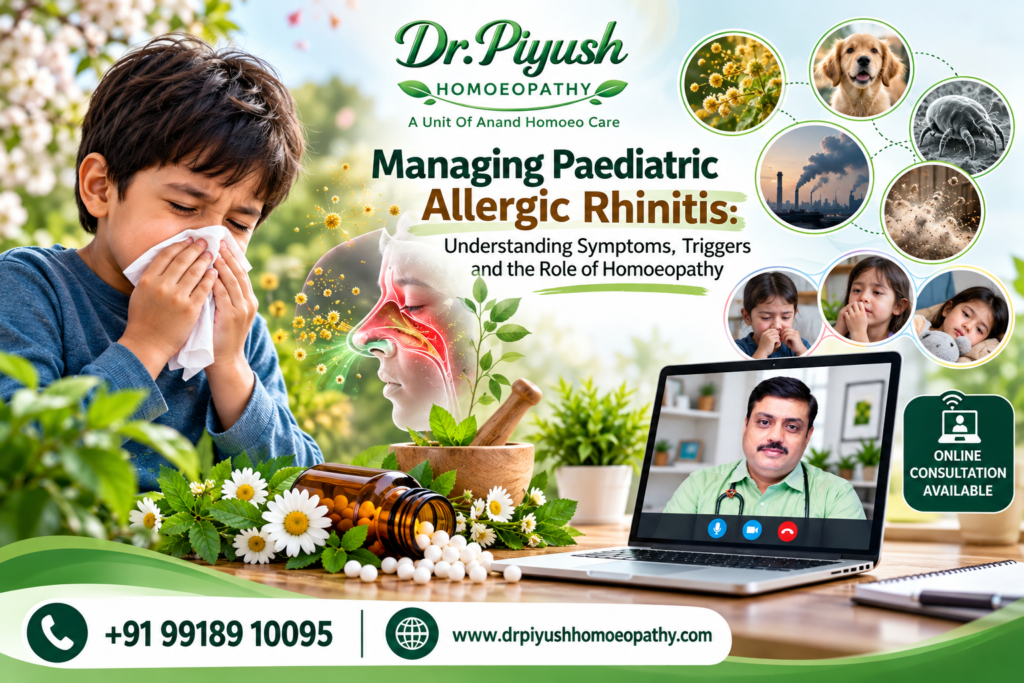
A child who frequently sneezes, rubs the nose, has watery nasal discharge or struggles to breathe comfortably through the nose may be experiencing allergic rhinitis. What may appear to be a simple “cold” can sometimes continue for weeks or return repeatedly with changes in weather, dust, pollen or other allergens.
Paediatric allergic rhinitis can affect sleep, concentration, school performance and everyday activities. Early recognition, trigger management and appropriate medical care are therefore important.
Homoeopathy is sometimes used as a complementary approach for children with allergic complaints. However, current evidence does not establish homoeopathy as an effective treatment for allergic rhinitis, so it should not replace evidence-based medical care.
What Is Allergic Rhinitis?
Allergic rhinitis is an inflammatory condition of the nose that occurs when the immune system reacts to substances that are normally harmless.
Common triggers include:
- Dust mites
- Pollen
- Mould
- Animal dander
- Household dust
- Certain environmental allergens
A child may develop symptoms soon after exposure to a trigger or may experience symptoms repeatedly during a particular season.
Why Is Allergic Rhinitis Important in Children?
Allergic rhinitis is more than occasional sneezing. Persistent symptoms can interfere with several areas of a child’s life.
A child may experience:
- Poor-quality sleep
- Difficulty concentrating
- Daytime tiredness
- Reduced participation in sports
- Irritability
- Difficulty breathing through the nose
- Frequent rubbing of the nose
- Reduced school performance
Allergic rhinitis may also occur alongside other allergic conditions such as asthma or eczema. Therefore, recurrent symptoms should be properly evaluated rather than repeatedly treated as an ordinary cold.
Common Symptoms of Paediatric Allergic Rhinitis
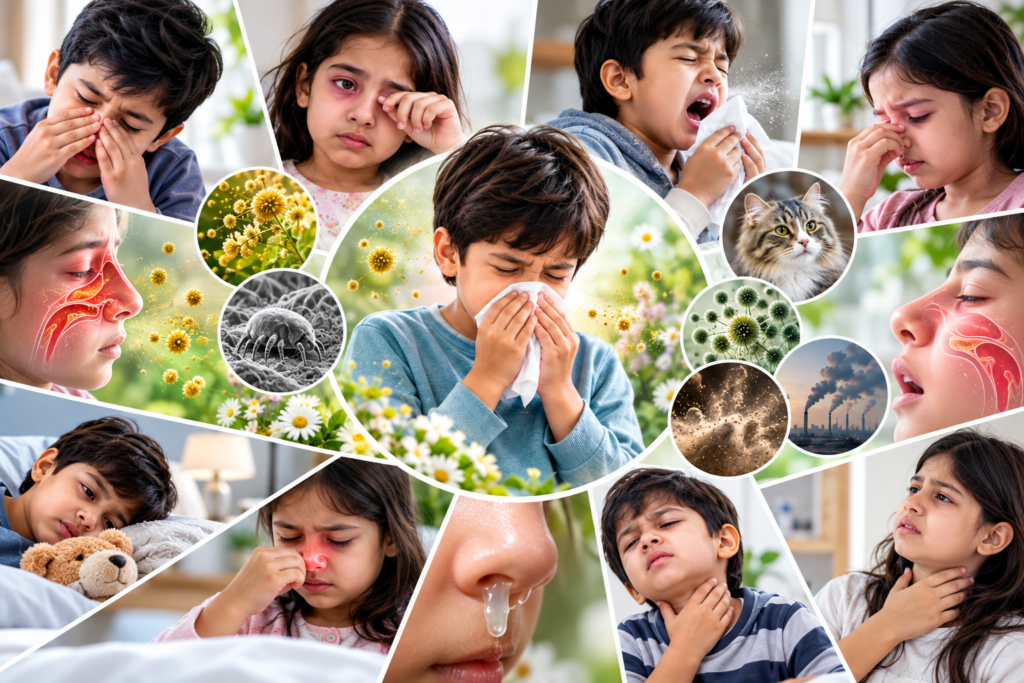
The symptoms can vary from child to child.
1. Repeated Sneezing
Frequent bouts of sneezing, particularly in the morning or after exposure to a trigger, are common.
2. Runny Nose
The nasal discharge is often clear and watery.
3. Nasal Congestion
The child may complain that the nose feels blocked. Younger children may breathe through the mouth because of nasal obstruction.
4. Nasal Itching
Children may repeatedly rub or scratch their nose because of persistent itching.
5. Watery or Itchy Eyes
Some children develop associated allergic eye symptoms, including watering, redness and itching.
6. Post-Nasal Drip
Mucus flowing from the back of the nose into the throat can cause throat irritation or coughing.
Common Signs Parents Should Notice
Parents may observe certain characteristic behaviours and physical signs.
These can include:
- Frequent nose rubbing
- Mouth breathing
- Dark circles under the eyes
- Persistent nasal congestion
- Repeated sneezing
- Snoring
- Poor sleep
- Tiredness during the day
A persistent transverse crease across the nose may also develop from repeated upward rubbing.
What Causes Allergic Rhinitis in Children?
Allergic rhinitis develops through a complex interaction between genetic susceptibility and environmental exposure.
Common Risk Factors
Environmental factors
- Dust
- Pollen
- Smoke
- Air pollution
- Mould
- Pet allergens
Family history
Children with a family history of allergic conditions may have a greater tendency towards allergic disease.
Indoor exposure
Poor ventilation, dust accumulation and indoor allergens can contribute to recurring symptoms.
Seasonal changes
Some children experience symptoms more frequently during particular seasons because of changes in pollen and environmental conditions.
How Does Allergic Rhinitis Affect a Child’s Daily Life?
The impact may extend beyond the nose.
Sleep
Nasal blockage can interfere with comfortable sleep and may contribute to daytime tiredness.
School
Poor sleep and persistent symptoms can make it harder for a child to concentrate.
Physical Activity
Breathing difficulty and fatigue may reduce participation in outdoor activities.
Emotional Well-being
Persistent symptoms may make children uncomfortable, irritable or less confident.
This is why paediatric allergy management should consider the child’s overall well-being rather than focusing only on nasal symptoms.
Understanding the Allergic Response
Allergic rhinitis involves an immune response to specific allergens.
When a susceptible child encounters an allergen, the immune system can produce IgE antibodies. These antibodies participate in an inflammatory response involving mast cells and other immune cells.
Histamine and other inflammatory mediators contribute to symptoms such as:
- Sneezing
- Itching
- Watery discharge
- Nasal congestion
- Eye irritation
The process can also lead to persistent inflammation when exposure continues.
Diagnosis of Allergic Rhinitis
A healthcare professional usually considers:
- The child’s symptom pattern
- Duration of symptoms
- Possible triggers
- Family history
- Physical examination
- Associated allergic conditions
Depending on the case, allergy testing or other investigations may be considered.
It is particularly important to distinguish allergic rhinitis from other causes of nasal symptoms, including viral infections, sinus problems, enlarged adenoids and a nasal foreign body.
Allergic Rhinitis and Asthma: Why Early Care Matters
Allergic rhinitis and asthma can occur together because both involve airway inflammation and allergic mechanisms.
A child with persistent allergic rhinitis should therefore be monitored for symptoms such as:
- Recurrent cough
- Wheezing
- Chest tightness
- Shortness of breath
- Breathing difficulty during exercise
If these symptoms occur, medical evaluation is important.
Prevention and Lifestyle Management
Prevention begins with identifying and reducing exposure to known triggers.
1. Reduce Dust Exposure
- Keep the child’s sleeping area clean.
- Wash bedding regularly.
- Reduce unnecessary dust-collecting items.
- Keep mattresses and pillows appropriately protected.
2. Manage Indoor Air Quality
Avoid cigarette smoke and reduce exposure to strong irritants.
Good ventilation can also help maintain a healthier indoor environment.
3. Identify Seasonal Triggers
If symptoms repeatedly appear during a particular season, parents can discuss possible pollen or environmental triggers with a healthcare professional.
4. Encourage Good Sleep
A consistent sleep schedule is especially important when nasal symptoms interfere with nighttime rest.
5. Encourage Outdoor Activity When Appropriate
Physical activity is important for children’s overall health. Activities should be adjusted according to the child’s symptoms and medical advice.
6. Avoid Unnecessary Self-Medication
Repeated use of medicines without proper evaluation may overlook the actual cause of recurring symptoms.
The Role of Homoeopathy in Paediatric Allergic Rhinitis
Homoeopathy takes an individualized approach. In traditional homoeopathic practice, the physician considers the child’s complete symptom picture rather than selecting a remedy only from the disease name.
A consultation may consider:
- Pattern of sneezing
- Character of nasal discharge
- Nasal itching
- Time of aggravation
- Weather sensitivity
- Food or environmental triggers
- Sleep pattern
- General temperament
- Associated symptoms
- Previous medical history
This is commonly described as an individualized homoeopathic approach.
However, it is important to distinguish traditional homoeopathic principles from established clinical evidence. Current evidence does not provide reliable support that homoeopathy effectively treats any specific medical condition, including allergic rhinitis.
Therefore, parents should discuss complementary approaches with their child’s healthcare professional and should not stop prescribed allergy or asthma treatment without medical advice.

Homoeopathic Remedies Traditionally Considered in Allergic Rhinitis
In traditional homoeopathic materia medica, several remedies are associated with symptom patterns commonly seen in allergic rhinitis.
These descriptions represent traditional homoeopathic indications and should not be interpreted as proven clinical effectiveness.
Allium Cepa
Traditionally associated with:
- Profuse watery nasal discharge
- Nasal irritation
- Frequent sneezing
- Watery eyes
- Symptoms that may vary with environmental conditions
Sabadilla
Traditionally considered when there are:
- Repeated spasmodic sneezing
- Nasal itching
- Watery eyes
- Sensitivity to pollen or strong smells
Arsenicum Album
Traditional descriptions include:
- Watery, irritating nasal discharge
- Nasal obstruction
- Restlessness
- Chilly sensitivity
Arundo Mauritanica
Traditionally associated with pronounced itching involving:
- Nose
- Nasal passages
- Palate
- Eyes
Sulphur
Traditional homoeopathic literature associates this remedy with recurrent catarrhal complaints and itching, particularly in certain chronic symptom patterns.
Psorinum
In traditional homoeopathic practice, it may be considered in selected chronic or recurrent allergic presentations based on the complete individual symptom picture.
Important: These remedies should not be selected or administered to a child solely because the child has allergic rhinitis. Children require appropriate assessment, and treatment should be supervised by a qualified healthcare professional.
Can Homoeopathy Prevent Allergic Rhinitis?
This requires careful explanation.
From the traditional homoeopathic perspective, individualized treatment is intended to address a person’s overall susceptibility and recurring symptom pattern.
However, there is currently not enough reliable scientific evidence to conclude that homoeopathy can prevent allergic rhinitis, eliminate allergic susceptibility, or prevent progression to asthma.
Therefore, prevention should primarily focus on:
- Identifying triggers
- Reducing allergen exposure
- Maintaining healthy indoor air
- Following an appropriate medical treatment plan
- Monitoring recurring symptoms
- Seeking timely assessment when asthma-like symptoms develop
Homoeopathy, if chosen by a family, should be discussed as a complementary approach rather than a replacement for established care.
When Should Parents Seek Medical Attention?
Parents should consult a healthcare professional when:
- Symptoms continue for several weeks.
- Nasal blockage affects sleep.
- The child snores frequently.
- Symptoms interfere with school activities.
- There is recurrent wheezing or coughing.
- Breathing becomes difficult.
- Symptoms repeatedly return despite treatment.
- The diagnosis is uncertain.
Urgent medical attention is required if a child develops significant breathing difficulty, severe wheezing, bluish lips, marked lethargy or other signs of serious illness.
A Holistic Approach to Childhood Allergy Care
Good paediatric allergy management is not simply about controlling sneezing.
A complete approach considers:
Diagnosis → Trigger identification → Symptom management → Lifestyle measures → Monitoring → Follow-up
Parents, paediatricians, allergy specialists and other qualified healthcare professionals can work together to provide coordinated care.
If a family chooses complementary homoeopathic care, the treating practitioner should also be informed about the child’s conventional medicines and medical history. This helps reduce the risk of missed treatment or potential interactions.
Key Takeaways
- Allergic rhinitis is a common inflammatory condition that can significantly affect a child’s sleep, concentration and quality of life.
- Recurrent sneezing, watery nasal discharge, nasal itching and congestion should be properly evaluated.
- Identifying and reducing environmental triggers is an important part of allergy prevention and management.
- Homoeopathy uses an individualized approach, but current scientific evidence does not establish it as an effective treatment for allergic rhinitis.
- Homoeopathic treatment, when chosen, should be considered complementary and should not replace prescribed allergy or asthma care.
- Early medical evaluation is important when allergic symptoms are persistent or associated with breathing problems.