
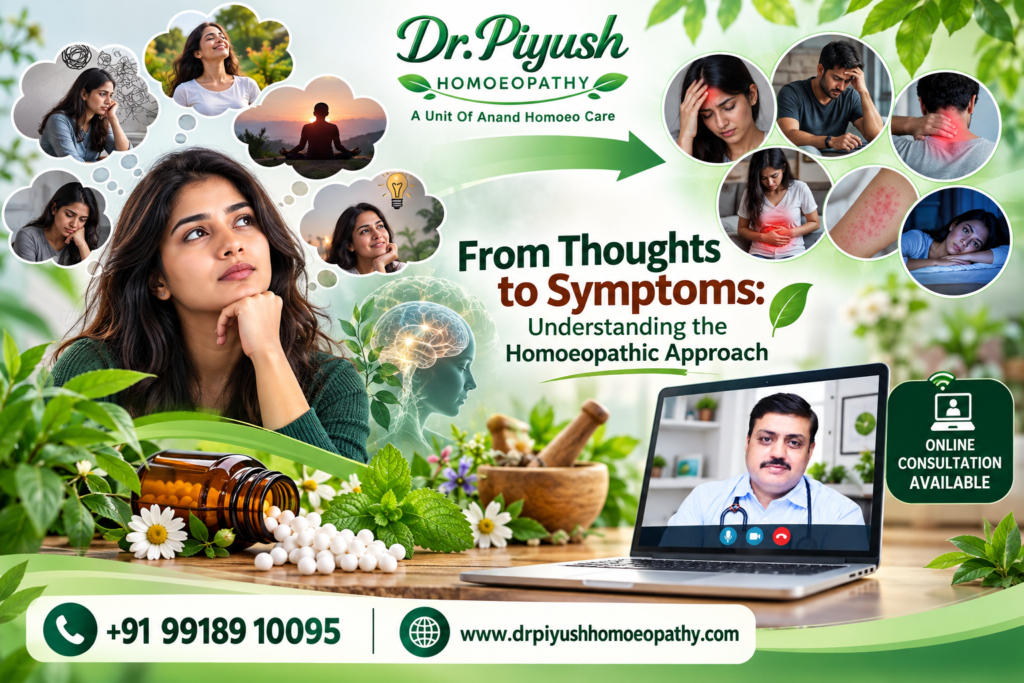
Our thoughts and emotions can influence how we experience physical symptoms. Stress may affect sleep, appetite or digestion, while grief, fear or prolonged emotional pressure may influence overall well-being.
Homoeopathy traditionally gives importance to the mental and emotional state of an individual during case-taking. Rather than looking only at the name of a disease, a homoeopathic practitioner may consider the person’s physical complaints, emotional responses, behaviour, habits and individual characteristics together.
This approach is known as individualisation and is an important part of traditional homoeopathic practice. However, it is important to distinguish traditional homoeopathic principles from established medical evidence. Current scientific evidence does not establish homoeopathy as an effective treatment for specific diseases. Therefore, persistent physical or mental-health symptoms should receive appropriate medical evaluation.
What Is the Mind-Body Connection?
The mind and body continuously interact.
Emotions can influence physical experiences, and physical illness can also affect mood and behaviour.
For example:
- Stress may be associated with muscle tension or digestive discomfort.
- Anxiety can cause palpitations, sweating or difficulty sleeping.
- Emotional distress may affect appetite and energy.
- Poor sleep can influence concentration and mood.
- Chronic pain can contribute to emotional distress.
These connections are recognised in modern healthcare as well. The important point is that such symptoms should not automatically be assumed to be caused by emotions. Physical causes should also be considered.
Why Are Mental Symptoms Important in Traditional Homoeopathy?
In classical homoeopathic case-taking, mental and emotional symptoms may be recorded alongside physical symptoms.
A practitioner may ask about:
- Fears and worries
- Irritability
- Anger
- Sadness
- Emotional reactions
- Sleep patterns
- Concentration
- Memory
- Personal habits
- Reactions to stress
- Changes following emotional experiences
The purpose is to develop a detailed picture of the individual.

The Principle of Individualisation
One of the central ideas in traditional homoeopathy is individualisation.
Two people may have the same diagnosed condition but describe their experience differently.
For example, two people with headaches may differ in:
- Location of pain
- Timing
- Triggers
- Sleep pattern
- Emotional state
- Sensitivity to light or sound
- Food preferences
- Response to stress
Traditional homoeopathic prescribing attempts to consider these individual features rather than selecting a medicine only from the disease name.
From Thoughts to Symptoms: How Emotions May Affect the Body
1. Stress and Digestive Complaints
Stress can affect the nervous system and gastrointestinal function. Some people may experience:
- Indigestion
- Abdominal discomfort
- Changes in bowel habits
- Reduced appetite
- Nausea
Persistent digestive symptoms should be medically assessed rather than automatically attributed to stress.
2. Anxiety and Sleep
Anxiety can make it difficult to relax at bedtime.
A person may experience:
- Racing thoughts
- Difficulty falling asleep
- Frequent waking
- Restlessness
- Daytime fatigue
Good sleep habits and appropriate professional care are important when sleep problems continue.
3. Emotional Distress and Physical Symptoms
Grief, prolonged stress and emotional strain can affect how people experience pain and other physical symptoms.
This does not mean that symptoms are imaginary. The brain, nervous system, hormones and immune system interact in complex ways.
Mental and Emotional Features Considered During Homoeopathic Case-Taking
A traditional homoeopathic consultation may explore several areas.
Emotional Responses
The practitioner may ask:
- Does the person become angry easily?
- How do they react to criticism?
- Do they become anxious under pressure?
- Do they prefer company or solitude?
- How do they respond to emotional situations?
Fears and Phobias
A detailed history may include specific fears and the situations that trigger them.
Memory and Concentration
Questions may cover:
- Forgetfulness
- Difficulty concentrating
- Mental fatigue
- Reduced attention
Behavioural Changes
Changes in:
- Speech
- Social interaction
- Daily habits
- Emotional reactions
- Sleep patterns
may also be recorded.
Examples From Traditional Homoeopathic Materia Medica
Traditional homoeopathic materia medica describes different mental and emotional patterns associated with individual remedies.
For example:
Chamomilla
Traditionally described in relation to marked irritability, anger and sensitivity, particularly in certain childhood presentations.
Nux vomica
Traditionally associated with irritability, impatience, mental overwork and sensitivity.
Lycopodium
Traditional descriptions include concerns about confidence, irritability and particular social or emotional patterns.
Calcarea carbonica
Traditional materia medica includes descriptions involving anxiety, sensitivity, fatigue and certain childhood behavioural patterns.
Sulphur
Traditionally associated with restlessness, intellectual activity and particular behavioural characteristics.
Belladonna
Traditional descriptions include sudden and intense emotional or behavioural states.
These descriptions belong to traditional homoeopathic materia medica. They should not be interpreted as scientifically proven personality tests or as evidence that these remedies treat specific mental-health conditions.

The Importance of Listening in Homoeopathic Case-Taking
A good consultation requires more than asking questions.
It requires careful listening.
A practitioner may observe:
- How the patient describes the problem
- Which symptoms are most important to the patient
- Emotional reactions while discussing the illness
- Changes in behaviour
- Lifestyle patterns
- Factors that worsen or improve symptoms
This detailed information forms part of the traditional individualised homoeopathic assessment.
Mind and Body: A Holistic Perspective
The term holistic healthcare refers to considering different aspects of a person’s health together.
These may include:
Physical Health
Symptoms, medical history, sleep, diet and activity.
Emotional Health
Stress, anxiety, grief and emotional responses.
Lifestyle
Work, exercise, screen use, nutrition and daily routines.
Social Environment
Family relationships, work environment and social support.
A complete healthcare approach should consider these areas while also using appropriate medical investigations when needed.
How Can Homoeopathy Help?
From the traditional homoeopathic perspective, treatment is individualised according to the person’s overall symptom picture.
A homoeopathic doctor may consider:
- Physical symptoms
- Mental and emotional symptoms
- General health
- Lifestyle
- Previous medical history
- Family history
- Individual responses to stress
However, current scientific evidence does not provide reliable support for homoeopathy as an effective treatment for specific mental or physical diseases. It should therefore not replace evidence-based medical or psychological care.
For symptoms such as persistent anxiety, depression, severe insomnia, unexplained physical complaints or major behavioural changes, professional medical assessment is important.
Can Homoeopathy Prevent Stress-Related Health Problems?
There is currently no good evidence that homoeopathic medicines can prevent diseases caused by emotional stress.
Prevention should focus on proven healthy habits.
Practical Prevention Strategies
1. Manage Stress
Try:
- Regular physical activity
- Breathing exercises
- Relaxation techniques
- Time management
- Adequate rest
2. Protect Sleep
Maintain a regular sleep schedule and reduce stimulating activities before bedtime.
3. Stay Physically Active
Walking, stretching, sports and other enjoyable activities can support physical and mental well-being.
4. Maintain Social Connections
Talking to trusted family members, friends or professionals can provide emotional support.
5. Avoid Self-Diagnosis
Not every physical symptom is caused by stress.
Persistent or unusual symptoms require appropriate medical evaluation.
When Should You Seek Professional Help?
Mental and physical symptoms should not be ignored when they become persistent or severe.
Seek professional healthcare support if you experience:
- Persistent anxiety or low mood
- Severe or continuing sleep problems
- Repeated unexplained physical symptoms
- Significant changes in behaviour
- Difficulty performing normal daily activities
- Severe headaches or neurological symptoms
- Thoughts of self-harm or suicide
In an emergency or when there is immediate danger, seek urgent medical help.
The Role of a Trusted Homoeopathic Consultation
A professional homoeopathic consultation can provide an opportunity to discuss the complete health picture, including lifestyle and emotional experiences.
A responsible homoeopathic practitioner should:
- Listen carefully.
- Take a detailed history.
- Respect patient concerns.
- Avoid making unsupported promises.
- Encourage appropriate medical investigations.
- Recognise when referral is necessary.
- Avoid advising patients to discontinue essential medicines without medical supervision.
This creates a more responsible and patient-centred approach to complementary healthcare.
Mind-Body Awareness in Modern Life
Modern lifestyles can place significant demands on both mind and body.
Work pressure, excessive screen use, poor sleep, sedentary habits and constant digital stimulation can contribute to stress and fatigue.
A healthier routine can include:
Better sleep + regular movement + balanced nutrition + meaningful relationships + stress management + appropriate healthcare
This approach is useful regardless of which healthcare system a person chooses.
Conclusion
The relationship between thoughts, emotions and physical experiences is an important area of health.
Traditional homoeopathy gives considerable attention to the individual’s mental and emotional state during case-taking. Its principle of individualisation encourages practitioners to understand the person rather than focus only on the disease label.
At the same time, mental symptoms should be interpreted carefully. Physical symptoms should not automatically be attributed to emotional causes, and homoeopathic treatment should not replace appropriate medical or mental-health care.
Understanding the person, listening carefully and recognising when professional medical support is needed are essential parts of responsible healthcare.
Key Takeaways
- The mind and body are closely connected, and emotional experiences can influence how people experience physical symptoms.
- Traditional homoeopathic case-taking gives importance to mental, emotional and physical symptoms together.
- Individualisation is a central principle of classical homoeopathic practice.
- Homoeopathic materia medica contains traditional descriptions of different mental and emotional symptom patterns.
- Healthy sleep, exercise, stress management and social support are important for maintaining overall well-being.
- Persistent or serious physical or mental-health symptoms should receive appropriate professional medical evaluation.