
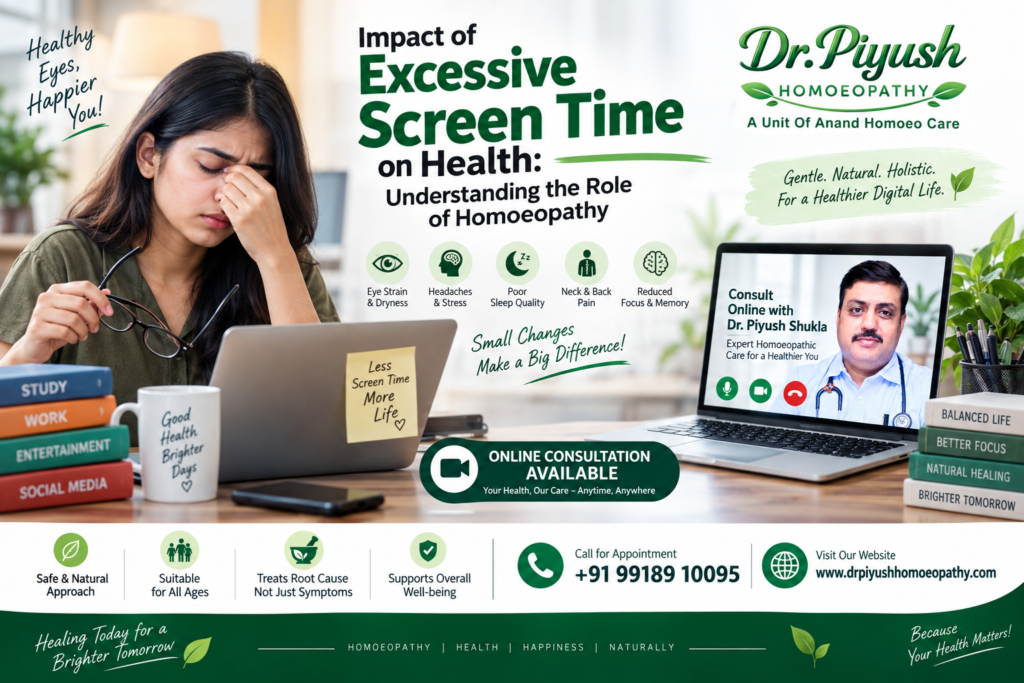
Smartphones, computers, tablets and other digital devices have become an important part of everyday life. They support education, work, communication and entertainment. However, spending too much time on screens can reduce physical activity, disturb sleep and affect daily routines.
Excessive screen time is not simply about the number of hours spent on a device. The purpose of screen use, time of day, age, sleep, physical activity and whether screen use interferes with daily life also matter.
This blog explains the health effects of excessive screen time, common signs of problematic digital use, practical prevention strategies and the traditional role of homoeopathic care. Importantly, current evidence does not establish homoeopathy as a proven treatment for screen addiction or its specific health effects.
What Is Excessive Screen Time?
Screen time means the time spent using devices such as:
- Smartphones
- Tablets
- Computers and laptops
- Television
- Gaming consoles
- Streaming devices
Some screen use is necessary for school, work and communication. The concern arises when screen use becomes difficult to control or starts replacing sleep, exercise, face-to-face interaction, outdoor activity or other important parts of daily life.
For young children, the World Health Organization recommends limiting sedentary screen time and replacing prolonged sitting with active play and adequate sleep. For children aged 2 years and 3–4 years, WHO recommends no more than one hour of sedentary screen time per day, with less being better.
For older children and adults, there is no single universal number that defines unhealthy screen use. The focus should be on maintaining a healthy balance between screen use, physical activity, sleep and everyday responsibilities.
Why Is Screen Overuse Increasing?
Digital technology is now part of almost every area of life.
1. Smartphones and Easy Internet Access
A smartphone can provide entertainment, social media, games, shopping, news and communication at any time.
This makes it easy to continue using a device even when there is no real need for it.
2. Online Education and Work
Students may spend several hours in front of a screen for classes, assignments and research.
Adults may spend most of their working day on computers.
3. Social Media
Social networking platforms are designed to provide a continuous flow of content.
Notifications, short videos and personalised recommendations can encourage repeated checking.
4. Online Gaming
Gaming can be enjoyable and social. However, excessive gaming can interfere with sleep, studies, physical activity and family life.
5. Digital Entertainment
Streaming services, online shopping and short-form videos have made digital entertainment available throughout the day.
What Happens When Screen Time Becomes Excessive?
Excessive screen use can affect several areas of health.
Physical Health
Long periods of sitting may reduce physical activity and contribute to a sedentary lifestyle. WHO notes that higher amounts of sedentary behaviour are associated with several adverse health outcomes across age groups.
Eye Health
Long periods of close screen work can contribute to digital eye strain.
Possible symptoms include:
- Dry eyes
- Burning
- Blurred vision
- Headache
- Eye fatigue
- Difficulty focusing
A systematic review found associations between longer screen exposure and digital eye-strain symptoms in young screen users. It also highlighted the importance of good ergonomics and limiting screen duration.
Sleep
Late-night screen use can interfere with healthy sleep routines.
Using a device in bed can also encourage people to stay awake longer than planned.
Poor sleep can then affect:
- Concentration
- Mood
- Memory
- Productivity
- Daytime energy
Mental and Emotional Well-being
Problematic digital use may occur alongside:
- Stress
- Anxiety
- Low mood
- Irritability
- Poor concentration
- Social withdrawal
The relationship can work in both directions. Stress or loneliness may encourage increased screen use, while problematic use may further interfere with sleep and daily activities.
Signs That Screen Use May Be Becoming a Problem
It may be useful to look beyond the clock and observe behaviour.
Warning signs can include:
- Repeatedly checking the phone without a clear reason
- Difficulty stopping screen use
- Using devices late into the night
- Feeling restless when unable to access a device
- Neglecting exercise
- Skipping meals or delaying important tasks
- Reduced interest in offline activities
- Declining academic or work performance
- Reduced family interaction
- Continuing screen use despite negative consequences
One or two of these signs do not automatically mean a person has an addiction. A healthcare professional should assess significant or persistent problems.
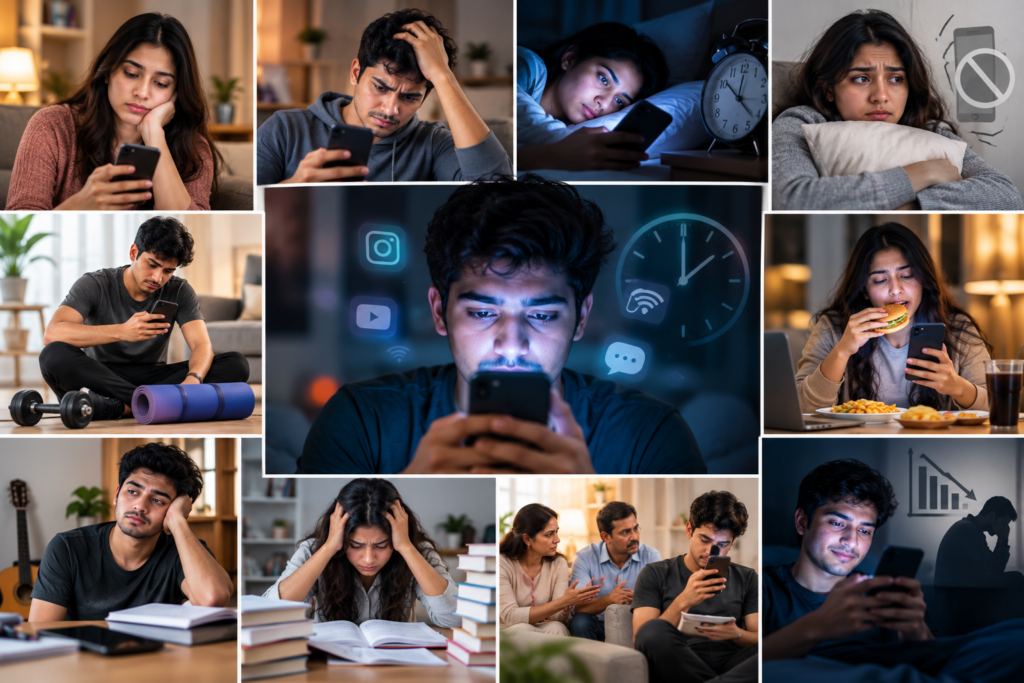
Impact of Excessive Screen Time on Children
Children need adequate sleep, physical activity, social interaction and opportunities for learning away from screens.
Excessive sedentary screen use can crowd out these activities.
Possible concerns include:
Physical Development
Less active play can contribute to sedentary behaviour.
Sleep
Late screen use can interfere with regular sleep routines.
Learning
Frequent notifications and multitasking may make sustained attention more difficult.
Social Development
Children also need direct interaction with parents, caregivers and other children.
The American Academy of Pediatrics recommends creating a family media plan that considers a child’s age, development and family circumstances rather than relying on one rule for every child.
Impact of Excessive Screen Time on Adults
Adults may experience screen overload because of work, communication and entertainment.
Common complaints may include:
- Eye fatigue
- Neck and shoulder discomfort
- Headaches
- Reduced physical activity
- Sleep problems
- Mental fatigue
- Reduced concentration
- Work-life imbalance
The solution is not necessarily to stop using technology. Instead, the goal is to create healthy screen habits.
Screen Time and Digital Eye Strain
How Does Screen Use Affect the Eyes?
When people concentrate on a screen for a long period, they may blink less frequently and maintain prolonged near focus.
This can contribute to discomfort and visual fatigue.
Healthy Screen Habits for the Eyes
Try to:
- Take regular breaks from close-up screen work.
- Look away from the screen periodically.
- Keep the screen at a comfortable distance.
- Adjust brightness and contrast.
- Avoid excessive glare.
- Maintain good posture.
- Use appropriate lighting.
- Consult an eye-care professional if symptoms persist.
Do not assume persistent blurred vision or eye pain is simply due to screen time. It may require an eye examination.
Screen Time and Sleep
One of the most practical changes is creating a screen-free period before bedtime.
Consider:
- Keeping smartphones away from the bed.
- Turning off unnecessary notifications.
- Avoiding stimulating games late at night.
- Following a consistent sleep schedule.
- Replacing late-night scrolling with reading or relaxation.
- Keeping the bedroom suitable for sleep.
The American Academy of Pediatrics recommends screen-free zones such as the dinner table and before bed as part of a family media plan.
How Can Excessive Screen Time Be Prevented?
Prevention starts with simple daily habits.
1. Create Screen-Free Zones
Examples include:
- Dining table
- Bedroom
- Family conversations
- During homework, when appropriate
2. Schedule Screen Breaks
Instead of using a device continuously, take regular breaks during prolonged work or study.
3. Increase Physical Activity
Replace some sedentary screen time with:
- Walking
- Cycling
- Outdoor games
- Stretching
- Sports
- Household activities
WHO recommends limiting sedentary behaviour and increasing physical activity across age groups.
4. Protect Sleep
Avoid allowing entertainment screens to dominate the hour before bedtime.
5. Turn Off Unnecessary Notifications
Notifications can repeatedly interrupt work, study and relaxation.
6. Choose Quality Over Quantity
Not every type of screen use has the same purpose.
Educational work, a video call with family and several hours of passive scrolling are different activities.
7. Make Time for Offline Activities
Encourage:
- Reading
- Outdoor play
- Hobbies
- Music
- Creative activities
- Family conversations
- Social interaction
What Is a Digital Detox?
A digital detox means intentionally reducing unnecessary digital use for a specific period.
It does not have to mean completely avoiding technology.
A simple digital detox may involve:
Morning
Avoid checking social media immediately after waking.
During Work
Keep unnecessary notifications off.
Evening
Create a screen-free period before bedtime.
Weekend
Spend more time outdoors and with family.
The goal is to develop habits that can continue beyond the detox period.
Role of Parents in Healthy Screen Habits
Parents can play an important role in children’s digital behaviour.
Instead of only saying “Put the phone away,” parents can:
- Set clear family rules.
- Explain why the rules exist.
- Create screen-free family time.
- Encourage outdoor activities.
- Keep devices away during meals.
- Model healthy device use themselves.
- Discuss what children watch or play.
- Review the media plan as children grow.
The AAP recommends combining boundaries with communication and positive family interaction.

Can Homoeopathy Help With Excessive Screen Use?
This requires a balanced explanation.
Traditional homoeopathic practice approaches patients individually. A practitioner may discuss symptoms such as:
- Difficulty sleeping
- Mental fatigue
- Headache
- Restlessness
- Irritability
- Difficulty concentrating
- Eye discomfort
A professional homoeopathic consultation may therefore focus on understanding the person’s complete health picture and lifestyle.
However, there is not enough reliable clinical evidence to establish homoeopathy as an effective treatment for screen addiction, digital addiction, insomnia caused by screen use, or digital eye strain. NCCIH states that there is little evidence supporting homoeopathy as an effective treatment for any specific health condition.
Therefore, homoeopathy should not be presented as a proven way to “cure” excessive screen use.
Traditional Homoeopathic Perspective
Traditional homoeopathic materia medica contains descriptions of medicines associated with symptoms such as sleeplessness, nervous tension, mental fatigue and eye discomfort.
Some practitioners may consider medicines such as:
Nux vomica
Traditionally associated with:
- Irritability
- Mental overwork
- Sleep disturbance
- Lifestyle-related complaints
- Sensitivity to external stimuli
Coffea cruda
Traditionally associated with:
- Mental excitement
- Racing thoughts
- Difficulty sleeping
- Increased sensitivity
Gelsemium
Traditionally described in relation to:
- Mental fatigue
- Dullness
- Drowsiness
- Difficulty concentrating
Ruta graveolens
Traditionally associated with:
- Eye strain
- Discomfort after prolonged close work
- Strain-related complaints
Phosphorus
Traditionally described with sensitivity to sensory stimulation and certain visual complaints.
Natrum muriaticum
Traditional materia medica describes emotional and headache patterns that may be considered during individualised case-taking.
These are traditional materia-medica descriptions, not scientifically established treatments for screen overuse. They should not be self-prescribed as a substitute for eye care, psychological care or medical treatment.
How Can Homoeopathic Consultation Support a Person?
A trusted homoeopathic doctor may use consultation to understand the patient’s overall experience.
This can include:
- Detailed case-taking
- Lifestyle discussion
- Sleep assessment
- Discussion of stress and daily routines
- Review of existing medicines
- Follow-up of symptoms
- Encouragement of healthier habits
- Referral when another healthcare professional is needed
The consultation can be part of a broader health plan.
However, the most important interventions for excessive screen use remain behaviour change, healthy routines, physical activity, adequate sleep and appropriate professional support.
Can Homoeopathy Prevent Screen Addiction?
There is currently no reliable evidence that homoeopathic medicines can prevent screen addiction.
Prevention should focus on the causes and behaviours associated with excessive screen use.
A Practical Prevention Plan
Limit unnecessary screen use
↓
Take regular breaks
↓
Protect sleep
↓
Increase physical activity
↓
Spend time offline
↓
Create family media rules
↓
Seek professional support when necessary
This approach is more useful than depending on any single medicine or therapy.
When Should You Seek Professional Help?
Consider professional evaluation when screen use is causing persistent problems such as:
- Severe sleep disturbance
- Significant anxiety or low mood
- Loss of control over gaming or internet use
- Major academic problems
- Work impairment
- Social withdrawal
- Persistent headaches
- Ongoing eye symptoms
- Neck or back pain
- Major changes in behaviour
If someone has severe depression, thoughts of self-harm, confusion or another emergency symptom, urgent medical or mental-health support is required.
A Balanced Approach to Digital Health
Technology is not the enemy.
Screens are valuable for:
- Education
- Employment
- Communication
- Healthcare
- Research
- Entertainment
The problem begins when digital use starts replacing essential activities.
A healthier approach is:
Technology + Physical Activity + Sleep + Social Connection + Healthy Habits
This balanced approach can help people benefit from technology without allowing it to dominate their lives.
Homoeopathy and Responsible Patient Care
A trusted homoeopathic clinic should provide realistic information rather than promise guaranteed results.
A responsible homoeopathic doctor should:
- Listen carefully.
- Take an individualised case.
- Ask about existing treatment.
- Avoid unsupported claims.
- Encourage healthy lifestyle changes.
- Recognise when specialist care is needed.
- Never advise patients to stop essential treatment without appropriate medical supervision.
This approach supports patient-centred homoeopathic care while respecting modern healthcare standards.

Dr. Piyush Homoeopathy: Supporting Healthier Digital Habits
At Dr. Piyush Homoeopathy, patients can discuss concerns such as sleep difficulties, stress, mental fatigue and lifestyle-related complaints through an individualised homoeopathic consultation.
A consultation can help patients discuss their overall health, daily habits and concerns while encouraging practical measures such as better sleep routines, physical activity and responsible screen use.
Online Consultation Available.
For persistent eye, neurological, psychological or other medical symptoms, appropriate specialist evaluation should not be delayed.
Conclusion
Excessive screen time is an important modern health concern. It can interfere with sleep, physical activity, eye comfort, concentration, family interaction and overall well-being.
The answer is not to completely reject technology. Instead, we should learn to use it in a healthier way.
Regular screen breaks, physical activity, adequate sleep, outdoor time, family interaction and mindful digital habits form the foundation of prevention.
Homoeopathy has a traditional individualised approach and may be discussed as a complementary form of healthcare. However, current evidence does not establish it as a proven treatment or preventive therapy for screen addiction or its specific health effects.
The most effective starting point is simple:
Use technology for life—do not let technology replace life.
Key Takeaways
- Excessive screen time can affect sleep, physical activity, eye comfort, concentration and social well-being.
- Screen use should be balanced with exercise, adequate sleep, outdoor activities and face-to-face interaction.
- Parents can support children by creating age-appropriate family media plans and screen-free routines.
- Digital eye strain can be reduced by improving screen ergonomics, taking breaks and avoiding prolonged continuous screen use.
- Traditional homoeopathy may consider symptoms such as sleep difficulty, mental fatigue and eye discomfort during individualised consultation, but there is insufficient reliable evidence that homoeopathy treats or prevents screen addiction.
- Healthy digital habits and behaviour change should remain the foundation of managing excessive screen use.