
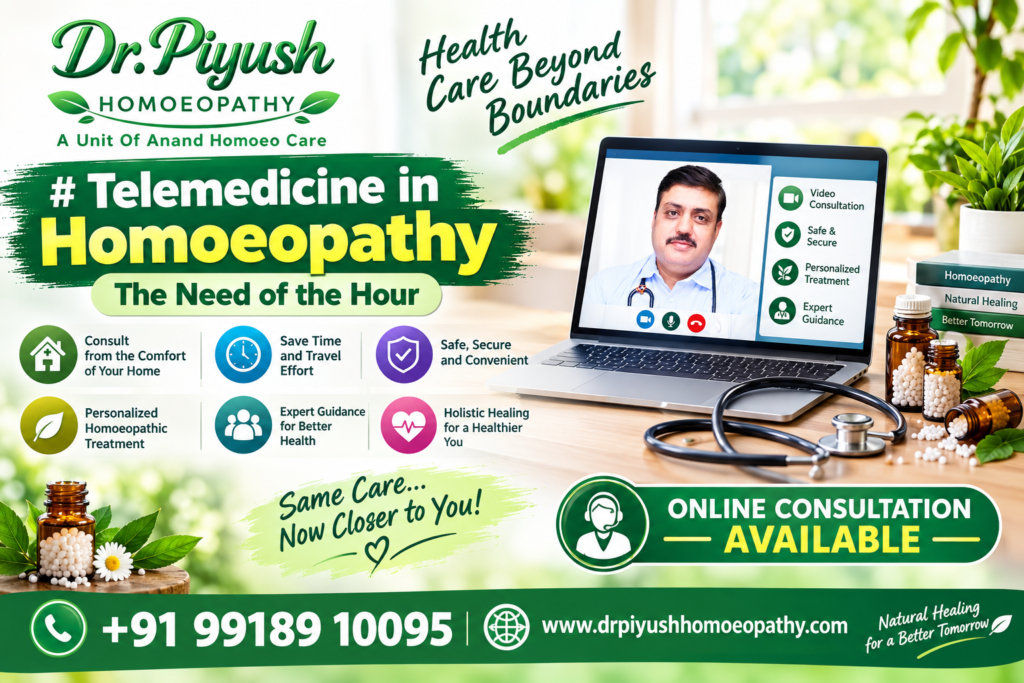
Healthcare is changing rapidly with the growth of smartphones, internet access, and digital communication. Today, patients can connect with healthcare professionals without always travelling to a clinic. This model of healthcare is known as telemedicine or teleconsultation.
For homoeopathy, telemedicine can make consultations more accessible, especially for patients who live far from a clinic, have mobility difficulties, or need regular follow-up care. In India, telemedicine has also become an important part of digital healthcare, with official frameworks supporting remote healthcare practice.
However, online consultation should be used responsibly. Some conditions require a physical examination, diagnostic testing, or urgent in-person care. Telemedicine should improve access to healthcare, not replace necessary medical evaluation.
What Is Telemedicine?
Telemedicine means providing healthcare through digital communication technologies when the doctor and patient are in different locations.
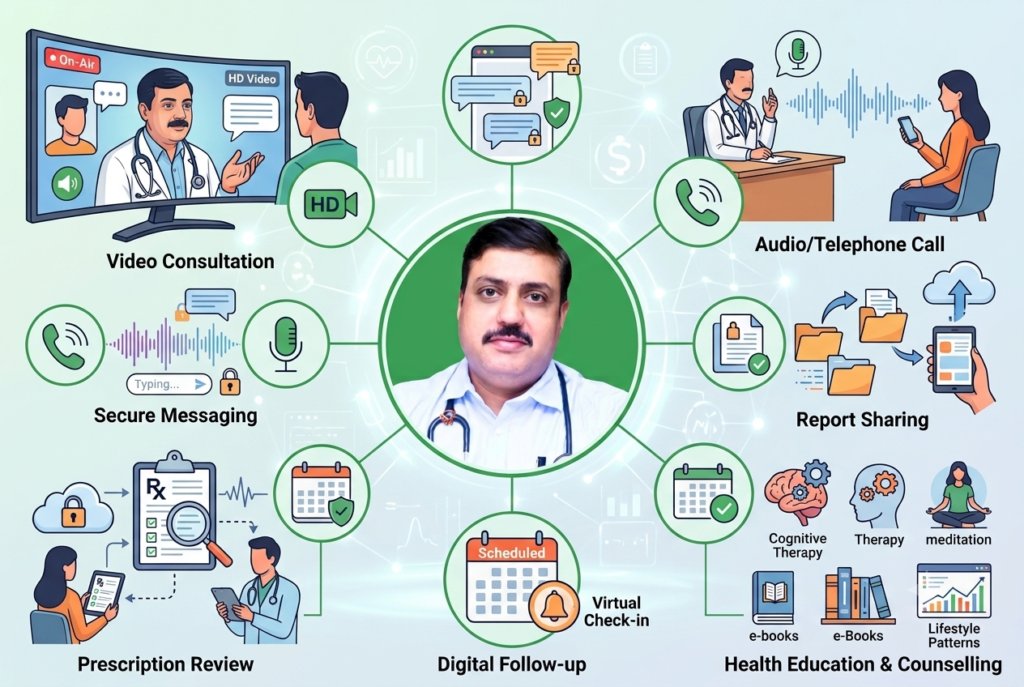
It can involve:
- Video consultations
- Audio calls
- Telephone consultations
- Secure messaging
- Sharing medical reports
- Reviewing previous prescriptions
- Digital follow-up appointments
- Health education and counselling
In simple words, telemedicine allows a patient to communicate with a healthcare professional remotely.
For a homoeopathic doctor, this can provide an additional way to understand a patient’s health concerns, review symptoms, discuss reports, provide appropriate advice, and plan follow-up care.
Telemedicine in Homoeopathy
Homoeopathy traditionally places importance on detailed case-taking and understanding the individual patient. A consultation may involve questions about:
- Presenting symptoms
- Duration of symptoms
- Previous health problems
- Family history
- Lifestyle
- Sleep
- Diet
- Stress
- Existing medicines
- Previous treatment
- Medical reports
- Changes in symptoms over time
Many parts of this information can be collected through a well-structured online consultation.
This makes online homoeopathy consultation a useful option for selected patients, particularly when an in-person examination is not immediately necessary.
The Central Council for Research in Homoeopathy (CCRH) describes individualized homoeopathic care as involving detailed case-taking and clinical evaluation.
Why Telemedicine Is Important in Homoeopathy
1. Better Access to Healthcare
Patients living in remote areas may find it difficult to travel regularly to a clinic.
Online homoeopathy consultation can reduce the need for unnecessary travel and help patients communicate with a practitioner from home.
This can be especially useful for:
- Elderly patients
- Patients with mobility difficulties
- People living far from cities
- Working professionals
- Parents with young children
- Patients requiring regular follow-ups
2. Saves Time and Travel
A traditional clinic visit may require travelling, waiting, and arranging time away from work or family responsibilities.
With telemedicine in homoeopathy, selected consultations can be conducted remotely.
Potential benefits include:
- Less travelling
- Reduced waiting time
- Easier appointment scheduling
- Better convenience
- Easier follow-up
3. Better Follow-Up Care
Follow-up is an important part of long-term healthcare.
Patients may need regular discussions about:
- Changes in symptoms
- Treatment response
- New complaints
- Lifestyle changes
- Medical reports
- Ongoing health concerns
Online homoeopathic consultation can make these follow-ups easier to maintain.
Better continuity may also help patients remain connected with their healthcare provider.
How Telemedicine Can Help Homoeopathic Practice
Detailed Case Taking
A good homoeopathic consultation depends on understanding the patient’s complete health history.
During an online consultation, the practitioner can discuss:
- Main complaints
- Associated symptoms
- Personal history
- Family history
- Lifestyle
- Sleep and stress
- Previous treatment
- Relevant reports
The information can then be documented for future follow-up.
Individualized Patient Care
Homoeopathy is traditionally practiced using an individualized approach.
A personalized homoeopathic care consultation may focus on the patient’s overall symptom pattern rather than considering only one complaint.
Digital consultations can help maintain continuity of this information across follow-up appointments.
However, online consultation does not remove the need for clinical judgment. When physical examination, testing, or urgent assessment is needed, the patient should be referred for in-person care.
Telemedicine for Chronic Health Conditions
Chronic health conditions often require long-term monitoring and regular follow-up.
Telemedicine may be useful for selected patients with ongoing concerns such as:
- Lifestyle-related health problems
- Chronic digestive complaints
- Skin concerns
- Allergic conditions
- Long-term respiratory complaints
- Stress-related concerns
- General wellness counselling
A homoeopathic clinic offering teleconsultation can use digital follow-ups to maintain communication with patients.
However, chronic disease management should always include appropriate diagnosis and evidence-based medical care where required. Telemedicine should not be used to avoid investigations or specialist referral when they are necessary.
Telemedicine for Preventive Healthcare
One of the important benefits of digital healthcare is health education.
A trusted homoeopathic care platform can use online consultations to educate patients about:
- Healthy lifestyle habits
- Nutrition
- Sleep
- Physical activity
- Stress management
- Hygiene
- Disease awareness
- Medication safety
- When to seek medical attention
Can Homoeopathy Prevent Diseases Through Telemedicine?
It is important to use responsible language here.
Homoeopathic treatment should not be promoted as a guaranteed way to prevent infectious diseases, replace vaccination, or eliminate the risk of developing a medical condition.
Instead, telemedicine can support preventive healthcare by helping patients understand risk factors, healthy habits, early warning signs, and the importance of timely medical evaluation.
Telemedicine for Follow-Up Visits
Follow-up care is one of the most practical uses of telemedicine.
For an established patient, an online appointment may be useful for discussing:
- Changes since the previous consultation
- Improvement or worsening of symptoms
- New symptoms
- Test reports
- Lifestyle changes
- Treatment adherence
- Further follow-up requirements
This can make individualized homoeopathy more accessible for patients who cannot visit the clinic for every appointment.
Telemedicine for Children and Families
Parents often find it difficult to travel with children for every minor consultation or follow-up.
Online consultation can sometimes provide:
- General health guidance
- Follow-up discussions
- Review of previously available reports
- Advice about when an in-person visit is required
- Health education for parents
However, children with serious symptoms, breathing difficulty, dehydration, high-risk conditions, or rapidly worsening illness require appropriate in-person medical assessment.
Telemedicine for Elderly Patients
Older adults may face difficulties with:
- Long-distance travel
- Mobility
- Waiting in clinics
- Regular transportation
- Caregiver availability
Online homoeopathy consultation can provide an additional healthcare access option for selected follow-up and consultation needs.
Family members or caregivers may also assist with technology when appropriate and with the patient’s consent.
Online Consultation: What Patients Should Keep Ready
Patients can make their homoeopathic consultation online more useful by keeping relevant information ready.
Before the consultation, keep:
- Previous prescriptions
- Medical reports
- Current medication list
- Previous diagnosis reports
- Allergy information
- Important medical history
- List of current symptoms
- Previous treatment details
Patients should also explain their symptoms clearly and honestly.
Privacy and Security in Telemedicine
Privacy is an important part of digital healthcare.
During an online consultation, personal health information may include:
- Name and contact information
- Medical history
- Prescriptions
- Diagnostic reports
- Images
- Videos
- Consultation records
Healthcare providers should use appropriate safeguards to protect patient information.
In India, telemedicine practice should follow applicable professional and regulatory requirements. The Indian telemedicine framework provides guidance for healthcare professionals providing care through remote technologies.
The original concept of automatically applying HIPAA to every telemedicine consultation is not appropriate for all countries. HIPAA is a United States healthcare privacy framework. Indian providers should follow the laws, professional standards, and privacy requirements applicable to their practice in India.
Limitations of Telemedicine in Homoeopathy
Telemedicine offers many advantages, but it also has limitations.
An online consultation may not be appropriate when a patient needs:
- Physical examination
- Immediate emergency care
- Diagnostic testing
- Vital-sign assessment
- Procedures
- Hospital admission
- Specialist evaluation
Examples of Situations Requiring Urgent In-Person Care
Patients should not depend on an online consultation alone in situations such as:
- Severe breathing difficulty
- Chest pain
- Loss of consciousness
- Severe bleeding
- Stroke-like symptoms
- Serious injuries
- Severe dehydration
- Rapid deterioration
- Other medical emergencies
In such situations, immediate local medical or emergency care should be sought.

How Homoeopathy Can Help Through Telemedicine
A responsible homoeopathic doctor may use telemedicine to provide selected forms of care such as:
1. Remote Case Taking
The doctor can discuss the patient’s symptoms, medical history, lifestyle, and previous treatment.
2. Follow-Up Consultation
Existing patients can discuss changes in their condition without travelling for every appointment when clinically appropriate.
3. Health Education
Patients can receive guidance about healthy routines, symptom monitoring, and when professional medical care is required.
4. Treatment Continuity
Digital communication may help maintain continuity between appointments.
5. Access to Professional Guidance
Patients who have difficulty reaching a clinic may have another way to communicate with a healthcare professional.
These benefits relate primarily to access, continuity, communication, and convenience. They should not be interpreted as proof that homoeopathy is effective for every medical condition.
How Telemedicine Can Help Prevent Delays in Healthcare
Telemedicine itself does not prevent every disease. However, it may help prevent delays in seeking appropriate care.
For example, a remote consultation may help a patient understand:
- Whether symptoms require urgent attention
- Whether an in-person examination is necessary
- Whether a diagnostic test may be required
- When a follow-up appointment is appropriate
- When symptoms should not be managed at home
This type of preventive health care can encourage timely decision-making.
The Future of Telemedicine in Homoeopathy
Digital healthcare is likely to continue developing as internet access, smartphones, electronic health records, and secure communication platforms improve.
The future may include:
- Better digital health records
- Secure video consultations
- Digital appointment systems
- Remote follow-up
- Online health education
- Integrated diagnostic reports
- Better patient communication
- Digital reminders
- Improved continuity of care
India’s healthcare system continues to develop digital and telemedicine infrastructure, while government health institutions also provide standards and guidance for AYUSH healthcare services.
The goal should be simple: use technology to make responsible healthcare more accessible while maintaining patient safety and professional standards.
Telemedicine at Dr. Piyush Homoeopathy
At Dr. Piyush Homoeopathy, online consultation can provide an additional way for patients to connect with homoeopathic healthcare from the comfort of their home.
An online consultation may be useful for:
- Detailed case discussion
- Follow-up consultations
- Review of available medical reports
- Lifestyle and health guidance
- Long-term communication
- Patients who cannot easily visit the clinic
Patients should always provide complete and accurate health information and seek in-person medical care whenever physical examination or urgent treatment is required.
How to Make Online Homoeopathy Consultation More Effective
For Patients
- Book an appointment in advance.
- Sit in a quiet place.
- Keep medical reports ready.
- Keep your current medicine list available.
- Explain your symptoms clearly.
- Mention previous diagnoses and treatments.
- Ask questions if anything is unclear.
- Follow up as advised.
For Healthcare Providers
A professional homoeopathic clinic should focus on:
- Patient confidentiality
- Accurate documentation
- Clear communication
- Appropriate clinical assessment
- Proper follow-up
- Recognizing red-flag symptoms
- Timely referral when required
- Responsible health communication
Why Responsible Telemedicine Matters
The purpose of telemedicine should not simply be to move a clinic visit onto a smartphone.
Good telemedicine should provide:
Accessibility + Communication + Continuity + Privacy + Patient Safety
A patient-centered care model ensures that technology remains a tool for better healthcare rather than becoming a substitute for appropriate clinical judgment.
Key Takeaways
- Telemedicine in homoeopathy can improve access to consultations and follow-up care for selected patients.
- Online consultations can reduce travel, save time, and make healthcare communication more convenient.
- Individualized homoeopathic care can include detailed remote case-taking and follow-up when clinically appropriate.
- Telemedicine can support preventive healthcare through education, early guidance, and timely referral.
- Online consultation has limitations and should not replace physical examination or emergency care when these are necessary.
- The future of digital homoeopathic healthcare depends on accessibility, privacy, responsible practice, and patient safety.