
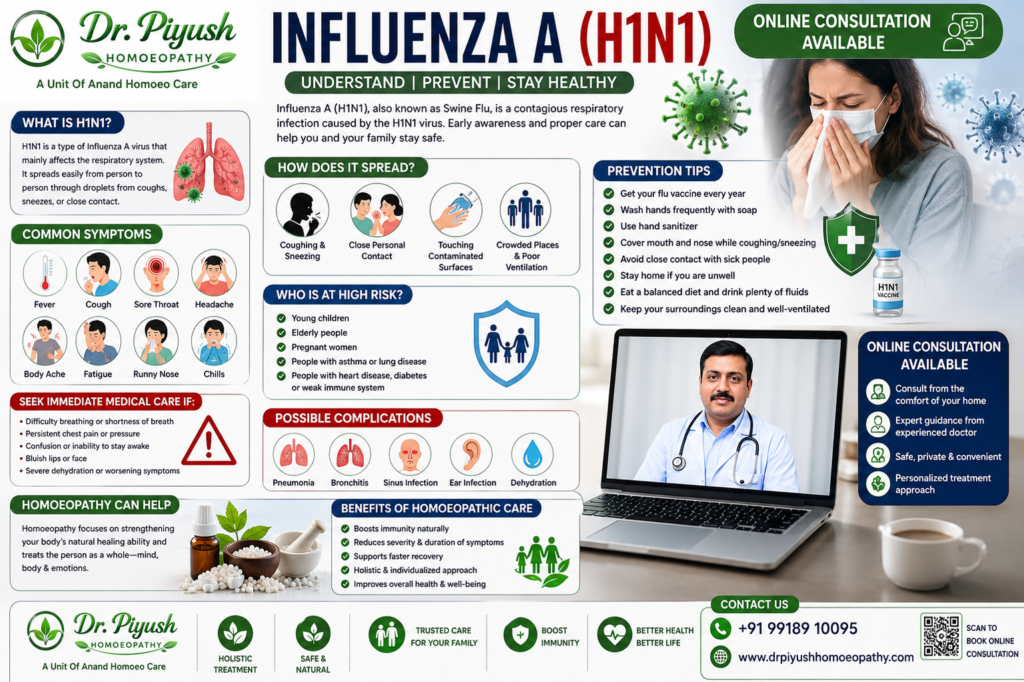
Influenza A (H1N1), commonly known as swine flu, is a respiratory infection caused by an influenza A virus. It can spread easily from person to person, especially during seasonal outbreaks. Most people recover with proper rest and supportive care, but some individuals can develop serious complications.
Understanding the symptoms of H1N1, warning signs, prevention methods, and when to seek medical attention can help protect you and your family.
At Dr. Piyush Homoeopathy, we believe that health awareness, timely medical evaluation, healthy habits, and individualized care are important parts of maintaining overall well-being.
Important: H1N1 can sometimes cause severe influenza and complications such as pneumonia. Homoeopathy should not replace vaccination, antiviral treatment, emergency care, or other evidence-based medical treatment when indicated.
What Is Influenza A (H1N1)?
Influenza A is a type of influenza virus that can cause respiratory illness. H1N1 refers to a particular subtype of Influenza A.
The infection mainly affects the:
- Nose
- Throat
- Upper respiratory tract
- Lungs in more severe cases
H1N1 can spread through respiratory droplets and particles released when an infected person coughs, sneezes, talks, or breathes.
How Does H1N1 Spread?
Influenza A can spread quickly in homes, schools, offices, hospitals, and other crowded places.
Transmission may occur through:
- Coughing and sneezing
- Close contact with an infected person
- Respiratory particles in indoor spaces
- Touching contaminated surfaces and then touching the mouth, nose, or eyes
People may be able to spread influenza before they realize they are sick.

Common Symptoms of Influenza A (H1N1)
Symptoms can vary from person to person. They often develop suddenly.
Common Symptoms
- Fever or feeling feverish
- Chills
- Cough
- Sore throat
- Runny or blocked nose
- Headache
- Muscle and body aches
- Fatigue and weakness
- Reduced appetite
Some people may also experience:
- Nausea
- Vomiting
- Diarrhea
Digestive symptoms can be more common in children than adults.
H1N1 Symptoms in Children
Children can develop influenza symptoms similar to adults. Parents should monitor children carefully, especially if they have an underlying health condition.
Watch for:
- High or persistent fever
- Cough and sore throat
- Breathing difficulty
- Unusual sleepiness
- Poor feeding or reduced fluid intake
- Vomiting or diarrhea
- Irritability
- Signs of dehydration
When Should Parents Seek Urgent Medical Care?
Seek immediate medical attention if a child develops:
- Difficulty breathing or rapid breathing
- Bluish or grayish lips or face
- Severe weakness or inability to stay awake
- Severe dehydration
- Seizures
- Chest pain
- Symptoms that improve and then suddenly become worse
Who Is at Higher Risk of Complications?
Influenza can become more serious in certain individuals.
Higher-risk groups include:
- Young children
- Older adults
- Pregnant women
- People with asthma or other chronic lung conditions
- People with heart disease
- People with diabetes
- People with weakened immune systems
- Individuals with certain chronic medical conditions
This is why early medical evaluation is especially important for people in higher-risk groups.

H1N1 vs Common Cold
H1N1 and the common cold can have similar symptoms, but influenza often begins more suddenly and may cause stronger systemic symptoms.
| Feature | Influenza A (H1N1) | Common Cold |
| Onset | Often sudden | Usually gradual |
| Fever | Common | Less common |
| Body aches | Often significant | Usually mild |
| Fatigue | Can be marked | Usually mild |
| Cough | Common | Common |
| Sore throat | Possible | Common |
| Runny nose | Possible | Very common |
Symptoms alone cannot always confirm H1N1. Testing may be recommended depending on the clinical situation.
Possible Complications of Influenza A
Most people recover without serious problems. However, influenza can sometimes lead to complications.
Possible complications include:
1. Pneumonia
Influenza can cause viral pneumonia or may increase the risk of secondary bacterial pneumonia.
2. Worsening of Existing Conditions
Influenza may worsen conditions such as asthma, COPD, diabetes, or heart disease.
3. Dehydration
Fever, poor appetite, vomiting, or diarrhea can contribute to fluid loss.
4. Other Complications
Rare but serious complications can include inflammation of the heart, brain, or muscles.
Breathing difficulty, chest pain, confusion, severe weakness, or rapidly worsening symptoms require prompt medical attention.
Diagnosis of H1N1
A healthcare professional may assess influenza based on:
- Symptoms
- Medical history
- Physical examination
- Current influenza activity in the community
- Risk factors
In certain situations, laboratory testing may be used to identify influenza infection.
Testing is particularly useful when the result may influence treatment or infection-control decisions.
Treatment and Supportive Care
Treatment depends on the person’s age, symptoms, risk factors, and severity of illness.
For uncomplicated influenza, supportive measures may include:
- Adequate rest
- Drinking sufficient fluids
- Nutritious, easy-to-digest meals
- Monitoring temperature and symptoms
- Staying home when unwell
- Avoiding close contact with vulnerable people
Some patients, especially those at higher risk or with severe illness, may benefit from prescription antiviral medicines. These should be discussed with a qualified healthcare professional and are most effective when started early in appropriate cases.
Avoid Self-Medication
Do not start antibiotics without medical advice. Antibiotics do not treat influenza viruses, although a doctor may prescribe them if a bacterial infection develops.
Prevention of Influenza A (H1N1)
Prevention plays an important role in reducing influenza transmission.
1. Annual Influenza Vaccination
Seasonal influenza vaccination is an important preventive measure, particularly for people at higher risk of complications.
Discuss vaccination with your healthcare professional to determine whether it is appropriate for you.
2. Maintain Hand Hygiene
Wash your hands regularly with soap and water. Alcohol-based hand sanitizer can also be useful when soap and water are unavailable.
3. Cover Coughs and Sneezes
Use a tissue or your elbow when coughing or sneezing. Dispose of used tissues properly and clean your hands afterward.
4. Stay Home When Sick
Avoid unnecessary contact with others while experiencing an acute respiratory infection.
5. Improve Indoor Ventilation
Fresh air and good ventilation can help reduce the concentration of respiratory particles in indoor environments.
6. Support General Health
A healthy lifestyle supports overall well-being:
- Eat a balanced diet
- Stay physically active
- Get adequate sleep
- Maintain good hydration
- Manage stress
- Avoid smoking

Homoeopathic Approach to Respiratory Health
Homoeopathy uses an individualized approach in which a practitioner considers the person’s overall symptom pattern, physical complaints, and individual characteristics.
At Dr. Piyush Homoeopathy, the focus is on understanding the individual rather than treating a diagnosis alone. A consultation may consider:
- Present symptoms
- Symptom pattern
- Duration of illness
- Previous health history
- Lifestyle factors
- Sleep and appetite
- Individual constitution
- Associated physical complaints
An Important Medical Note
There is currently no reliable scientific evidence that homoeopathic medicines can prevent, cure, or eliminate the influenza virus or replace antiviral treatment or vaccination.
Therefore, patients with suspected or confirmed H1N1 should not delay appropriate medical evaluation or evidence-based treatment in favor of homoeopathy.
Homoeopathic consultation, where chosen by a patient, should be considered complementary supportive care, not a substitute for necessary medical treatment.
Can You Prevent H1N1 Through Home Remedies?
Simple supportive habits can help you feel more comfortable during an influenza illness, but they do not eliminate the virus.
Helpful measures include:
- Drinking adequate fluids
- Taking sufficient rest
- Eating nutritious food
- Keeping the room comfortably ventilated
- Practicing good hand hygiene
- Monitoring symptoms
Avoid unproven remedies that claim to “kill” the influenza virus or guarantee prevention of H1N1.
When Should You Consult a Doctor?
Contact a healthcare professional if:
- Fever or symptoms are persistent or worsening
- Breathing becomes difficult
- There is chest pain
- Severe weakness develops
- You are unable to maintain adequate fluid intake
- You belong to a high-risk group
- Symptoms improve and then suddenly become worse
- A young child, elderly person, or pregnant woman develops significant influenza-like symptoms
Emergency Warning Signs
Seek urgent medical care for:
- Severe difficulty breathing
- Blue or gray lips or face
- Severe chest pain
- Confusion or inability to stay awake
- Seizures
- Severe dehydration
- Rapid deterioration
How Dr. Piyush Homoeopathy Can Help
At Dr. Piyush Homoeopathy, health education and individualized consultation are important parts of patient care.
Our approach focuses on:
- Individualized healthcare
- Holistic health assessment
- Patient-centered consultation
- Preventive health awareness
- Lifestyle guidance
- Respiratory health support
- Online consultation
For persistent, severe, or concerning influenza symptoms, appropriate medical evaluation should always be prioritized.
Key Takeaways
- Influenza A (H1N1) is a viral respiratory infection that can spread easily between people.
- Fever, cough, sore throat, body aches, headache, and fatigue are common symptoms.
- Children, older adults, pregnant women, and people with certain chronic conditions may have a higher risk of complications.
- Vaccination, hand hygiene, ventilation, and staying home when sick are important preventive measures.
- Difficulty breathing, chest pain, confusion, severe weakness, or rapid deterioration require urgent medical attention.
- Homoeopathy should not replace vaccination, antiviral treatment, or emergency medical care when these are indicated.