
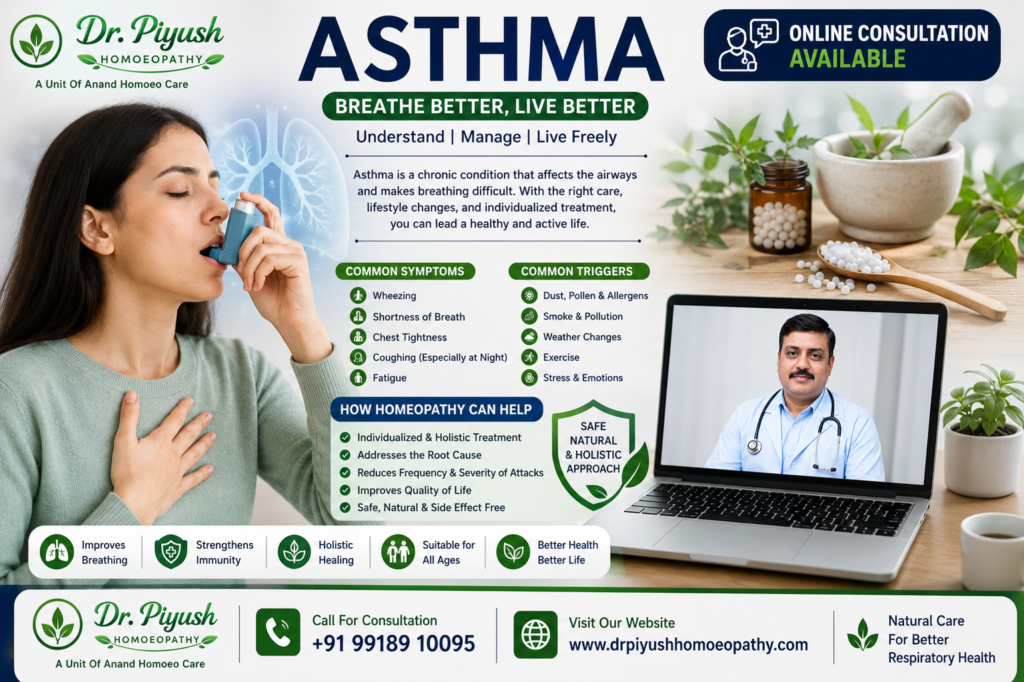
Introduction
Breathing should be effortless. For people living with bronchial asthma, however, even simple activities can sometimes become difficult. Wheezing, coughing, chest tightness and shortness of breath may occur suddenly or repeatedly and can affect sleep, work, exercise and everyday life.
Asthma is a chronic respiratory disease in which the airways become inflamed and narrowed. Symptoms can vary from person to person and may be triggered by allergens, infections, smoke, exercise, weather changes and other factors. Asthma can be serious, but with correct diagnosis, appropriate treatment and regular monitoring, most people can lead active and fulfilling lives.
At Dr. Piyush Homoeopathy, understanding the individual pattern of symptoms is an important part of consultation. However, homoeopathy should not replace prescribed inhalers or emergency treatment, particularly during an acute asthma attack.
What Is Asthma?
Asthma is a long-term condition affecting the airways of the lungs. During an episode, the airway walls can become inflamed and swollen, the muscles around the airways can tighten, and mucus may increase. Together, these changes make it harder for air to move in and out of the lungs.
Common symptoms include:
- Wheezing
- Coughing
- Shortness of breath
- Chest tightness
- Difficulty breathing, especially during flare-ups
- Night-time or early-morning cough in some patients
Asthma symptoms may come and go. Some people have symptoms only occasionally, while others require regular treatment.
Understanding the Types of Asthma
Asthma can be described in different ways depending on its triggers and clinical pattern.
1. Allergic Asthma
This may be associated with exposure to allergens such as:
- House dust mites
- Pollen
- Mould
- Animal dander
- Certain environmental allergens
People with allergic asthma may also have allergic rhinitis or eczema.
2. Non-Allergic Asthma
Symptoms may occur without a clear allergic trigger. Viral infections, air pollution, smoke, weather changes, stress or certain medicines may contribute to symptoms.
3. Exercise-Induced Symptoms
Physical activity can trigger asthma symptoms in some people. With proper medical management, however, many people with asthma can safely remain physically active.
4. Occupational Asthma
Repeated exposure to dust, fumes, chemicals or other workplace substances may contribute to asthma symptoms in some individuals.

Causes and Common Triggers of Asthma
There is usually no single cause of asthma. Genetics, airway sensitivity and environmental factors can all play a role.
Common Asthma Triggers
Allergens
- Dust mites
- Pollen
- Mould
- Animal dander
- Certain environmental allergens
Respiratory Infections
Viral respiratory infections can trigger worsening asthma symptoms.
Environmental Factors
- Tobacco smoke
- Air pollution
- Strong perfumes
- Chemical fumes
- Dust
- Sudden weather changes
Physical and Emotional Factors
- Exercise
- Stress
- Strong emotions
- Cold air
Certain Medicines
Some medicines can trigger asthma symptoms in susceptible individuals. Aspirin and other NSAIDs are examples for some patients. Certain beta-blockers can also trigger or worsen asthma.
Important: Never stop a prescribed medicine on your own. Discuss possible triggers with your doctor.
Risk Factors for Asthma
The risk of developing asthma may be higher in people with:
- A family history of asthma
- Allergic rhinitis
- Eczema
- Exposure to tobacco smoke
- Exposure to air pollution
- Occupational exposure to dust or chemicals
- Certain childhood respiratory infections
- Overweight or obesity
WHO notes that asthma can affect both children and adults and is particularly common as a chronic condition in children.
Symptoms of Bronchial Asthma
Asthma symptoms can differ in severity and frequency.
Common Symptoms
- Wheezing: A whistling sound while breathing.
- Breathlessness: Feeling unable to get enough air.
- Chest tightness: A feeling of pressure or constriction in the chest.
- Cough: Often worse at night, early morning or during exercise.
- Rapid breathing: May occur during a flare-up.
- Difficulty sleeping: Night-time symptoms can disturb sleep.
- Fatigue: Poorly controlled asthma may affect daily energy levels.
Some patients experience symptoms only during certain seasons or after exposure to specific triggers.
When Is Asthma an Emergency?
A severe asthma attack can become life-threatening.
Seek urgent medical attention if:
- Breathing is severely difficult.
- The person cannot speak comfortably because of breathlessness.
- Symptoms are rapidly getting worse.
- The prescribed reliever is not providing adequate relief.
- The person becomes confused, extremely drowsy or exhausted.
- There is severe chest tightness or signs of inadequate oxygen.
Do not rely on homeopathy or home remedies for a severe asthma attack. Follow the patient’s emergency asthma action plan and seek emergency medical care immediately.
Asthma attacks can lead to hospitalisation and, in severe cases, death. Evidence-based inhaled treatment is an essential part of asthma care.
How Is Asthma Diagnosed?
A proper diagnosis is important because several other conditions can cause cough, wheezing or breathlessness.
1. Detailed Medical History
A doctor may ask about:
- Frequency of symptoms
- Night-time symptoms
- Exercise-related symptoms
- Allergy history
- Family history
- Previous asthma attacks
- Smoking exposure
- Occupational exposure
- Medication history
- Previous hospitalisation
2. Physical Examination
The doctor may examine the:
- Chest and lungs
- Nose and throat
- Respiratory rate
- General health status
3. Lung Function Testing
Tests such as spirometry may be used to assess airflow and support the diagnosis.
Depending on the patient, additional tests may include bronchodilator response testing, peak-flow monitoring, allergy assessment or other investigations.
Current international asthma guidance emphasises confirming the diagnosis where possible and regularly assessing symptoms, risk factors, lung function, inhaler technique and treatment response.
Asthma Treatment and Management
Asthma treatment depends on the severity and pattern of symptoms.
The main goals are to:
- Control daily symptoms
- Prevent severe flare-ups
- Maintain normal activity
- Reduce the risk of complications
- Improve quality of life
Conventional Medical Treatment
Modern asthma management commonly includes inhaled medicines. These may include:
- Inhaled corticosteroids (ICS) to reduce airway inflammation
- Bronchodilators to relax airway muscles
- Combination inhalers containing more than one medicine
- Other medicines for selected patients
GINA’s current guidance recommends an individualised, stepwise approach based on symptoms, exacerbation risk, lung function, inhaler technique, adherence and patient needs.
Never Stop Your Inhaler Without Medical Advice
If you are already using a prescribed asthma inhaler, do not stop it or reduce the dose simply because you begin another form of treatment.
An asthma action plan can help patients recognise worsening symptoms and know when to adjust treatment or seek medical care.
Lifestyle Measures for Better Asthma Control
Medical treatment works best when combined with healthy habits and trigger management.
Helpful measures include:
- Identify and avoid known triggers.
- Avoid active and passive smoking.
- Keep indoor spaces clean and well ventilated.
- Reduce exposure to dust and mould.
- Maintain a healthy body weight.
- Remain physically active according to medical advice.
- Take prescribed medicines regularly.
- Learn the correct inhaler technique.
- Attend regular follow-up appointments.
- Keep your asthma action plan accessible.
Avoiding triggers can reduce symptoms, but trigger avoidance should complement—not replace—appropriate medical treatment.
The Homoeopathic Approach to Asthma
Homoeopathy traditionally follows an individualised approach, where the patient’s complete symptom picture is considered rather than selecting a medicine solely because the diagnosis is “asthma.”
During a homoeopathic consultation, a practitioner may consider:
- Nature and pattern of breathing difficulty
- Time of occurrence
- Triggers and relieving factors
- Weather sensitivity
- Allergic complaints
- Sleep pattern
- Digestive symptoms
- Emotional and mental factors
- Family and medical history
- Other associated symptoms
The aim is to understand the patient’s overall health pattern and provide individualised care.
An Important Medical Note
Claims that homoeopathy can cure asthma or replace evidence-based inhaled treatment are not supported by established clinical evidence. For safety, people with asthma should continue appropriate conventional treatment and should never delay emergency care while seeking complementary treatment.
Homoeopathic care, where chosen by a patient, should be discussed openly with a qualified healthcare professional and used as a complementary approach rather than a substitute for essential asthma treatment.

Can Homoeopathy Support Patients With Asthma?
Patients seeking homoeopathic treatment for asthma may wish to discuss their symptoms, triggers and overall health with a qualified practitioner.
A personalised consultation may focus on:
- Individual symptom patterns
- Recurrent respiratory complaints
- Allergic tendencies
- Lifestyle factors
- Sleep and stress
- Environmental triggers
- Overall health and well-being
However, treatment decisions should always prioritise asthma control and patient safety.
At Dr. Piyush Homoeopathy, consultations can be used to understand the patient’s concerns and create an individualised care approach while recognising the importance of appropriate medical asthma management.
Asthma in Children
Asthma is common in children and can sometimes be difficult for parents to recognise.
Parents should watch for:
- Repeated night-time coughing
- Wheezing
- Breathlessness during play
- Cough after exercise
- Frequent respiratory symptoms
- Difficulty participating in physical activities
- Repeated need for urgent medical care
Children with breathing difficulties should receive appropriate medical evaluation. Parents should not discontinue prescribed inhalers or other asthma medicines without medical advice.
Asthma and Mental & Emotional Well-Being
Breathing difficulty can naturally cause fear and anxiety. At the same time, stress may worsen symptoms in some people.
A complete asthma management plan may therefore include:
- Stress management
- Adequate sleep
- Relaxation techniques
- Regular physical activity when appropriate
- Family support
- Professional counselling when required
It is important to understand that emotional factors should not be used to dismiss genuine breathing symptoms. Asthma is a real respiratory disease requiring appropriate assessment and treatment.
Prevention and Long-Term Asthma Care
Asthma cannot always be prevented, but good management can reduce symptoms and the risk of severe flare-ups.
Follow these practical steps:
- Know your asthma triggers.
- Take prescribed controller treatment as directed.
- Learn proper inhaler technique.
- Keep follow-up appointments.
- Avoid tobacco smoke.
- Maintain a healthy lifestyle.
- Monitor changes in symptoms.
- Keep your asthma action plan available.
- Seek medical help when symptoms become severe.
- Do not depend on self-medication during an acute attack.
WHO and GINA both emphasise appropriate diagnosis, inhaled treatment, trigger management, education and regular review as important parts of asthma care.
Why Individualised Care Matters
Asthma does not look exactly the same in every person. One person may have symptoms mainly during exercise, while another may experience symptoms after exposure to dust, pollen or viral infections.
Understanding the patient’s individual pattern can help healthcare professionals identify triggers, assess disease control and develop a suitable management plan.
This individualised principle is also central to a holistic homoeopathic consultation, where the patient’s complete symptom picture is considered.
Key Takeaways
- Asthma is a chronic respiratory disease that can cause cough, wheezing, breathlessness and chest tightness.
- Triggers may include allergens, infections, smoke, pollution, exercise, stress and weather changes.
- Proper diagnosis and regular monitoring are essential for good asthma control.
- Inhaled corticosteroid-containing treatment is an important evidence-based component of asthma management.
- Homoeopathic consultation may be considered as a complementary approach, but it should not replace prescribed asthma treatment or emergency care.
- Severe breathing difficulty requires immediate medical attention.