
Introduction
Fear and anxiety are natural human emotions. They can help us respond to danger, prepare for challenges and protect ourselves. However, when fear or worry becomes excessive, persistent and difficult to control, it may begin to affect everyday life.
Phobias and anxiety disorders can affect sleep, relationships, education, work and overall emotional well-being. People may experience a racing heartbeat, sweating, trembling, restlessness or a strong urge to avoid certain situations. With the right support, these conditions can be managed, and many people experience meaningful improvement.
At Dr. Piyush Homoeopathy, conversations about mental well-being should begin with understanding, compassion and responsible guidance. This article explains the types, causes and symptoms of phobias and anxiety disorders, evidence-based treatment options, healthy coping strategies and the limitations of homoeopathy in mental health care.
What Are Phobias and Anxiety Disorders?
What Is an Anxiety Disorder?
Anxiety is a feeling of worry, nervousness or fear. It becomes a possible anxiety disorder when it is excessive, difficult to control, lasts over time or interferes with daily activities.
Common anxiety-related conditions include:
- Generalized Anxiety Disorder (GAD): Persistent and excessive worry about everyday matters.
- Panic Disorder: Repeated panic attacks accompanied by concern about having further attacks.
- Social Anxiety Disorder: Intense fear of being judged, embarrassed or rejected in social situations.
- Separation Anxiety Disorder: Excessive fear about being separated from a close person, beyond what is expected for the person’s age and circumstances.
According to the World Health Organization (WHO), anxiety disorders are among the most common mental health conditions worldwide. Effective treatments are available, but many people do not receive the care they need. WHO: Anxiety Disorders.
What Is a Phobia?
A phobia is an intense fear of a particular object, activity, animal or situation. The fear may be much greater than the actual danger and can lead to avoidance.
Examples include:
- Arachnophobia: Fear of spiders.
- Acrophobia: Fear of heights.
- Claustrophobia: Fear of enclosed spaces.
- Social Phobia: Intense fear of social or performance situations.
- Agoraphobia: Fear of situations where escape or access to help may feel difficult.
A phobia may cause significant distress even when the person understands that the fear is excessive.
Causes of Phobias and Anxiety Disorders
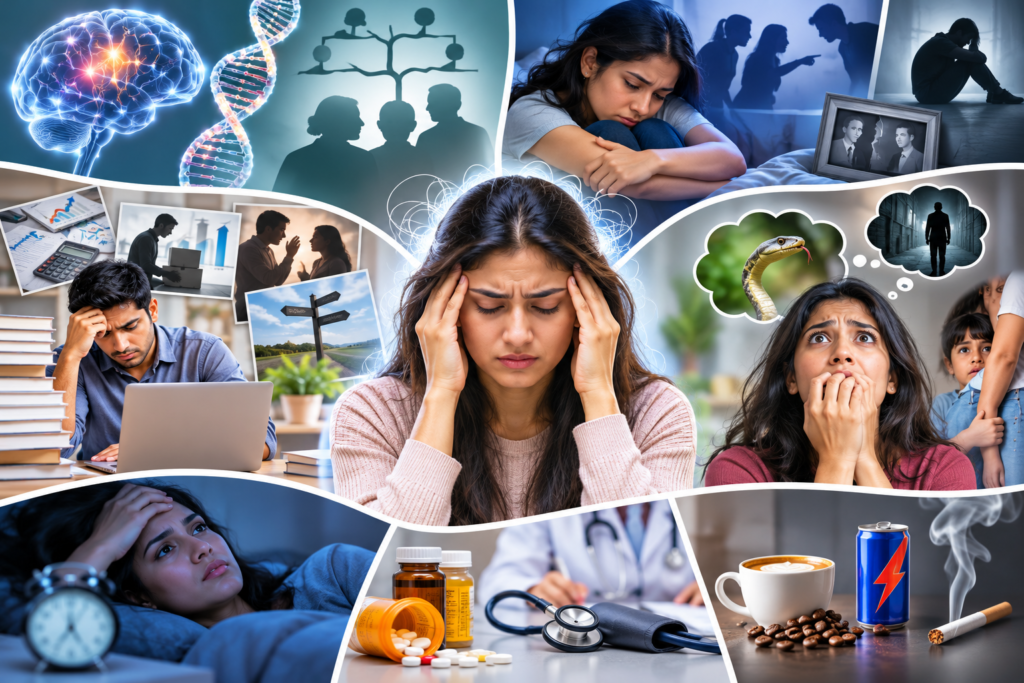
There is no single cause of every anxiety disorder or phobia. Several factors may contribute to their development.
1. Genetic and Biological Factors
A family history of anxiety or other mental health conditions may increase a person’s vulnerability. Biological processes involved in fear and stress can also play a role.
2. Psychological Factors
Difficult experiences, ongoing stress, bullying, trauma, grief or repeated frightening situations may contribute to anxiety. However, not everyone who experiences these events develops an anxiety disorder.
3. Environmental Stress
Financial concerns, workplace pressure, academic demands, relationship difficulties and major life changes can increase emotional strain.
4. Learned Fear
People may develop fears after a frightening experience or by observing another person’s fearful reactions. Avoiding the feared situation can sometimes maintain the fear over time.
5. Physical Health and Lifestyle Factors
Sleep problems, some medical conditions, certain medicines and the use of stimulants may cause or worsen anxiety-like symptoms. A healthcare professional can help assess possible causes.
Common Symptoms of Anxiety and Phobias
Symptoms differ from person to person. They may involve thoughts, emotions, physical sensations and behaviour.
Emotional and Psychological Symptoms
- Excessive worry or fear
- Restlessness and irritability
- Difficulty concentrating
- Fear of losing control
- Feeling tense or overwhelmed
- Repeated worry about future events
Physical Symptoms
- Rapid heartbeat or palpitations
- Sweating and trembling
- Dizziness or light-headedness
- Shortness of breath
- Nausea or stomach discomfort
- Muscle tension
- Difficulty sleeping
Behavioural Symptoms
- Avoiding certain people, places or situations
- Repeatedly seeking reassurance
- Withdrawing from social activities
- Difficulty attending school or work
- Changing daily routines to avoid a feared situation
These symptoms do not automatically mean a person has an anxiety disorder. A professional assessment can help distinguish anxiety from other mental or physical health conditions.
How Are Phobias and Anxiety Disorders Diagnosed?
Diagnosis usually involves a discussion of symptoms, their duration, their triggers and their effect on daily life. A healthcare professional may also ask about medical history, sleep, medicines and stressful experiences.
Assessment may help determine:
- The type and severity of anxiety symptoms
- Whether a specific phobia or another anxiety disorder is present
- Whether a physical health condition may be contributing
- Which treatment and support options are appropriate
Avoid self-diagnosis based only on online symptom lists. A qualified mental health professional or doctor can help develop an appropriate care plan.
Evidence-Based Treatment for Phobias and Anxiety Disorders
The treatment depends on the person’s symptoms, needs, preferences and clinical assessment. Many people benefit from psychological treatment, and some may also need medication.
1. Cognitive Behavioural Therapy (CBT)
Cognitive Behavioural Therapy (CBT) is an established psychological treatment for many anxiety disorders. It helps people understand the connection between thoughts, feelings and behaviours and develop healthier ways of responding to fear.
2. Exposure Therapy
Exposure therapy is often used for phobias. With professional guidance, a person gradually works towards facing feared situations in a planned and manageable way.
It is not about forcing someone into a frightening situation. The process should be appropriate to the person’s needs and carried out safely.
3. Medication When Appropriate
A qualified prescriber may recommend medication for certain anxiety disorders. The choice depends on the diagnosis, symptom severity, medical history and potential benefits and risks.
Do not start, stop or change prescribed medication without discussing it with the treating professional.
4. Counselling and Emotional Support
Mental health counselling can provide a supportive setting to discuss difficult emotions, learn coping skills and develop practical ways to manage everyday challenges.
5. Combined and Individualized Care
Some people benefit from a combination of psychotherapy, medication, lifestyle changes and regular follow-up. Treatment should be planned around the individual rather than a one-size-fits-all approach.
For further information, see the National Institute of Mental Health guidance on phobias.

Homoeopathy and Anxiety Disorders: What Should Patients Know?
Homoeopathy traditionally emphasizes individual consultation and the patient’s reported physical and emotional experiences. In a consultation, a practitioner may ask about sleep, stress, fears, daily habits and general well-being.
However, there is not enough reliable scientific evidence to conclude that homoeopathy effectively treats phobias or anxiety disorders. It has not been established as a method to prevent these conditions or replace evidence-based mental health care. The National Center for Complementary and Integrative Health also notes that there is little evidence supporting homoeopathy as an effective treatment for specific health conditions. NCCIH: Homoeopathy.
What Is the Role of Individualized Homoeopathic Consultation?
A responsible homoeopathic consultation may offer a space for patients to discuss their concerns and describe how symptoms affect daily life. Listening carefully and treating patients respectfully are important parts of supportive healthcare.
Nevertheless, these consultation practices should not be confused with proof that a homoeopathic remedy treats the underlying anxiety disorder.
When considering homoeopathic care for anxiety, patients should:
- Ask about the available scientific evidence and realistic treatment goals.
- Seek assessment from a qualified mental health professional or doctor.
- Continue evidence-based treatment as advised by their treating professional.
- Avoid products or claims promising a guaranteed cure.
- Inform all healthcare professionals about any products they use.
What About Commonly Mentioned Homoeopathic Remedies?
Traditional homoeopathic literature discusses remedies such as Aconitum napellus, Argentum nitricum, Gelsemium sempervirens, Arsenicum album, Ignatia amara and Kali phosphoricum in relation to different symptom descriptions.
These traditional associations do not establish that the remedies are effective for anxiety disorders or phobias. There is no reliable basis for recommending these remedies as proven treatment, and this article does not provide a prescription, potency or dosage.
People experiencing ongoing anxiety should not delay professional assessment while trying remedies on their own.
Can Homoeopathy Prevent Phobias and Anxiety Disorders?
There is no reliable scientific evidence that homoeopathic treatment prevents the development of phobias or anxiety disorders. Prevention and early support instead focus on strengthening coping skills, addressing stress where possible and making appropriate mental health care accessible.
A trusted homoeopathic clinic should communicate these limitations clearly and encourage patients to seek appropriate care without making unsupported promises.
How Can Anxiety and Phobias Be Managed in Everyday Life?
Healthy daily habits may support emotional well-being. They are not a substitute for professional treatment when symptoms are persistent or severe.
1. Practise Slow, Comfortable Breathing
When anxiety rises, try breathing slowly and comfortably without forcing deep breaths. Regular practice may help some people manage stress.
2. Maintain a Regular Sleep Routine
Aim for a consistent bedtime and waking time. Reduce stimulating activities before bed and seek help if sleep problems continue.
3. Stay Physically Active
Walking, stretching, cycling or another suitable activity may support mood and general health. Start at a comfortable level and build gradually.
4. Reduce Excessive Caffeine
Tea, coffee, energy drinks and other sources of caffeine may worsen symptoms in some people. Notice your response and reduce intake if it contributes to restlessness or poor sleep.
5. Talk to Someone You Trust
Speaking with a supportive friend, family member, counsellor or healthcare professional can help reduce isolation and make it easier to seek care.
6. Learn to Recognize Anxiety Triggers
A simple diary can help identify situations, thoughts or habits associated with anxiety. This information may also be useful during a professional consultation.
7. Seek Professional Support Early
If fear or worry repeatedly interferes with daily activities, consider seeking help. Avoiding treatment because of shame or fear can prolong distress.
How Can We Reduce the Risk of Anxiety Problems?
No method can guarantee that a person will never develop an anxiety disorder. However, several measures may support mental well-being and reduce some contributing risks.
- Encourage emotional expression and supportive relationships.
- Build healthy coping and problem-solving skills.
- Maintain regular sleep, physical activity and balanced meals.
- Seek help for persistent stress, trauma or emotional difficulties.
- Encourage age-appropriate social and emotional learning in children.
- Address physical health concerns that may contribute to anxiety.
- Make psychological support accessible without stigma.
These measures support anxiety management and emotional well-being. They should not be described as guaranteed prevention, and homoeopathy should not be promoted as a proven preventive treatment.
When Should You Seek Professional Help?
Consider speaking with a doctor or mental health professional if:
- Anxiety or fear continues for weeks or repeatedly returns.
- You avoid important activities because of fear.
- Panic symptoms interfere with work, study, relationships or sleep.
- You are using alcohol or other substances to cope with anxiety.
- Symptoms are becoming more severe or difficult to manage.
Seek urgent medical help for severe or new chest pain, serious breathing difficulty or other potentially dangerous physical symptoms. If you feel at risk of harming yourself or cannot keep yourself safe, contact local emergency services or go to the nearest emergency department.
The Role of a Responsible Homoeopathic Clinic in Patient Awareness
A reliable homoeopathic clinic can contribute to public awareness by discussing emotional health respectfully, helping patients understand the limits of available treatments and encouraging appropriate referral when needed.
For a trusted homoeopathic doctor, responsible patient communication should include:
- Listening without judgement.
- Avoiding promises of guaranteed recovery.
- Explaining that homoeopathy is not an established treatment for anxiety disorders.
- Encouraging evidence-based psychological and medical care.
- Respecting the patient’s informed choices.
- Supporting continuity of care and appropriate professional referral.
A patient-centred homoeopathic practice should never encourage people to stop prescribed medication or delay mental health treatment.
Conclusion
Phobias and anxiety disorders can affect many areas of life, but effective support and treatment are available. Recognizing the symptoms, seeking an accurate assessment and following an appropriate care plan are important steps towards better emotional well-being.
Psychological treatments such as CBT and exposure therapy have an established role in managing many phobias and anxiety disorders. Medication may also be appropriate for some people. Healthy lifestyle habits and supportive relationships can complement professional care.
Although homoeopathy emphasizes individualized consultation, current scientific evidence does not establish it as an effective treatment or preventive method for phobias and anxiety disorders. The safest approach is compassionate, evidence-informed care that prioritizes mental health, avoids unsupported claims and never delays proven treatment.
For readers exploring homoeopathic consultation, the priority should always be transparent information, realistic expectations and appropriate professional mental health support.
Medical Disclaimer
This article is for general educational purposes and does not replace professional medical advice, diagnosis or treatment. If you are concerned about anxiety, phobias or panic symptoms, consult a qualified healthcare professional. Do not stop prescribed medication or delay recommended mental health care.
Key Takeaways
- Phobias and anxiety disorders can affect emotional well-being, physical health, relationships and daily activities.
- Symptoms may include excessive worry, rapid heartbeat, trembling, panic and avoidance of feared situations.
- CBT and exposure therapy are established treatment options; medication may also be appropriate for some people.
- Healthy sleep habits, physical activity, stress management and supportive relationships can complement professional care.
- Homoeopathy has not been established as an effective treatment or prevention method for anxiety disorders or phobias.
- Early assessment, honest treatment information and appropriate mental health support should always be prioritized.