Introduction
Autism Spectrum Disorder (ASD) is a neurodevelopmental condition that affects how a person communicates, interacts with others, learns, and experiences the world. Signs often begin in early childhood, although some people are diagnosed later in life.
Every autistic person is different. Some people need limited support in daily life, while others require ongoing assistance with communication, learning, or everyday activities. Autism is not caused by poor parenting, and it should not be viewed as a personal failure or something to be ashamed of.
Early identification, family support, and appropriate developmental services can help autistic people build skills and improve their quality of life. This article explains the signs, possible causes, diagnosis, evidence-based support, and the limits of homoeopathy in autism care.
What Is Autism Spectrum Disorder?
Autism is a condition related to differences in brain development. It can affect social communication, interaction, behaviour, interests, and responses to sensory information.
The word “spectrum” reflects the wide range of abilities and support needs among autistic people. Some communicate using spoken language, while others use gestures, pictures, sign language, or communication devices.
Important facts about ASD:
- Autism can be identified in early childhood, but diagnosis may occur at any age.
- Autistic people have different strengths, interests, and support needs.
- Some autistic people also have sleep difficulties, anxiety, attention difficulties, epilepsy, or digestive concerns.
- Autism is not contagious.
- Autism is not caused by vaccines or poor parenting.
- Autism is a lifelong neurodevelopmental condition, but suitable support can help people develop skills and participate in daily life.
Causes and Risk Factors of Autism
There is no single cause of autism. Research suggests that genetic and other biological factors contribute to differences in brain development. The exact causes are not fully understood.
1. Genetic factors
Many genes may contribute to the likelihood of autism. In some cases, autism is associated with a known genetic condition. Having a family member who is autistic may increase the likelihood, but it does not determine a person’s development.
2. Prenatal and early developmental factors
Some factors related to pregnancy and early development have been associated with a higher likelihood of autism. These associations are complex and do not mean that any one factor directly causes autism in an individual.
3. Differences in brain development
Autism is linked to differences in how the brain develops and processes information. These differences may influence communication, social interaction, learning, and sensory experiences.
4. Environmental and health factors
Researchers continue to study how genetic and environmental factors may interact. There is no single environmental exposure that explains all cases of autism.
Important: Autism is not caused by a lack of affection, poor discipline, or a parent’s failure to communicate with a child. Families should receive understanding and support rather than blame.
Signs and Symptoms of Autism Spectrum Disorder
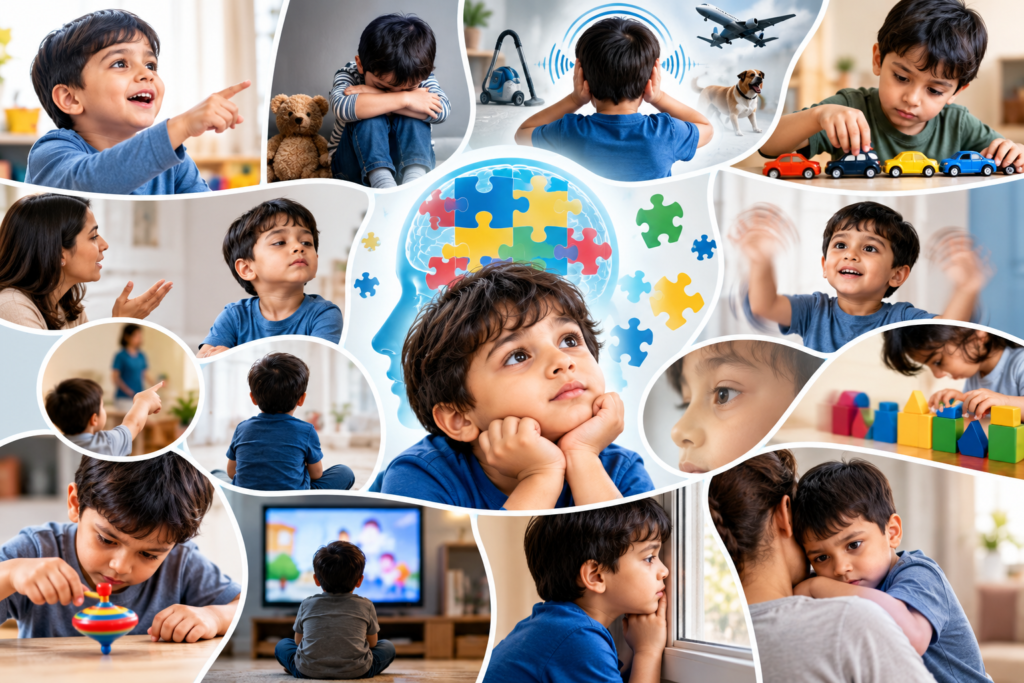
Autism can look different from one person to another. Signs may become noticeable during the first few years of life.
1. Differences in social communication
A child may:
- Find back-and-forth conversation difficult.
- Use fewer gestures, facial expressions, or other non-verbal communication methods.
- Find it difficult to understand social cues.
- Communicate differently from other children of the same age.
- Prefer certain forms of interaction or need more time to respond.
Not every autistic person has difficulty with spoken language. Some have strong language skills but find social communication challenging.
2. Repetitive behaviours and routines
Some autistic people may:
- Repeat words, sounds, or movements.
- Prefer familiar routines.
- Become distressed when plans change unexpectedly.
- Have strong interests in particular topics or activities.
- Arrange objects in a particular way or repeat certain actions.
These behaviours may help a person feel comfortable, communicate, or manage their surroundings. They should not automatically be treated as problems if they are harmless.
3. Sensory differences
A person may be unusually sensitive or less responsive to:
- Loud sounds.
- Bright lights.
- Certain textures or clothing.
- Smells or tastes.
- Touch or movement.
For example, a busy classroom or crowded shopping area may feel overwhelming to some autistic people.
4. Differences in play and learning
Some children may prefer playing alone, repeat the same play activity, or focus intensely on particular interests. Others may show advanced skills in memory, visual learning, music, numbers, or specific subjects.
Strengths and support needs should both be considered when planning care.
Early Signs of Autism in Children
Parents and caregivers may notice developmental differences during infancy or early childhood. Possible signs include:
- Limited response to their name.
- Fewer gestures, such as pointing to share interest.
- Differences in shared attention, such as looking between an object and another person.
- Delayed spoken language or differences in communication.
- Repetitive movements or strong preferences for routines.
- Unusual reactions to sounds, textures, or other sensory experiences.
- Loss of previously acquired language or social skills.
These signs do not automatically mean a child is autistic. They do, however, deserve professional assessment when concerns persist.
If a child loses skills they previously had, seek prompt medical evaluation. Do not wait for the child to grow out of the concern before seeking advice.
How Is Autism Diagnosed?
There is no single blood test or scan that can diagnose autism. Diagnosis is based on developmental history, observation, and a detailed assessment by qualified professionals.
1. Developmental screening
A healthcare professional may ask about the child’s language, play, social interaction, behaviour, and daily activities. Screening tools can help identify children who need further assessment, but screening alone does not confirm autism.
2. Specialist assessment
Depending on the person’s age and needs, assessment may involve a developmental paediatrician, child psychologist, child psychiatrist, neurologist, or another trained professional.
3. Communication and developmental assessment
Professionals may assess speech, language, learning, social communication, sensory needs, and everyday living skills.
4. Assessment of other health needs
Hearing difficulties, sleep problems, seizures, anxiety, attention difficulties, and other medical concerns may need separate assessment. Additional tests are recommended when clinically appropriate.
An early and accurate assessment helps families understand a person’s strengths and support needs and plan suitable services.
Evidence-Based Support and Management for Autism
There is no single approach that meets every autistic person’s needs. Support should be personalised, respectful, and based on the person’s developmental profile and goals.
1. Speech and language therapy
Speech and language therapy may support communication, understanding, conversation, and the use of gestures or other communication methods.
Some people benefit from alternative and augmentative communication, such as picture boards or electronic communication devices. These tools can support communication and should not be withheld because a person does not speak.
2. Occupational therapy
Occupational therapy may help with daily living skills, such as dressing, eating, personal care, and participating in school or community activities. It may also help families understand sensory needs and adapt everyday environments.
3. Developmental and behavioural support
Appropriate programmes may help a person develop communication, learning, social, and daily living skills. The approach should be individualised, respectful, and focused on meaningful goals, comfort, and independence.
4. Educational support
Children may benefit from suitable classroom adjustments, visual schedules, clear instructions, predictable routines, and individual learning support.
Working together with teachers, caregivers, and healthcare professionals can help make learning more accessible.
5. Support for associated conditions
Some autistic people have additional health or mental health conditions. A qualified clinician may recommend treatment for specific concerns such as anxiety, sleep difficulties, seizures, or severe irritability.
Medication does not cure autism, but it may help manage certain co-occurring symptoms when prescribed and monitored appropriately.
6. Family and caregiver support
Parents and caregivers may benefit from practical guidance, counselling, support groups, and respite services where available. Families should be included in decisions while also respecting the autistic person’s preferences, communication, and dignity.

The Role of Homoeopathy in Autism Spectrum Disorder
Some families explore homoeopathy while seeking support for a child or adult with autism. Traditional homoeopathic practice may involve discussing a person’s general health, sleep, emotional responses, behaviour, and individual history.
However, there is no reliable scientific evidence that homoeopathy treats autism itself, changes its underlying neurodevelopment, or improves core autism-related communication and social differences. It has also not been shown to prevent autism.
Can homoeopathy help with autism?
Homoeopathy should not be presented as a proven treatment for autism. Claims that homoeopathic remedies can improve speech, eliminate repetitive behaviours, reverse autism, or prevent developmental differences are not supported by reliable evidence.
If a family chooses to discuss homoeopathy, a responsible homoeopathic consultation should:
- Explain the limits of current scientific evidence clearly.
- Encourage timely assessment by qualified developmental professionals.
- Never advise stopping prescribed medication, speech therapy, occupational therapy, or other established support.
- Avoid promises of a cure or guaranteed developmental improvement.
- Encourage appropriate medical assessment for new or worsening symptoms.
- Consider safety, including the ingredients and quality of any product being discussed.
A trusted homoeopathic doctor should communicate honestly and respect the family’s right to make informed decisions. A responsible homoeopathic practitioner should not discourage evidence-based care or use unsupported claims to create unrealistic expectations.
Homoeopathy and associated concerns
Autistic people may experience other health concerns, such as sleep problems, anxiety, digestive symptoms, or feeding difficulties. These concerns should be assessed individually because they may have treatable medical or developmental causes.
There is insufficient reliable evidence to recommend homoeopathy as an effective treatment for these concerns in autistic people. A qualified healthcare professional can help identify suitable options and monitor the person’s response.
Should homoeopathy replace developmental therapies?
No. Homoeopathy should not replace professional developmental assessment, speech and language therapy, occupational therapy, educational support, or medically recommended treatment.
Delaying support while trying an unproven approach may mean losing valuable opportunities to address communication, learning, and daily living needs.
The most responsible approach is to prioritise services that are appropriate to the person’s needs and supported by reliable evidence.
Can Autism Be Prevented With Homoeopathy?
There is currently no established method, including homoeopathy, that can guarantee prevention of autism. Autism is associated with complex differences in brain development and genetic factors, and it is not something parents cause through their behaviour.
Families should avoid products or programmes advertised as preventing autism, reversing it, or eliminating its underlying cause without reliable scientific evidence.
Instead, focus on steps that support healthy development and timely care:
- Attend routine child health and developmental check-ups.
- Discuss developmental concerns with a qualified healthcare professional as soon as they arise.
- Seek assessment if a child has communication delays or loses previously acquired skills.
- Follow appropriate medical advice during pregnancy and childhood.
- Support the child’s communication, learning, sleep, nutrition, and general health.
- Arrange suitable developmental and educational support when needed.
These steps do not prevent autism, but they can help identify needs early and support a child’s development.
How Parents Can Support an Autistic Child at Home
Every child has individual needs. Simple, consistent strategies may help children feel safe, communicate, and participate in family life.
1. Build a predictable routine
A regular daily schedule may help a child understand what will happen next. Visual timetables and advance warnings about changes can be useful.
2. Use clear communication
Use simple, direct language and allow the child enough time to respond. Pictures, gestures, written words, or communication devices may help when spoken language is difficult.
3. Understand sensory needs
Notice which sounds, lights, textures, or situations cause discomfort. Reduce avoidable sensory stress and offer suitable quiet spaces or sensory tools when appropriate.
4. Encourage interests and strengths
Use the child’s interests to create opportunities for learning, play, and connection. Celebrate progress without comparing the child with siblings or peers.
5. Work with professionals
Follow recommendations from the child’s care team and share observations about communication, sleep, behaviour, and daily activities. Ask for help when a strategy is not working.
6. Look after caregiver well-being
Caring for a child with additional support needs can be demanding. Parents deserve rest, practical assistance, and emotional support. Asking for help is a positive step.
Myths and Facts About Autism
Myth: Autism is caused by poor parenting.
Fact: Autism is a neurodevelopmental condition. It is not caused by a lack of parental love or discipline.
Myth: Every autistic person has the same symptoms.
Fact: Autism is a spectrum. Abilities, communication styles, and support needs vary widely.
Myth: Autism can be prevented or cured by homoeopathy.
Fact: There is no reliable scientific evidence that homoeopathy prevents or cures autism.
Myth: A child who speaks late will always catch up without support.
Fact: Language development varies, but concerns should be assessed early. Appropriate support can help address communication needs.
Myth: Autistic people cannot learn or develop new skills.
Fact: Many autistic people learn and develop throughout life. The right support can help them build skills, confidence, and independence.
When Should You Seek Professional Help?
Speak to a healthcare professional if you notice:
- Delays or differences in speech, communication, or social interaction.
- Repetitive behaviours or sensory responses that affect daily life.
- Difficulty with eating, sleeping, learning, or everyday activities.
- Loss of previously acquired skills.
- Persistent anxiety, distress, self-injury, or other safety concerns.
If there is an immediate risk of serious injury or a medical emergency, seek urgent help. Do not delay professional assessment while trying alternative treatments.
Compassionate and Responsible Care at Dr. Piyush Homoeopathy
At Dr. Piyush Homoeopathy, patient education and respectful communication can help families make informed healthcare decisions. Parents who have concerns about their child’s development deserve clear information, a careful discussion of their questions, and guidance that respects the child’s individual needs.
A trusted homoeopathic clinic should be transparent about what homoeopathy can and cannot be shown to do. Autism requires appropriate developmental assessment and individualised support. Homoeopathic consultation should not be presented as a replacement for these services.
Families are encouraged to work with qualified developmental and healthcare professionals and to seek support based on the person’s needs, preferences, and the best available evidence.
Conclusion
Autism Spectrum Disorder is a lifelong neurodevelopmental condition that affects people in different ways. Understanding its signs, seeking an accurate assessment, and arranging appropriate developmental support can help autistic people build skills and improve their quality of life.
Homoeopathy has not been established as an effective treatment or prevention method for autism. It should not replace evidence-based developmental services or medical care. Families deserve honest information, compassionate guidance, and support without blame or unrealistic promises.
The goal is not to change who an autistic person is, but to help them communicate, learn, participate, feel safe, and live as well as possible.
Key Takeaways
- Autism Spectrum Disorder affects communication, social interaction, behaviour, and sensory experiences differently in each person.
- Early assessment and appropriate developmental support can help address individual needs.
- Speech and language therapy, occupational therapy, educational support, and family guidance may be useful, depending on the person.
- There is no reliable scientific evidence that homoeopathy cures, treats the core features of, or prevents autism.
- Homoeopathy should never replace professional assessment or evidence-based developmental and medical care.
- Respect, inclusion, practical support, and realistic guidance help autistic people and their families.