
Introduction
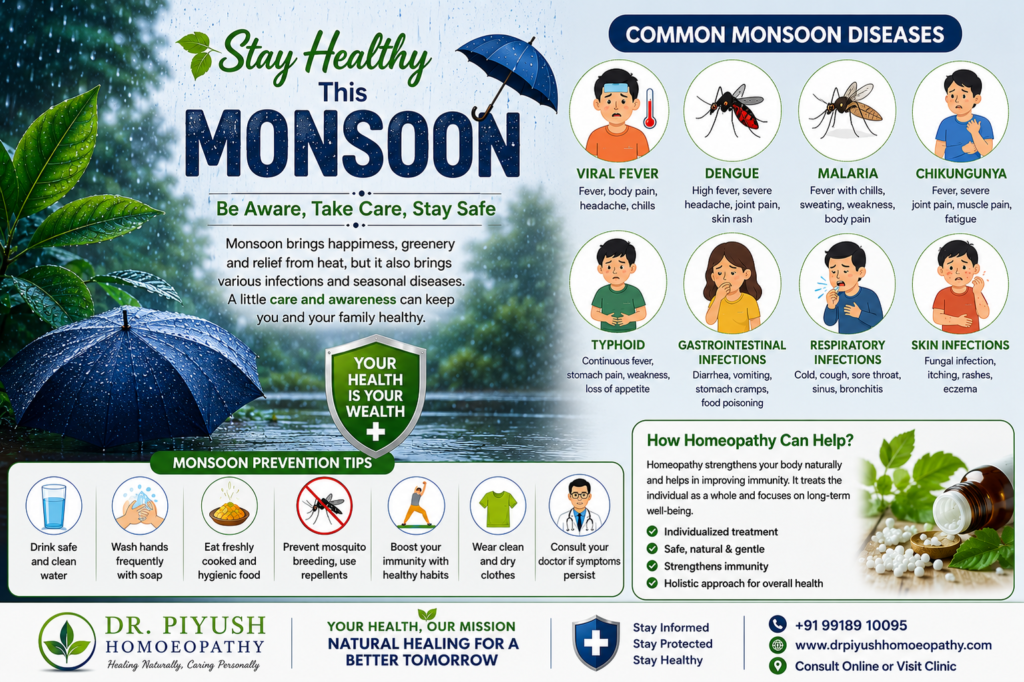
The monsoon season brings pleasant weather, greenery, and relief from the summer heat. However, it also increases the risk of many infections and seasonal diseases. Rainwater, stagnant water, high humidity, and changing temperatures create an ideal environment for bacteria, viruses, fungi, and mosquitoes to multiply rapidly.
During this season, illnesses such as viral fever, dengue, malaria, typhoid, chikungunya, food poisoning, skin infections, respiratory infections, and stomach disorders become very common. Taking the right precautions and seeking timely medical advice can help prevent serious complications.
At Dr. Piyush Homoeopathy, we believe that prevention is always better than cure. Homoeopathy focuses on strengthening the body’s natural defense system and providing individualized treatment according to each patient’s symptoms.
Why Do Diseases Increase During the Monsoon?
High humidity and waterlogging create ideal conditions for germs.
Common reasons include:
- Mosquito breeding in stagnant water
- Contaminated drinking water
- Spoiled food due to moisture
- Poor sanitation
- Sudden weather changes
- Weak immunity
- Increased fungal growth
These factors increase the chances of seasonal infections among children, adults, and elderly individuals.
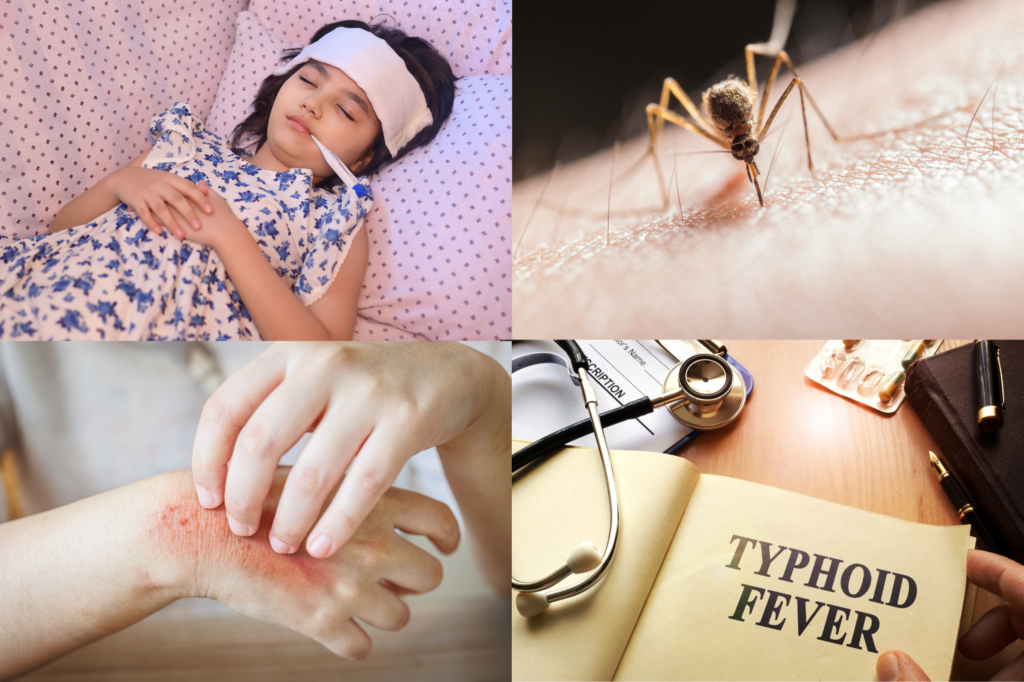
Common Monsoon Diseases You Should Know
1. Viral Fever
One of the most common illnesses during rainy season.
Symptoms
- High fever
- Body pain
- Weakness
- Chills
- Headache
- Sore throat
Prevention
- Drink clean water
- Wash hands regularly
- Avoid crowded places if possible
- Take enough rest
2. Dengue Fever
Dengue spreads through the bite of infected Aedes mosquitoes.
Symptoms
- High fever
- Severe headache
- Pain behind the eyes
- Joint pain
- Muscle pain
- Skin rash
- Low platelet count
Prevention
- Remove stagnant water
- Wear full-sleeved clothes
- Use mosquito repellents
- Sleep under mosquito nets
Important: Severe dengue requires immediate medical attention.
3. Malaria
Malaria is caused by the bite of infected Anopheles mosquitoes.
Symptoms
- High fever with chills
- Sweating
- Vomiting
- Weakness
- Body pain
Prevention
- Prevent mosquito breeding
- Keep surroundings clean
- Use mosquito protection
4. Chikungunya
This mosquito-borne illness often causes severe joint pain.
Symptoms
- Sudden fever
- Joint pain
- Muscle pain
- Skin rash
- Fatigue
Joint pain may continue even after the fever subsides.
5. Typhoid Fever
Typhoid spreads through contaminated food and water.
Symptoms
- Continuous fever
- Loss of appetite
- Stomach pain
- Constipation or diarrhea
- Weakness
Prevention
- Drink boiled or filtered water
- Eat freshly cooked food
- Maintain food hygiene
6. Gastrointestinal Infections
Monsoon increases digestive problems because bacteria multiply rapidly in food and water.
Common Problems
- Food poisoning
- Diarrhea
- Vomiting
- Stomach cramps
- Acidity
- Indigestion
Prevention
- Avoid street food
- Wash fruits and vegetables properly
- Eat freshly prepared meals
7. Respiratory Infections
Humidity can trigger respiratory illnesses.
Common Conditions
- Common cold
- Influenza
- Sinus infection
- Bronchitis
- Sore throat
People with asthma should take extra precautions during monsoon.
8. Skin Infections
Wet clothes and excessive sweating encourage fungal infections.
Common Skin Problems
- Ringworm
- Athlete’s foot
- Fungal infection
- Eczema flare-ups
- Itching
Prevention
- Keep skin dry
- Wear clean cotton clothes
- Avoid staying in wet clothes
Who Is More at Risk During Monsoon?
People who need extra care include:
- Children
- Elderly people
- Pregnant women
- Diabetic patients
- Patients with asthma
- Individuals with low immunity
- Patients suffering from chronic diseases

Monsoon Health Tips for Strong Immunity
Stay Healthy This Rainy Season
Follow these simple habits:
- Drink boiled or purified water
- Eat fresh home-cooked meals
- Wash hands frequently
- Avoid uncovered food
- Sleep for 7–8 hours
- Exercise regularly
- Keep surroundings clean
- Prevent mosquito breeding
- Wear clean and dry clothes
- Include seasonal fruits and vegetables
- Avoid excessive oily and junk food
- Consult a qualified doctor if symptoms persist
How Homoeopathy Can Support Your Health During Monsoon
Homoeopathy follows an individualized approach. Rather than treating only the disease name, it considers the patient’s overall physical, mental, and emotional condition.
At Dr. Piyush Homoeopathy, treatment is selected after a detailed case evaluation. Homoeopathic care may be considered as part of an overall healthcare plan for suitable patients. It should not replace emergency medical treatment for serious conditions such as severe dengue, dehydration, or heat-related emergencies.
Homoeopathy focuses on:
- Supporting the body’s natural healing response
- Individualized patient assessment
- Long-term constitutional care where appropriate
- Holistic management considering overall health
- Lifestyle and preventive guidance
Note: Homoeopathic medicines should always be taken under the guidance of a qualified homoeopathic physician. Never self-medicate for serious illnesses.

When Should You Visit a Doctor Immediately?
Seek urgent medical attention if you experience:
- Fever above 103°F (39.4°C)
- Difficulty breathing
- Severe dehydration
- Persistent vomiting
- Blood in stools
- Confusion or unconsciousness
- Continuous high fever for more than two days
- Severe abdominal pain
- Very low urine output
- Signs of severe dengue or malaria
Early diagnosis can prevent serious complications.
Why Choose Dr. Piyush Homoeopathy?
At Dr. Piyush Homoeopathy, our goal is to provide compassionate, personalized, and holistic care.
We offer:
- Detailed case evaluation
- Individualized homoeopathic treatment
- Lifestyle and dietary guidance
- Preventive health education
- Online Homoeopathic Consultation
- Offline Homoeopathic Consultation
- Family healthcare support
- Patient-centered approach
Our mission is to help patients achieve better health naturally through safe, evidence-informed homoeopathic practice alongside appropriate medical care.
Key Takeaways
- Monsoon increases the risk of infections due to humidity, contaminated water, and mosquito breeding.
- Preventive measures like hygiene, clean water, and mosquito control are essential.
- Early recognition of symptoms helps prevent serious complications.
- Homoeopathy offers individualized care that focuses on the person as a whole and should be guided by a qualified practitioner.
- A healthy lifestyle and timely medical consultation are the best ways to stay safe during the rainy season.
- Prevention, awareness, and prompt treatment can protect your family throughout the monsoon.