
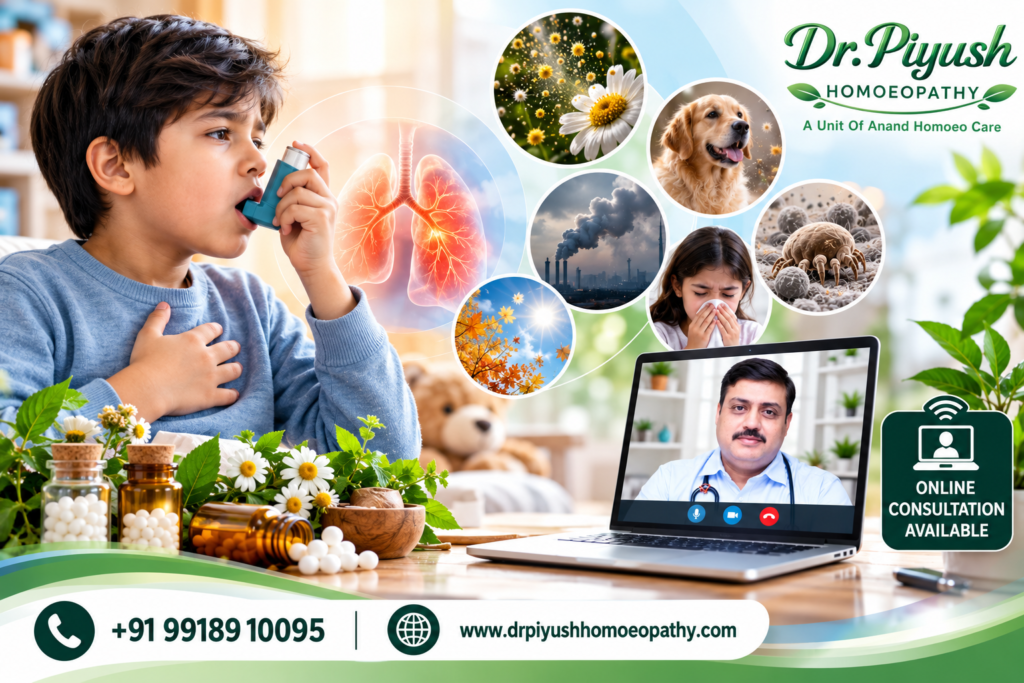
A child who coughs repeatedly at night, wheezes while playing or complains of chest tightness may have more than an ordinary cough or cold. Asthma in children is a chronic condition in which the airways become inflamed and narrow at times, making breathing difficult. Symptoms can vary from occasional to severe.
For parents, early recognition is important. Good asthma management involves identifying triggers, following the child’s prescribed treatment plan and knowing what to do when symptoms worsen. Homoeopathy is sometimes considered as a complementary approach, but there is currently no conclusive evidence that homoeopathy can treat or prevent asthma. It should never replace prescribed asthma medicines or an asthma action plan.
What Is Asthma in Children?
Childhood asthma is a long-term respiratory condition affecting the airways.
During an asthma episode, the airways can become:
- Inflamed
- Narrowed
- More sensitive to triggers
- Associated with increased mucus in some children
This can make it harder for air to move normally through the lungs.
The symptoms may come and go. Some children have symptoms only during certain situations, while others require regular treatment.
Common Symptoms of Childhood Asthma
Parents should learn to recognise the common signs.
1. Persistent or Recurrent Cough
Coughing may become more noticeable:
- At night
- Early in the morning
- During exercise
- After exposure to allergens
- During or after respiratory infections
2. Wheezing
A whistling sound while breathing can occur when the airways become narrowed.
3. Shortness of Breath
A child may feel unable to breathe comfortably, particularly during physical activity or an asthma flare-up.
4. Chest Tightness
Older children may describe a feeling of pressure or tightness in the chest.
5. Reduced Activity
Some children may stop playing or exercising because they become breathless or tired.
What Can Trigger Asthma in Children?
Asthma triggers are different for different children. Common triggers include:
- Dust mites
- Pollen
- Pet allergens
- Mould
- Tobacco smoke
- Air pollution
- Respiratory infections
- Cold or dry air
- Weather changes
- Strong fragrances or chemicals
- Exercise
- Emotional stress
The CDC recommends identifying individual triggers and taking steps to reduce exposure.
Asthma and Seasonal Weather Changes
Changes in weather can be relevant for some children with asthma.
Cold, dry air, high humidity, storms, pollen and changes in air quality may trigger symptoms in susceptible children.
This is particularly important during seasonal transitions.
Parents should observe whether their child’s symptoms repeatedly appear:
- During a particular season
- After playing outdoors
- During sudden weather changes
- After exposure to dust
- During periods of poor air quality
Keeping a simple symptom and trigger record can help during medical consultations.
Why Does Childhood Asthma Need Proper Management?
Uncontrolled asthma can interfere with a child’s everyday life.
It may affect:
Sleep
Night-time coughing or breathing problems can disturb sleep.
School
Poor sleep and recurring symptoms may affect concentration and attendance.
Physical Activity
A child may avoid sports or outdoor activities because of breathing difficulties.
Emotional Well-being
Repeated breathing problems can make a child worried or frustrated.
The goal of asthma management is to help children stay active while keeping symptoms under control.

How Is Asthma Diagnosed in Children?
Diagnosis depends on the child’s age, symptoms and medical history.
A healthcare professional may consider:
- Pattern of symptoms
- Family history of asthma or allergies
- Trigger exposure
- Physical examination
- Lung-function testing when appropriate
- Response to prescribed treatment
Not every cough or wheeze is asthma.
Other conditions can cause similar symptoms. Therefore, parents should avoid self-diagnosing a child.
Asthma Action Plan: An Important Part of Childhood Asthma Care
Children with asthma should have a clear plan developed with their healthcare professional.
A written Asthma Action Plan can explain:
- The child’s regular medicines
- How medicines should be used
- Early warning symptoms
- Known triggers
- What to do when symptoms worsen
- When emergency medical care is needed
The CDC recommends an individualised asthma action plan for people with asthma.
Parents should also make sure that relevant school staff or caregivers know about the child’s asthma plan.
How Can Parents Help Prevent Asthma Flare-Ups?
Asthma cannot always be completely prevented, but many attacks can be reduced or better controlled by avoiding known triggers and following the prescribed management plan.
Reduce Dust Exposure
- Wash bedding regularly.
- Use appropriate allergen-proof mattress and pillow covers when recommended.
- Clean dust regularly.
- Keep the child’s sleeping area as dust-free as practical.
Dust mites are a common asthma trigger.
Avoid Tobacco Smoke
Children with asthma should not be exposed to cigarette or other tobacco smoke.
Smoke can trigger asthma symptoms and attacks.
Control Indoor Mould
Keep damp areas dry and address water leaks promptly.
Mould exposure can worsen asthma in some children.
Monitor Air Quality
When outdoor air quality is poor or pollen is a known trigger, families can adjust outdoor activities according to the child’s asthma plan.
Reduce Strong Irritants
Perfumes, cleaning chemicals, smoke and strong fumes may trigger symptoms in some children.
Can Children With Asthma Exercise?
Yes. Children with asthma should generally be able to participate in physical activities when their condition is appropriately managed.
Parents should not automatically restrict exercise.
Instead:
- Follow the child’s asthma management plan.
- Discuss exercise-related symptoms with the healthcare professional.
- Learn whether the child needs any prescribed medicine before activity.
- Monitor symptoms during exercise.
A well-controlled child can often participate in normal childhood activities.
The Role of Homoeopathy in Childhood Asthma
Can Homoeopathy Treat Asthma?
This needs to be explained carefully.
Traditional homoeopathic treatment uses an individualised approach. A homoeopathic doctor may consider the child’s complete symptom pattern, general health, lifestyle and individual responses.
A homoeopathic consultation may discuss:
- Frequency of coughing
- Timing of symptoms
- Wheezing
- Possible triggers
- Sleep pattern
- Weather sensitivity
- Allergic symptoms
- Family history
- Previous health problems
This is commonly described as individualised homoeopathic care.
However, current evidence does not support using homoeopathy instead of proven asthma management. The National Center for Complementary and Integrative Health advises peop
le with asthma not to substitute complementary approaches for prescribed treatment.

Homoeopathy as Complementary Care
Families who are interested in complementary homoeopathic care should discuss this with the child’s healthcare provider.
A responsible approach means:
- Keeping the child’s asthma diagnosis clear.
- Continuing prescribed asthma medicines.
- Following the asthma action plan.
- Informing all healthcare professionals about complementary treatments.
- Monitoring symptoms regularly.
- Seeking medical care when symptoms worsen.
This approach helps avoid delays in effective asthma management.
For children, extra care is important because they can be more vulnerable to adverse effects from health products and because delaying proven treatment can be dangerous.
Can Homoeopathy Prevent Asthma Attacks?
There is currently no reliable evidence that homoeopathic medicines can prevent asthma attacks or eliminate a child’s tendency to develop asthma.
Therefore, parents should not depend on homoeopathic treatment as a preventive substitute for established asthma care.
Evidence-based prevention and control focus on:
- Identifying triggers
- Avoiding tobacco smoke
- Reducing allergen exposure
- Managing respiratory infections appropriately
- Using prescribed medicines correctly
- Following an Asthma Action Plan
- Attending regular medical reviews
These measures can help children achieve better asthma control.
Why Should Parents Never Stop an Inhaler Without Medical Advice?
This is particularly important.
If a child is prescribed an inhaler or other asthma medicine, parents should not stop or change the treatment independently.
The CDC specifically advises people with asthma not to stop medicines or change their asthma treatment plan without speaking to their healthcare provider.
A child appearing better does not necessarily mean that the underlying asthma is no longer present.
When Is Asthma an Emergency?
Asthma can sometimes become severe.
Seek urgent medical attention if a child has:
- Severe difficulty breathing
- Rapidly worsening breathing
- Severe wheezing
- Difficulty speaking because of breathlessness
- Blue or grey lips or face
- Extreme tiredness or confusion
- Symptoms that are not improving with the child’s prescribed reliever treatment
Follow the child’s written asthma action plan during worsening symptoms. If severe symptoms persist or emergency warning signs appear, seek emergency medical care.
A Holistic Approach to Childhood Asthma
A holistic healthcare approach should not mean replacing effective medical treatment.
Instead, it can mean looking at the child’s health from several angles:
Medical care + trigger control + healthy lifestyle + emotional support + regular monitoring
Parents can support their child by encouraging:
- Good sleep
- Regular physical activity
- Balanced nutrition
- Good hand hygiene
- Smoke-free surroundings
- Appropriate vaccination according to medical advice
- Open communication about breathing symptoms
What Parents Can Do Every Day
At Home
✔ Keep the environment smoke-free.
✔ Reduce dust and mould.
✔ Monitor known triggers.
✔ Follow prescribed medicines.
At School
✔ Inform teachers about the child’s asthma.
✔ Keep the asthma action plan accessible.
✔ Ensure prescribed emergency medicine is available as advised.
During Outdoor Activities
✔ Check air quality when relevant.
✔ Watch for exercise-related symptoms.
✔ Follow the child’s asthma action plan.
During an Asthma Flare-Up
✔ Stay calm.
✔ Follow the child’s prescribed asthma action plan.
✔ Use prescribed medicines as directed.
✔ Seek urgent medical care when indicated.
When Should Parents Consult a Doctor?
A medical consultation is recommended if a child:
- Has repeated coughing episodes.
- Frequently wheezes.
- Wakes at night because of coughing or breathing problems.
- Becomes breathless while playing.
- Frequently needs a reliever medicine.
- Misses school because of respiratory symptoms.
- Has repeated emergency visits.
- Has symptoms that are becoming more frequent.
Early evaluation can help identify the cause and create an appropriate management plan.
Conclusion
Asthma in children requires careful, ongoing management. Symptoms such as coughing, wheezing, chest tightness and breathlessness should never be dismissed as ordinary seasonal problems.
Parents can help by identifying triggers, maintaining a healthy home environment, following the child’s prescribed treatment and keeping an updated asthma action plan.
Homoeopathy may be considered by some families as a complementary healthcare approach. However, current evidence does not establish homoeopathy as an effective treatment or preventive therapy for asthma. It should not replace inhalers, prescribed medicines, medical monitoring or emergency care.
The priority is simple:
Recognise the symptoms. Know the triggers. Follow the asthma plan. Act early when breathing becomes difficult.
Key Takeaways
- Asthma in children is a chronic respiratory condition that can cause coughing, wheezing, chest tightness and breathing difficulty.
- Common triggers include dust mites, pollen, mould, smoke, pollution, respiratory infections, weather changes and exercise.
- Trigger avoidance, correct use of prescribed medicines and an individualised Asthma Action Plan are important parts of asthma control.
- Homoeopathy may be considered by some families as complementary care, but current evidence does not establish it as an effective treatment or prevention method for asthma.
- Parents should never stop or change prescribed asthma medicines without consulting the child’s healthcare professional.
- Severe breathing difficulty or rapidly worsening symptoms require urgent medical attention.