
Introduction
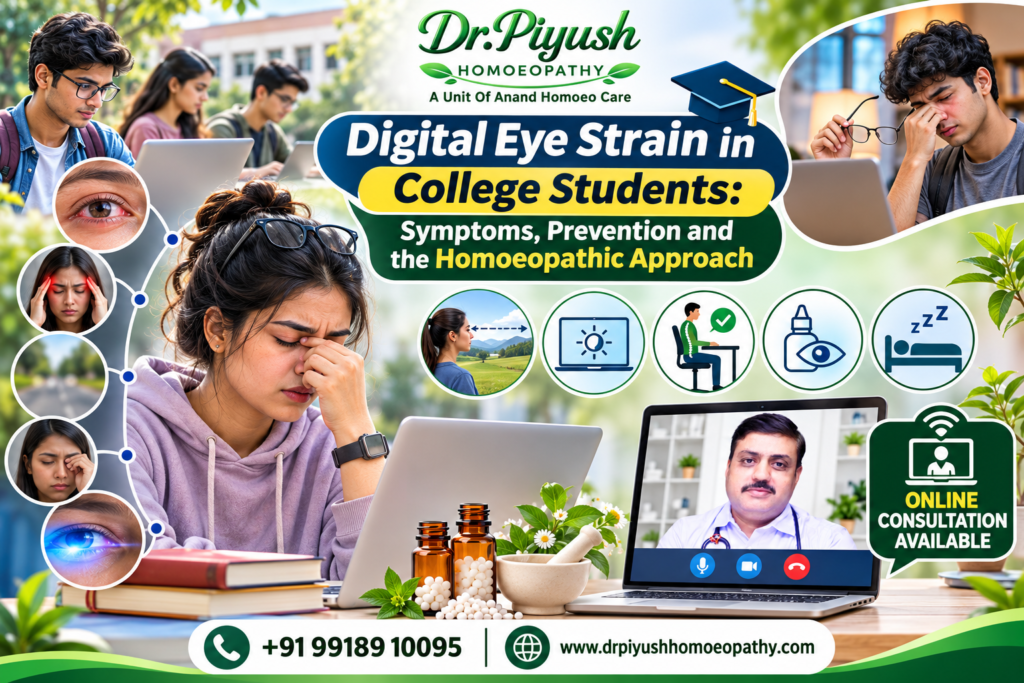
College students spend long hours using laptops, smartphones and tablets for online classes, assignments, research and entertainment. Although digital devices make learning easier, prolonged screen use can cause eye discomfort, headaches, blurred vision and neck pain. These symptoms are commonly known as Digital Eye Strain (DES) or Computer Vision Syndrome (CVS).
Digital eye strain is an important concern for students because it can affect visual comfort, concentration, sleep and academic productivity. Fortunately, simple changes in screen habits, workstation setup and eye care can help reduce symptoms.
This article explains the causes, symptoms and risk factors of digital eye strain, its impact on college students, practical prevention strategies and the traditional homoeopathic perspective. It also explains why evidence-based eye care remains essential.
1. What Is Digital Eye Strain Syndrome?
Digital Eye Strain Syndrome, also called Computer Vision Syndrome, refers to a group of eye and vision problems associated with prolonged use of digital screens. The eyes must continuously focus, adjust and coordinate when viewing digital content, particularly during long periods of close-up work.
Common symptoms include dry eyes, blurred vision, eye fatigue and headaches. Poor posture during screen use may also cause discomfort in the neck, shoulders and back.
Most symptoms can improve with rest and appropriate changes to screen habits. However, persistent symptoms may indicate an underlying vision problem or another eye condition that needs professional assessment.
Digital Eye Strain Among College Students
College students often use several digital devices throughout the day. Online lectures, digital textbooks, examinations, presentations and social media can increase the time spent looking at screens.
Research studies have reported a high frequency of digital eye strain symptoms among university students. However, prevalence varies according to the population studied, the amount of screen use and the methods used to measure symptoms.
Students who spend long periods studying without breaks may be more likely to experience discomfort, particularly when their workstation is poorly arranged or they have an uncorrected vision problem.
2. Causes and Risk Factors of Digital Eye Strain
Several factors can contribute to digital eye strain in college students.
2.1 Prolonged Screen Time
Looking at a screen for extended periods places sustained demands on the visual system. Long study sessions without breaks can increase discomfort and fatigue.
2.2 Reduced Blinking
People often blink less frequently or incompletely when concentrating on digital content. This can allow tears to evaporate more quickly, contributing to dryness, irritation and a gritty sensation.
2.3 Poor Lighting and Screen Glare
Bright reflections, unsuitable room lighting and excessive screen brightness may make text harder to view comfortably. Students may squint or adjust their posture to see the screen more clearly.
2.4 Incorrect Viewing Distance
Holding a smartphone too close or sitting too near a computer can increase visual demands. Very small text may also encourage students to lean forward or strain to focus.
2.5 Uncorrected Vision Problems
Refractive errors, focusing difficulties and problems with eye coordination can make screen use more uncomfortable. Students with persistent symptoms may need a comprehensive eye examination.
2.6 Poor Posture
Leaning forward, bending the neck or sitting without adequate back support can contribute to neck, shoulder and back discomfort.
2.7 Sleep and Lifestyle Habits
Late-night screen use can interfere with a healthy sleep routine. Poor sleep, heavy academic workloads and limited physical activity may contribute to fatigue and make discomfort harder to manage.
3. Common Symptoms of Digital Eye Strain
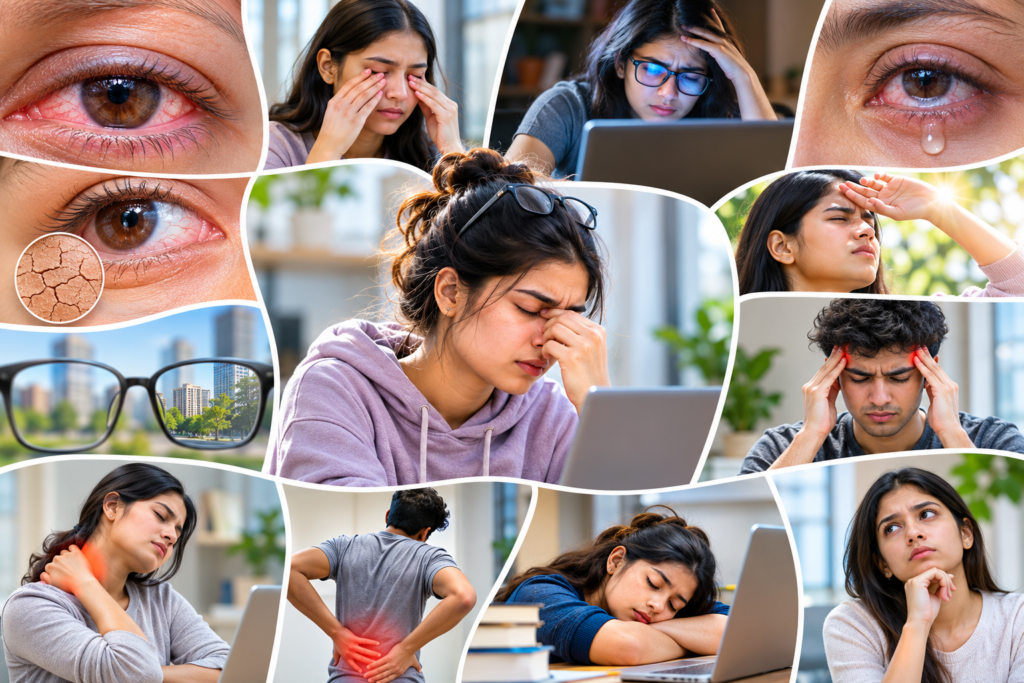
Symptoms vary from one person to another. They may affect the eyes, vision and muscles around the neck and shoulders.
Ocular Symptoms
- Dry or gritty eyes
- Burning, stinging or itching
- Red or watery eyes
- Eye fatigue or heaviness
- Blurred or fluctuating vision
- Difficulty focusing after prolonged reading
- Sensitivity to light
Non-Ocular Symptoms
- Headaches, particularly after extended screen use
- Neck and shoulder pain
- Back discomfort
- Difficulty concentrating
- General tiredness during long study sessions
These symptoms may improve after stopping screen use. However, persistent blurred vision, significant eye pain or worsening symptoms should not automatically be attributed to digital eye strain. Professional eye care can help identify the cause.
4. How Digital Eye Strain Affects College Students
4.1 Academic Performance
Eye fatigue, headaches and difficulty focusing can make it harder to read digital textbooks, attend online classes and complete assignments.
Students may need more frequent breaks or additional time to finish screen-based work. Managing symptoms can help make study sessions more comfortable.
4.2 Concentration and Emotional Well-Being
Persistent discomfort may contribute to frustration, irritability and stress. Students managing examinations and academic deadlines may find it especially difficult to balance screen breaks with their workload.
Regular rest periods, a comfortable study environment and appropriate eye care can support better daily functioning.
4.3 Sleep Quality
Using digital devices late at night can delay bedtime and interfere with sleep routines. Poor sleep may increase daytime tiredness and make it more difficult to concentrate.
Students can support their sleep by keeping a consistent schedule and setting aside screen-free time before bed.
4.4 Quality of Life
Digital eye strain may make reading, studying and recreational screen use less comfortable. Addressing the factors contributing to symptoms can help students manage their daily activities more comfortably.
5. Evidence-Based Management of Digital Eye Strain
The main approach to managing Computer Vision Syndrome involves improving screen habits, reducing visual demands, addressing dry eyes and correcting any underlying vision problems.
5.1 Follow the 20-20-20 Rule
The 20-20-20 rule for eye strain is a simple reminder to take regular visual breaks:
- Every 20 minutes, look away from the screen.
- Focus on an object approximately 20 feet away.
- Continue looking at it for at least 20 seconds.
This gives the eyes a brief break from continuous close-up focusing. Students can set reminders on their phones or computers to build the habit into their study routine.
5.2 Adjust Screen Distance and Height
A comfortable workstation can reduce unnecessary visual and muscular strain.
- Keep a computer monitor approximately an arm’s length away, adjusting the distance to suit the device and your vision.
- Position the screen slightly below eye level.
- Increase text size instead of moving the device closer.
- Adjust brightness and contrast to comfortable levels.
- Reduce reflections from windows, overhead lights and lamps.
5.3 Blink Regularly
Conscious, complete blinking can help maintain moisture on the eye’s surface.
During study breaks, relax your eyes and blink gently several times. Avoid rubbing irritated eyes, as this may worsen discomfort.
5.4 Take Regular Breaks
In addition to the 20-20-20 rule, take longer breaks during extended study sessions.
During a break, you can:
- Stand up and walk briefly.
- Stretch your neck and shoulders.
- Look at objects at different distances.
- Drink water.
- Complete a task that does not require a screen.
5.5 Consider Lubricating Eye Drops When Appropriate
Lubricating eye drops, often called artificial tears, may help relieve dryness in some people. A pharmacist, optometrist or doctor can advise which product is suitable, especially if symptoms are frequent or persistent.
Avoid using antibiotic, steroid or other medicated eye drops without appropriate medical advice.
5.6 Arrange an Eye Examination
An eye care professional can assess visual acuity, refractive errors, focusing and eye coordination. They can also check for dry eye or other conditions that may contribute to symptoms.
An eye examination is particularly important when symptoms recur, worsen or do not improve after changes to screen habits.
6. The Homoeopathic Perspective on Digital Eye Strain
Homoeopathy follows a traditional system of individualized assessment in which practitioners consider the patient’s reported symptoms and general health history.
In a homoeopathic consultation, a practitioner may ask about the nature of eye discomfort, when symptoms occur, associated headaches, sleep patterns, study habits and general well-being.
However, it is important to distinguish traditional practice from established scientific evidence. Reliable scientific evidence has not established homoeopathy as an effective treatment for digital eye strain, dry eyes or other screen-related vision problems. It should not replace an eye examination, appropriate lubricating drops or treatment for an underlying vision condition.
6.1 Individualized Assessment
Traditional homoeopathic practice emphasizes individualization. Two students reporting eye fatigue may describe different associated symptoms, such as dryness, headaches or difficulty concentrating.
Recording these symptoms can help a healthcare professional understand the student’s experience. However, individualized remedy selection has not been shown to provide a proven treatment for digital eye strain.
6.2 Traditional Homoeopathic Remedies Mentioned for Eyestrain
Homoeopathic literature traditionally associates several remedies with descriptions of eye discomfort. These historical indications should not be interpreted as evidence of effectiveness.
Examples include:
- Ruta graveolens: Traditionally associated with eye fatigue after prolonged reading or close-up work.
- Natrum muriaticum: Traditionally discussed in relation to certain patterns of eye discomfort and headaches.
- Argentum nitricum: Traditionally associated with symptom descriptions that may include nervousness and visual discomfort.
- Euphrasia officinalis: Traditionally discussed in relation to watery or irritated eyes.
- Gelsemium sempervirens: Traditionally associated with heaviness, fatigue and certain headache descriptions.
- Physostigma venenosum: Mentioned in traditional literature in relation to eye focusing and muscular symptoms.
These descriptions are provided for educational context only. They do not establish that these remedies improve digital eye strain. No remedy, potency or dosage is recommended here.
Physostigma venenosum deserves particular caution: the source plant contains potent alkaloids, including physostigmine. Plant preparations and products of uncertain composition can be dangerous. Do not prepare or use this substance yourself, and do not put homoeopathic products into the eyes.
6.3 Can Homoeopathy Prevent Digital Eye Strain?
There is no reliable evidence that homoeopathy prevents digital eye strain or protects the eyes from the effects of prolonged screen use.
The most practical prevention strategies are regular breaks, comfortable screen positioning, appropriate lighting, frequent blinking and suitable eye care. Students should not rely on homoeopathic remedies instead of these measures.
A responsible homoeopathic clinic should communicate the limits of the evidence, avoid promising a cure and encourage patients with persistent eye symptoms to consult an appropriate eye care professional.

7. Lifestyle Recommendations for Better Eye Comfort
Healthy study habits can complement appropriate eye care and help reduce some factors associated with digital eye strain.
7.1 Improve Screen Hygiene
- Keep screens clean and text easy to read.
- Reduce glare from windows and artificial lighting.
- Use a comfortable screen distance and height.
- Take regular breaks from close-up work.
- Alternate screen-based activities with suitable off-screen tasks.
7.2 Maintain a Healthy Sleep Routine
Try to keep a consistent bedtime and waking time. Reduce stimulating screen use before bed if it delays sleep or makes it difficult to relax.
Night mode or a blue-light filter may make a screen more comfortable for some users, but it should not be treated as a proven solution for digital eye strain.
7.3 Eat a Balanced Diet and Stay Hydrated
A balanced diet containing vegetables, fruits, whole grains, protein sources and healthy fats supports general health. Drink water regularly according to your needs.
No specific food or supplement should be presented as a guaranteed cure for digital eye strain.
7.4 Manage Stress and Study Workloads
Long study sessions can increase physical tension and fatigue. Consider dividing assignments into manageable blocks and taking short movement breaks.
Gentle stretching and relaxation activities may help reduce neck and shoulder discomfort associated with prolonged sitting.
7.5 Avoid Unnecessary Eye Strain
Do not ignore persistent symptoms or repeatedly increase screen brightness to compensate for unclear vision. If you are squinting, moving closer to the screen or experiencing frequent headaches, arrange an eye examination.
8. When Should Students Seek Medical Advice?
Students should consult an eye care professional if they experience:
- Repeated blurred vision or difficulty focusing.
- Dryness or irritation that continues despite basic self-care.
- Frequent headaches associated with reading or screen use.
- Symptoms that interfere with study or everyday activities.
- Increasing discomfort despite taking regular breaks.
Seek urgent medical assessment for sudden vision loss or a sudden change in vision, severe eye pain, a very red and painful eye, or eye symptoms accompanied by severe headache, nausea or other concerning symptoms.
Do not assume that every eye problem is caused by screen use.
9. Future Research on Homoeopathy and Digital Eye Strain
Further research would be needed to determine whether homoeopathy has any specific benefit for digital eye strain.
Well-designed clinical studies should compare treatment outcomes with appropriate control groups, use validated symptom questionnaires and clearly report adverse effects. Researchers should also distinguish improvements associated with changes in screen habits from any effect attributable to a particular treatment.
Until reliable evidence is available, homoeopathy should not be described as an established treatment for digital eye strain. Public health education should continue to prioritize proven eye care, ergonomic measures and timely professional assessment.
Conclusion
Digital eye strain is a common concern for college students who spend long hours using computers, smartphones and tablets. Symptoms such as dry eyes, headaches, blurred vision and neck discomfort can interfere with studying and everyday comfort.
The 20-20-20 rule, regular breaks, comfortable screen positioning, frequent blinking, appropriate lighting and eye examinations can help students manage screen-related symptoms. Persistent or worsening symptoms deserve professional assessment.
Homoeopathy emphasizes individualized consultation, and traditional literature describes several remedies in relation to eye discomfort. However, current evidence does not establish homoeopathy as an effective treatment or preventive method for digital eye strain.
A responsible approach combines clear health information, practical screen habits and appropriate eye care. For students, the best first step is to protect visual comfort through everyday habits and seek professional advice when symptoms persist.
Medical Disclaimer
This article is intended for general educational purposes only. It does not replace professional eye care, diagnosis or treatment. Consult a qualified eye care professional if you experience persistent or concerning symptoms. Do not delay necessary medical care or use unverified products in your eyes.
Key Takeaways
- Digital eye strain can cause dry eyes, blurred vision, headaches and neck or shoulder discomfort.
- Prolonged screen use, reduced blinking, glare, poor posture and uncorrected vision problems may contribute to symptoms.
- The 20-20-20 rule, regular breaks, suitable screen positioning and frequent blinking can help manage discomfort.
- Persistent symptoms should be assessed by an eye care professional.
- Students should prioritize practical eye care and avoid unverified remedies or products placed directly in the eyes.