
Introduction
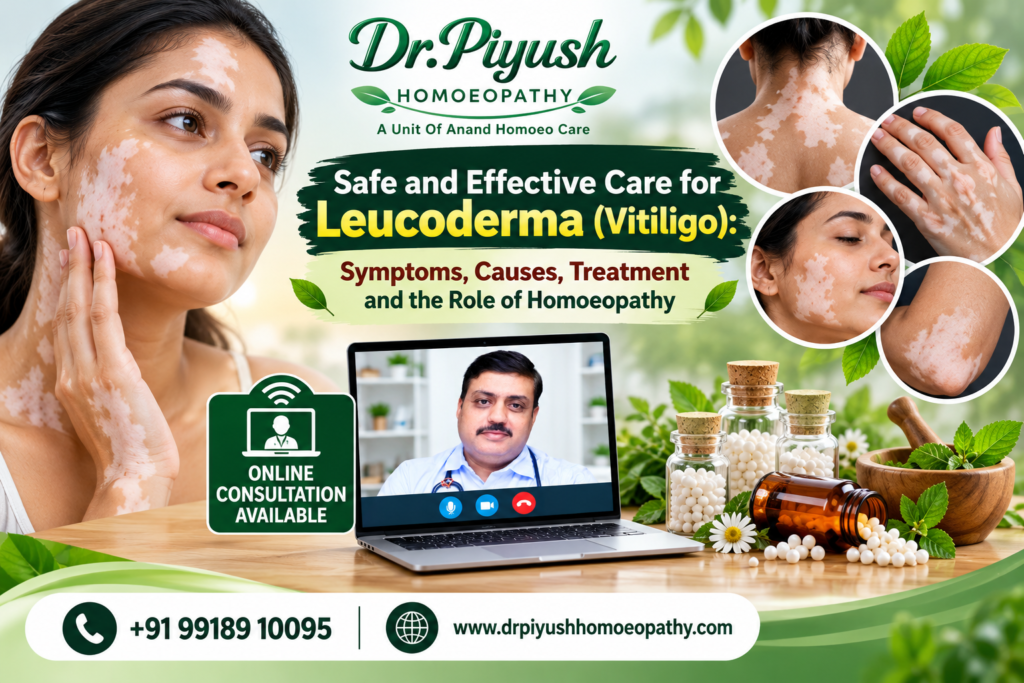
Leucoderma, commonly known as vitiligo, is a long-term skin condition that causes white or light-coloured patches to appear on the skin. It develops when melanocytes, the cells that produce the skin pigment melanin, are lost or stop working properly.
Vitiligo can affect people of any age, gender, or skin tone. It may appear on the face, hands, arms, feet, lips, or other parts of the body. Although it is not contagious, visible patches can sometimes affect a person’s confidence and emotional well-being.
Understanding the causes, symptoms, diagnosis, and available treatment options is an important step towards proper care. This article also explains the role of homoeopathy, the limits of current scientific evidence, and practical ways to protect skin affected by vitiligo.
What Is Leucoderma or Vitiligo?
Vitiligo is a condition in which the skin loses its natural colour in certain areas. Melanin gives skin its colour and helps protect it from ultraviolet radiation. When the pigment-producing cells are damaged or destroyed, white patches may develop.
Vitiligo is generally considered an autoimmune condition, especially in its most common form. This means the body’s immune system mistakenly attacks its own healthy pigment-producing cells.
Important facts about vitiligo:
- It is not contagious and cannot spread from one person to another through touch.
- It can affect people with all skin tones.
- It may remain limited to a few areas or spread to several parts of the body.
- Its course is unpredictable. Some patches remain stable, while others may expand or new patches may appear.
- It can affect emotional well-being as well as skin appearance.
If you notice new white patches, seek an assessment from a dermatologist rather than assuming that every pale patch is vitiligo.
Causes and Risk Factors of Vitiligo
The exact cause of vitiligo is not fully understood. Several factors may contribute to its development.
1. Autoimmune factors
In many cases, the immune system attacks melanocytes. This reduces the skin’s ability to produce melanin and leads to lighter patches.
2. Genetic factors
Vitiligo can occur in families. Having a relative with vitiligo may increase a person’s risk, but it does not mean that the condition will definitely develop.
3. Skin injury or trauma
Cuts, burns, severe sunburn, and repeated friction may trigger patches in some people. This is known as the Koebner phenomenon.
4. Other autoimmune conditions
Vitiligo can be associated with certain autoimmune conditions, including thyroid disorders. A healthcare professional may recommend tests when the person’s symptoms or medical history suggest that they are needed.
5. Environmental and other factors
Researchers continue to study the possible roles of environmental exposures, stress, and other biological factors. However, no single cause explains every case.
Important: Vitiligo should not automatically be attributed to nutritional deficiencies, digestive infections, emotional stress, or a specific food. Tests and treatment should be guided by a qualified healthcare professional.
Symptoms and Clinical Features of Vitiligo
The main symptom is the appearance of pale or white patches on the skin. The patches may vary in size, shape, and location.
Common features include:
- White, milky, or chalk-coloured patches.
- Patches with clear or irregular borders.
- Loss of colour around the eyes, mouth, fingers, wrists, elbows, knees, armpits, groin, or genital area.
- White or grey hair growing within an affected patch.
- Patches that remain stable or gradually increase in size.
- Occasionally, itching or discomfort, although vitiligo patches are often symptom-free.
Vitiligo can affect the skin and sometimes the mucous membranes, such as the inside of the mouth. If a patch changes rapidly, becomes painful, develops scaling, or looks unusual, seek medical assessment because another skin condition may be responsible.
Types of Vitiligo
Vitiligo is classified according to the distribution and extent of pigment loss.
1. Non-segmental vitiligo
This is the most common form. Patches often appear on both sides of the body, such as both hands or both knees. New patches may develop over time.
2. Segmental vitiligo
Patches usually affect one side or one area of the body. This type often begins at a younger age and may become stable after an initial period of change.
3. Focal vitiligo
Pigment loss is limited to a small area. It may not fit a wider distribution pattern, particularly in the early stages.
4. Acrofacial vitiligo
This form affects the fingers, toes, and areas around body openings, including the eyes and mouth.
5. Generalised vitiligo
Patches occur across multiple areas of the body and may be distributed fairly symmetrically.
6. Universal vitiligo
This uncommon form involves pigment loss across most of the skin.
A dermatologist can identify the likely type by examining the skin and reviewing the person’s medical history.
Active, Stable, and Improving Vitiligo
Vitiligo may change over time. Clinicians consider whether the patches are spreading, stable, or showing signs of repigmentation.
Active vitiligo
- New patches are appearing.
- Existing patches are expanding.
- The affected area is changing over a short period.
Stable vitiligo
- No new patches have appeared recently.
- Existing patches have not noticeably expanded.
- The distribution appears unchanged.
Improving or repigmenting vitiligo
- Some areas begin to regain pigment.
- Small areas of colour may appear within or around a patch.
- No new patches may be developing.
These descriptions help clinicians assess the condition and plan follow-up. Do not start or stop treatment based only on changes in appearance without professional advice.
How Is Vitiligo Diagnosed?
Correct diagnosis is important because several other skin conditions can cause pale patches.
A healthcare professional may use the following methods:
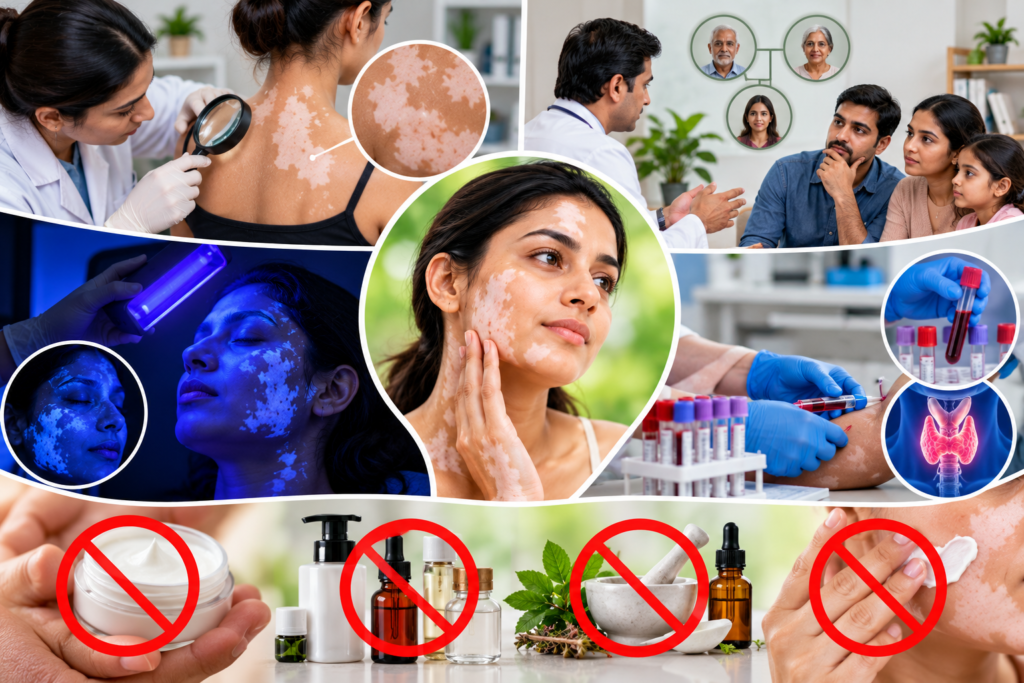
1. Skin examination
The clinician examines the colour, shape, distribution, and borders of the patches and asks when they first appeared.
2. Medical and family history
Questions may cover family history, other medical conditions, skin injuries, medicines, and the rate at which the patches are changing.
3. Wood’s lamp examination
A Wood’s lamp is a special light used in a dark room. It can make areas of pigment loss easier to identify.
4. Blood tests, when appropriate
A clinician may recommend tests for associated conditions, such as thyroid disease, depending on the person’s symptoms and history.
Avoid using skin-lightening products, strong chemicals, or unverified remedies before the diagnosis is confirmed.
Evidence-Based Treatment Options for Vitiligo
There is no single treatment that works for everyone. The choice depends on the type of vitiligo, the areas affected, whether the patches are spreading, age, overall health, and the person’s preferences.
A dermatologist may discuss the following options:
1. Prescription topical treatments
Certain prescribed creams or ointments may help restore some skin colour or control disease activity in selected patients. Their suitability and possible side effects should be discussed with a dermatologist.
2. Phototherapy
Controlled ultraviolet light treatment, including narrowband UVB, may be recommended for some people. It usually requires repeated sessions under medical supervision.
3. Other specialist treatments
Some patients may be suitable for other medicines, targeted light treatments, or surgical procedures. Availability and suitability vary, and treatment results cannot be guaranteed.
4. Skin camouflage
Camouflage makeup or skin-colouring products can reduce the contrast between affected and unaffected areas if a person wishes to use them. Choosing suitable products can help reduce irritation.
5. Emotional support
Vitiligo can affect confidence, relationships, and social participation. Support from family, counselling, or a patient support group may help people manage emotional distress.
Treatment may restore some pigment or help control changes, but results vary. A dermatologist can explain realistic expectations and the risks and benefits of each option.
The Role of Homoeopathy in Vitiligo
Some people explore homoeopathy as part of their wider approach to health. In homoeopathic practice, a practitioner may ask about a person’s general health, medical history, sleep, stress, and other symptoms before discussing an individualised consultation.
However, there is currently insufficient reliable scientific evidence that homoeopathy can treat vitiligo, restore lost skin pigment, stop the spread of patches, or prevent new patches from appearing. The concept of selecting a remedy based on the totality of symptoms is part of traditional homoeopathic practice, but it does not establish that the treatment is effective for vitiligo.
What should patients know?
- Do not delay assessment by a dermatologist while trying homoeopathy.
- Do not stop prescribed treatment or phototherapy without discussing it with the treating clinician.
- Do not rely on homoeopathic remedies as a proven method of preventing vitiligo.
- Tell your healthcare professionals about all products you use, including homoeopathic preparations, because some products may contain active ingredients or interact with medicines.
- Be cautious of promises of a permanent cure, guaranteed repigmentation, or rapid results.
A responsible homoeopathic consultation should provide clear information about the limits of available evidence and support informed decisions. It should not replace evidence-based dermatological care.
Homoeopathic remedies traditionally mentioned for skin complaints
Remedies such as Arsenicum album, Sulphur, Natrum muriaticum, Phosphorus, and Tuberculinum appear in traditional homoeopathic literature for various complaints. These historical associations do not prove that the remedies are effective for vitiligo.
No remedy or potency can be recommended as a scientifically established treatment for this condition. Patients should not use these remedies as a substitute for diagnosis or treatment advised by a dermatologist.
Can homoeopathy prevent vitiligo?
There is no reliable scientific evidence that homoeopathic treatment prevents vitiligo from developing, prevents new patches, or stops existing patches from spreading. At present, there is also no established way to prevent every case of vitiligo.
The most useful approach is early assessment, appropriate treatment, skin protection, and regular follow-up. If a person chooses to explore homoeopathy, this should be discussed transparently and should not interfere with medical care.

How Can You Care for Skin Affected by Vitiligo?
Although vitiligo cannot always be prevented, good skin care can reduce sun damage and help avoid some triggers that may worsen patches in susceptible people.
1. Protect your skin from the sun
Areas without pigment can burn more easily.
- Use a broad-spectrum, water-resistant sunscreen with SPF 30 or higher on exposed skin.
- Reapply sunscreen as directed, especially after swimming or sweating.
- Wear protective clothing and seek shade when the sun is strong.
- Avoid tanning beds and intentional tanning.
2. Prevent skin injuries
Cuts, burns, and repeated friction can trigger patches in some people.
- Use care when shaving or grooming.
- Avoid unnecessary skin irritation.
- Protect the skin during activities that may cause cuts or scrapes.
- Seek advice before using harsh chemical products on affected areas.
3. Follow a balanced diet
Eat a varied diet that includes vegetables, fruits, protein sources, and other nutritious foods. A balanced diet supports general health, but no particular diet has been proven to prevent or cure vitiligo.
Take vitamin or mineral supplements only when advised by a qualified healthcare professional, especially if a deficiency is suspected.
4. Manage stress and emotional well-being
Stress is not a proven single cause of vitiligo, but living with a visible skin condition can be emotionally challenging. Relaxation, regular physical activity, adequate sleep, and emotional support may help overall well-being.
5. Attend regular medical follow-ups
Monitor changes in the patches and discuss new symptoms with your dermatologist. Follow-up can help assess disease activity, review treatment response, and identify any associated health concerns.
Remember: These steps support skin health and may reduce avoidable irritation, but they do not guarantee that vitiligo will stop spreading.
When Should You Consult a Dermatologist?
Seek medical advice if:
- You notice new white or pale patches.
- Existing patches are spreading or changing.
- You are unsure whether the patches are vitiligo or another skin condition.
- You experience persistent itching, inflammation, pain, or other unusual symptoms.
- The condition is affecting your confidence, relationships, or emotional health.
- You want to discuss treatment options and their possible benefits and risks.
Early evaluation can help confirm the diagnosis and allow you to consider suitable treatment options.
Compassionate and Responsible Care at Dr. Piyush Homoeopathy
At Dr. Piyush Homoeopathy, patient education and respectful communication are important parts of healthcare. People concerned about white skin patches deserve clear information, individual attention, and guidance that respects their choices.
Anyone considering a homoeopathic consultation should be given an honest explanation of the available evidence. Vitiligo requires an accurate diagnosis, and a dermatologist should guide decisions about treatments intended to restore pigment or control disease activity.
For skin concerns, avoid self-medication and do not rely on claims of a guaranteed cure. An informed approach helps patients make decisions based on their needs, preferences, and the best available medical evidence.
Conclusion
Leucoderma, or vitiligo, is a long-term condition involving the loss of skin pigment. It is not contagious, and it can affect people of all ages and skin tones. Although its exact cause is not fully understood, autoimmune and genetic factors are thought to play important roles.
Evidence-based treatments may help some people restore skin colour or manage the condition. Sun protection, avoiding skin injury, regular medical follow-up, and emotional support are also important.
Homoeopathy has not been established as an effective treatment or prevention method for vitiligo. Anyone considering it should understand this limitation and should not delay or replace dermatological care. A compassionate, evidence-informed approach can help people manage the condition while protecting both skin health and confidence.
Key Takeaways
- Vitiligo causes loss of skin pigment and is not contagious.
- White patches should be assessed by a qualified healthcare professional to confirm the diagnosis.
- Dermatological treatments may help some people restore pigment or manage the condition.
- There is no reliable evidence that homoeopathy treats or prevents vitiligo.
- Sunscreen, protective clothing, and avoiding skin injuries help protect affected skin.
- Emotional support and regular medical follow-up are important parts of care.