
Bronchitis is a respiratory condition that causes inflammation of the airways in the lungs. It often leads to coughing, mucus production, chest discomfort, and breathing difficulties. It can develop after a respiratory infection or occur over a long period due to smoking and exposure to lung irritants.
Understanding the causes, symptoms, treatment options, and preventive steps can help you protect your respiratory health. This guide also explains the role of individualised homoeopathic consultation and why evidence-based medical care remains important.
What Is Bronchitis?
Bronchitis occurs when the bronchial tubes, which carry air to and from the lungs, become inflamed. The inflamed airways may produce extra mucus, leading to a persistent cough.
Bronchitis is commonly divided into two types:
- Acute bronchitis: Usually develops after a respiratory infection and often improves within two to three weeks, although the cough may last longer.
- Chronic bronchitis: A long-term condition commonly linked to smoking and repeated exposure to lung irritants. It is traditionally defined as a productive cough lasting at least three months in each of two consecutive years, after other causes have been considered.
Chronic bronchitis may occur as part of chronic obstructive pulmonary disease (COPD). It requires proper medical assessment and ongoing care.
Types of Bronchitis
1. Acute Bronchitis
Acute bronchitis often follows a viral respiratory infection, such as a cold or flu. The main symptom is a cough, with or without mucus.
Common features include:
- Persistent coughing
- Clear, white, yellow, or green mucus
- Mild chest discomfort
- Sore throat and tiredness
- Sometimes a mild fever
Most cases improve with time and supportive care. Antibiotics are not routinely needed because viruses cause most cases of acute bronchitis.
2. Chronic Bronchitis
Chronic bronchitis causes long-lasting inflammation and excess mucus in the airways. Smoking is a major risk factor. Air pollution, workplace dust, chemical fumes, and other irritants can also contribute.
Common symptoms include:
- A recurring cough with mucus
- Shortness of breath
- Wheezing
- Frequent respiratory infections
- Reduced ability to exercise or carry out daily activities
People with these symptoms should consult a qualified medical professional. Early assessment can help identify COPD or another underlying lung condition.
What Causes Bronchitis?
The causes depend on the type of bronchitis.
Causes of Acute Bronchitis
- Viral infections, including viruses that cause colds and flu
- Less commonly, bacterial infections
- Exposure to smoke, dust, and air pollution
Causes of Chronic Bronchitis
- Cigarette smoking and second-hand smoke
- Long-term exposure to dust, fumes, and chemicals
- Indoor and outdoor air pollution
- Repeated irritation of the airways
- Underlying respiratory conditions
Important: Yellow or green mucus alone does not prove that an infection is bacterial or that antibiotics are required.
Smoking and Bronchitis: Understanding the Connection
Smoking damages the natural cleaning system of the airways. Tiny hair-like structures called cilia help move mucus and trapped particles out of the respiratory tract. Tobacco smoke can impair this process and increase inflammation.
Over time, smoking may contribute to chronic bronchitis and COPD.
To protect your lungs:
- Stop smoking and avoid second-hand smoke.
- Keep indoor spaces well ventilated.
- Use appropriate protection when exposed to workplace dust or fumes.
- Seek professional help if you find it difficult to stop smoking.
Symptoms of Bronchitis
The symptoms can vary from person to person.
Common symptoms include:
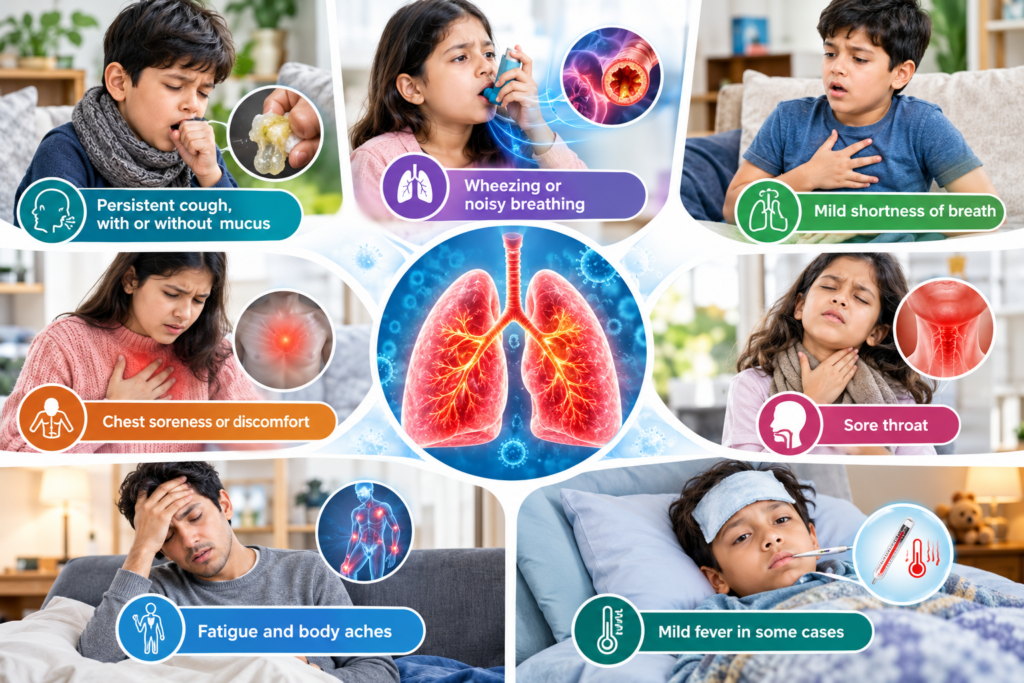
- Persistent cough, with or without mucus
- Wheezing or noisy breathing
- Mild shortness of breath
- Chest soreness or discomfort
- Sore throat
- Fatigue and body aches
- Mild fever in some cases
A cough that lasts for several weeks, keeps returning, or occurs with frequent breathing problems should be medically assessed.
When Should You Seek Medical Help?
Seek urgent medical attention if you experience:
- Severe or rapidly worsening breathlessness
- Blue or grey lips or skin
- Confusion, fainting, or unusual drowsiness
- Significant chest pain
- Coughing up blood, especially more than a small streak
Consult a doctor promptly for persistent fever, unexplained weight loss, repeated episodes of bronchitis, or a cough that does not improve. Infants, older adults, and people with chronic illnesses may need earlier assessment.
How Is Bronchitis Diagnosed?
A healthcare professional may assess bronchitis by:
- Asking about symptoms and how long they have lasted
- Reviewing smoking history and exposure to irritants
- Listening to the chest
- Checking oxygen levels when needed
- Ordering additional tests if pneumonia, asthma, COPD, or another condition is suspected
A chest X-ray is not required for every uncomplicated case. Further testing depends on the person’s symptoms and clinical findings.
Treatment and Home Care for Bronchitis
Treatment depends on the cause and severity of the condition.
Supportive Care for Acute Bronchitis
For uncomplicated acute bronchitis, helpful measures may include:
- Getting enough rest
- Drinking adequate fluids
- Avoiding smoking, dust, and strong fumes
- Using a clean humidifier if it provides comfort
- Asking a healthcare professional or pharmacist about suitable symptom relief
Do not give honey to children under one year of age. Avoid self-medicating with antibiotics. A clinician should decide whether antibiotics or other medicines are needed.
Treatment for Chronic Bronchitis
Chronic bronchitis requires assessment of the underlying cause. Treatment may include:
- Smoking cessation
- Prescribed inhalers or other medicines, when indicated
- Vaccinations recommended by a healthcare professional
- Pulmonary rehabilitation for suitable patients
- Reducing exposure to air pollution and workplace irritants
- Regular follow-up and a personalised medical care plan
Do not stop prescribed inhalers or other medicines in favour of alternative treatments.
The Role of Homoeopathy in Bronchitis
Trusted homoeopathic care begins with a detailed discussion of a person’s symptoms, medical history, lifestyle, and overall health. Homoeopathic practitioners may use an individualised approach when discussing a person’s health concerns.
However, it is important to understand the limits of the evidence. Current reliable scientific evidence does not establish that homoeopathic medicines effectively treat acute or chronic bronchitis. Homoeopathy has also not been shown to prevent bronchitis or stop it from recurring.
For this reason, homoeopathy should not replace medical diagnosis, prescribed inhalers, antibiotics when genuinely indicated, or urgent treatment for breathing difficulties.

How Can a Homoeopathic Consultation Help?
A consultation may provide an opportunity to:
- Discuss the pattern and duration of a cough.
- Review general health concerns and lifestyle factors.
- Understand when a medical examination or referral is necessary.
- Discuss supportive health habits alongside appropriate medical care.
- Arrange follow-up and monitor changes in symptoms.
These consultation and follow-up activities do not establish that homoeopathic medicines themselves are effective against bronchitis.
Homoeopathic Remedies Traditionally Described for Bronchitis
Traditional homoeopathic materia medica describes remedies such as Aconitum napellus, Antimonium tartaricum, Arsenicum album, Belladonna, Hepar sulphuris, and Kali bichromicum in relation to different cough and mucus patterns.
These descriptions reflect traditional homoeopathic practice, not proof of clinical effectiveness. Reliable evidence has not established these remedies as effective treatments for bronchitis. Products labelled homoeopathic may also contain active ingredients or pose quality and interaction risks.
Do not select a remedy based only on a symptom list, and do not delay medical assessment while trying alternative treatments.
Can Homoeopathy Prevent Bronchitis?
There is no reliable evidence that homoeopathic medicines prevent bronchitis, prevent respiratory infections, or provide protection against smoking-related lung damage.
The most useful preventive steps are based on established respiratory-health guidance.
Practical Ways to Reduce the Risk of Bronchitis
- Avoid smoking: Quitting tobacco is one of the most important steps for protecting lung health.
- Reduce exposure to irritants: Avoid second-hand smoke, heavy dust, and chemical fumes.
- Practise hand hygiene: Wash your hands regularly, especially during respiratory infection season.
- Stay up to date with recommended vaccinations: Ask your healthcare professional which vaccines are appropriate for your age and health.
- Improve indoor air quality: Reduce exposure to smoke and ensure suitable ventilation.
- Follow workplace safety measures: Use recommended protective equipment when exposed to dust or chemicals.
- Manage existing respiratory conditions: Follow your clinician’s treatment plan for asthma, COPD, or other lung problems.
- Seek early medical advice: Persistent cough, recurring chest infections, or breathing difficulties should not be ignored.
A professional homoeopathic consultation may be used to discuss general health concerns, but it should not be presented as a proven method of preventing bronchitis.
Bronchitis in Children and Older Adults
Children, older adults, and people with weakened immune systems or chronic medical conditions may be more vulnerable to complications from respiratory infections.
Parents and caregivers should seek medical advice if a child has persistent coughing, fever, poor feeding, unusual tiredness, or breathing difficulties. Fast breathing, ribs pulling inward during breathing, blue lips, or severe distress require urgent assessment.
Older adults and people with COPD, asthma, heart disease, or reduced immunity should also seek advice early if symptoms worsen.
Choose Informed and Responsible Respiratory Care
At Dr. Piyush Homoeopathy, health discussions should support informed decisions and appropriate medical care. A responsible approach includes listening to patients, understanding their concerns, and recognising when examination or referral is needed.
People exploring individualised homoeopathic consultation, homoeopathic health guidance, or online homoeopathic consultation should receive clear information about the limits of available evidence. Online consultation may help with selected discussions and follow-up, but it cannot replace emergency care or a physical examination when one is required.
For ongoing cough, breathing difficulty, or suspected chronic bronchitis, consult a qualified medical professional for an accurate diagnosis and evidence-based treatment.
Conclusion
Bronchitis can cause a troublesome cough and mucus production, while chronic bronchitis may lead to long-term breathing problems. Avoiding tobacco smoke, reducing exposure to irritants, maintaining good hygiene, and seeking timely medical advice can help protect respiratory health.
Although homoeopathy is used by some people as an individualised system of care, reliable scientific evidence does not establish that it treats or prevents bronchitis. The safest approach is to prioritise appropriate medical assessment and proven treatment, and never delay urgent care for breathing difficulties.
Key Takeaways
- Bronchitis causes inflammation of the airways and may lead to coughing, mucus production, and breathing discomfort.
- Acute bronchitis is commonly caused by viruses, while chronic bronchitis is strongly associated with smoking and long-term exposure to irritants.
- Avoiding smoking, practising good hygiene, reducing exposure to pollution, and following recommended vaccinations can help protect respiratory health.
- Homoeopathy has not been reliably shown to treat or prevent bronchitis. It should not replace evidence-based medical care.
- Persistent cough, coughing up blood, unexplained weight loss, or worsening breathing problems require medical assessment.
- Severe breathlessness, blue lips, or confusion require urgent medical attention.