
Introduction
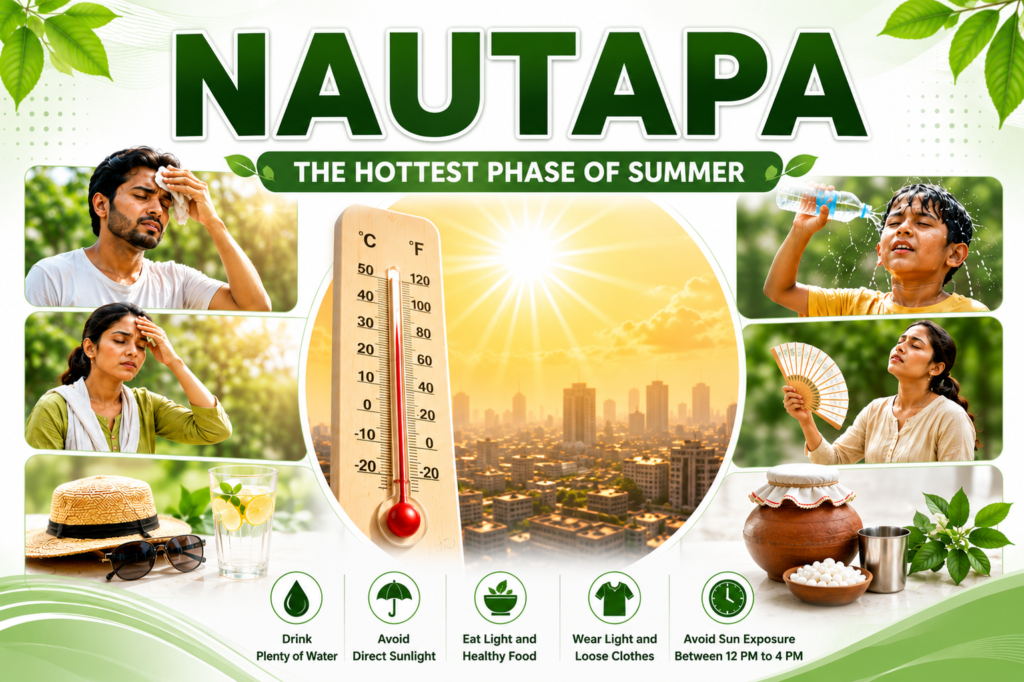
Every year during late May and early June, North India experiences an intense heat period called Nautapa. As temperatures rise sharply, people often search online to understand why the weather suddenly feels unbearable. Nautapa is not just a seasonal heatwave; it is deeply connected with traditional Indian astronomy and climate patterns.
For healthcare professionals, wellness experts, and readers interested in natural health, understanding Nautapa is important because extreme heat can affect digestion, hydration, immunity, and overall well-being. Through awareness, proper diet, hydration, and preventive care, people can stay healthy during this challenging summer phase.
This article explains the meaning of Nautapa, its scientific and traditional significance, common health risks, and practical prevention tips from a holistic and wellness-based perspective.
What is Nautapa?
Nautapa literally means “Nine Burning Days.” It refers to the nine hottest days of the year when the Sun enters the Rohini Nakshatra according to Hindu astronomy.
In 2026, Nautapa is observed from May 25 to June 2.
During this period:
- Temperatures rise sharply across North India
- Hot winds become stronger
- Humidity drops
- Heatwave conditions become more common
This seasonal event is widely discussed because of its direct effect on health, lifestyle, and daily routines.
The Astrological Significance of Nautapa
According to traditional Indian astrology:
- Nautapa begins when the Sun enters Rohini Nakshatra
- Rohini is considered one of the brightest and most influential constellations
- The Sun’s position during this time is believed to intensify heat on Earth
In Indian tradition, Nautapa is associated with:
- Increased body heat
- Digestive imbalance
- Fatigue and dehydration
- Greater need for cooling foods and lifestyle habits
Many families still follow seasonal wellness practices during Nautapa to protect health naturally.
Scientific Explanation Behind Nautapa
Science also supports the intense heat experienced during Nautapa.

Why Does the Temperature Rise So Much?
During late May and early June:
- The Sun moves almost directly overhead near the Tropic of Cancer
- Solar rays hit the Earth more directly
- The ground absorbs maximum heat
- Dry air and low humidity increase heat intensity
These conditions create:
- Heatwaves
- Dry winds
- Rapid dehydration
- Increased risk of heat-related illnesses
This is why Nautapa is often considered the peak summer phase in many parts of India.
Why is Nautapa Trending Online?
Nautapa trends every year because people look for explanations behind the sudden extreme heat.
Social media discussions increase during this time because:
- Temperatures become unusually high
- Heatwaves affect daily life
- Traditional knowledge becomes relevant again
- People search for health tips and summer remedies
The idea that this heat has a name, cultural significance, and a fixed duration gives people a sense of understanding and preparation.
Common Health Problems During Nautapa
Extreme summer heat can affect the body in many ways.
Heat Exhaustion
Symptoms include:
- Excessive sweating
- Weakness
- Dizziness
- Headache
- Muscle cramps
Heat Stroke
This is a medical emergency and may cause:
- Very high body temperature
- Confusion
- Fainting
- Rapid heartbeat
Dehydration
Common signs include:
- Dry mouth
- Fatigue
- Dark urine
- Increased thirst
Digestive Issues
Heavy foods and poor hydration may lead to:
- Acidity
- Bloating
- Indigestion
- Loss of appetite
Skin Problems
Summer heat may trigger:
- Sunburn
- Heat rashes
- Skin irritation
- Excessive sweating
How to Stay Safe During Nautapa
Stay Hydrated
Hydration is the most important protection during Nautapa.
Drink:
- Water
- Coconut water
- Buttermilk
- Lemon water
- Sattu sharbat
- Bael juice
- Fennel water
These drinks help maintain electrolytes and cool the body naturally.
Eat Cooling and Light Foods
Choose foods that are easy to digest.
Recommended foods:
- Watermelon
- Muskmelon
- Cucumber
- Pomegranate
- Moong dal
- Khichdi
- Curd rice
- Steamed vegetables
Avoid:
- Fried foods
- Oily meals
- Excessive spices
- Sugary drinks
- Processed foods
Wear Comfortable Clothing
Use:
- Loose cotton clothes
- Light-colored outfits
- Breathable fabrics
These help regulate body temperature naturally.
Avoid Direct Sun Exposure
Try to:
- Stay indoors during peak heat hours
- Avoid outdoor travel between 11 AM and 4 PM
- Use umbrellas or caps when outdoors
Get Proper Sleep and Rest
Lack of sleep can worsen:
- Heat fatigue
- Stress
- Weakness
Adequate rest helps the body recover from heat stress.

Holistic and Homoeopathic Wellness During Summer
A holistic health approach focuses on maintaining balance in the body during extreme seasonal changes.
Many people explore homoeopathic wellness care and natural seasonal health practices to support:
- Energy levels
- Digestion
- Stress management
- Summer immunity
- Overall well-being
A qualified homoeopathic doctor may recommend individualized care based on the person’s symptoms and constitution.
Summer Lifestyle Tips for Better Health
Daily Wellness Habits
- Drink water regularly
- Avoid excessive caffeine
- Eat fresh seasonal fruits
- Practice light exercise
- Stay in cool and ventilated spaces
- Reduce stress
- Avoid overheating
These small habits can significantly improve comfort and health during Nautapa.
Importance of Preventive Healthcare During Summer
Preventive healthcare becomes especially important during intense summer seasons.
Early care and awareness help prevent:
- Heatstroke
- Severe dehydration
- Fatigue
- Digestive disorders
- Seasonal infections
Healthcare professionals and wellness organizations play a major role in spreading awareness during summer months.
Conclusion
Nautapa is more than just a period of extreme heat. It is a seasonal phase recognized in both traditional Indian wisdom and modern climate science. The intense temperatures during these nine days can affect physical health, digestion, hydration, and overall well-being.
By following proper summer health practices such as staying hydrated, eating light foods, avoiding excessive sun exposure, and maintaining a balanced lifestyle, people can safely manage the challenges of Nautapa.
A holistic healthcare approach, including preventive wellness practices and individualized care, can support better health and comfort during this intense summer season.
Key Takeaways
- Nautapa refers to the nine hottest days of summer observed from May 25 to June 2.
- Extreme heat during Nautapa can cause dehydration, heatstroke, fatigue, and digestive issues.
- Staying hydrated and eating cooling foods are essential during this period.
- Avoid direct sunlight and wear loose cotton clothes to reduce heat stress.
- Preventive healthcare and holistic wellness practices can support better summer health.
- Proper rest, balanced nutrition, and hydration help maintain body balance during intense heat.