
Introduction
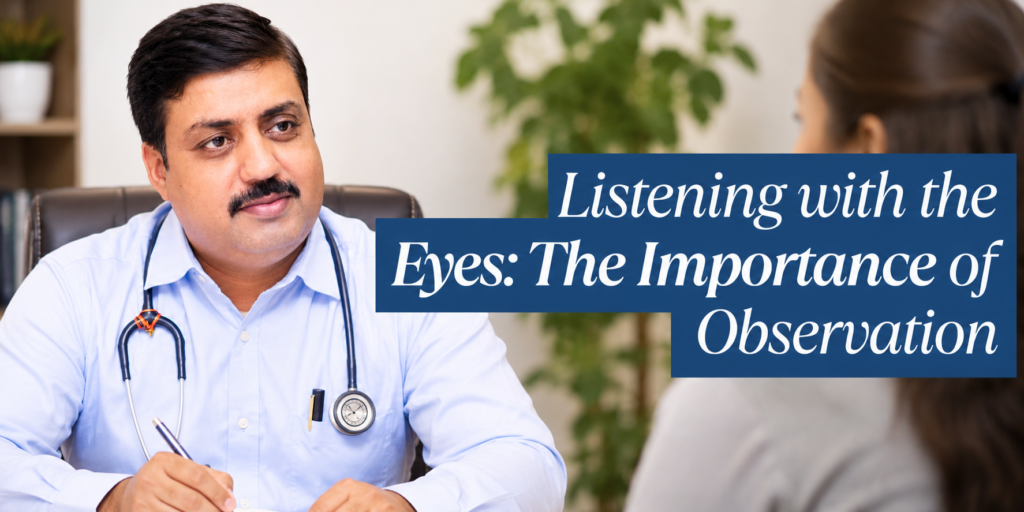
In homoeopathy, successful treatment depends on understanding the patient as a whole person, not just the disease. While patients share their symptoms through words, many important clues are communicated silently through facial expressions, body language, posture, gestures, and behavior.
This is where observation becomes one of the most valuable tools in homoeopathic practice. The ability to “listen with the eyes” helps a homoeopathic physician uncover deeper aspects of a patient’s health, emotions, and personality. Observation supports accurate remedy selection, confirms clinical findings, and helps monitor the healing process.
As a Homoeopathic Trust committed to holistic healthcare, individualized treatment, and natural healing, understanding the art of observation remains central to effective homoeopathic practice.
The Importance of Observation in Homoeopathy
What is Observation in Homoeopathic Case Taking?
Observation is the careful study of a patient’s appearance, behavior, movements, emotions, and reactions during consultation.
A skilled homoeopath pays attention to:
- Facial expressions
- Eye contact
- Speech patterns
- Posture and gait
- Personal hygiene
- Emotional reactions
- Hand gestures
- Interaction with family members
These observations often reveal valuable information that patients may not express verbally.
For every homoeopathic consultation, observation serves as a bridge between symptoms and the patient’s deeper constitutional state.
Why Observation Matters in Homoeopathic Practice
1. Reveals Hidden Symptoms
Many patients cannot fully describe their feelings or symptoms.
This is especially true for:
- Children
- Elderly patients
- Patients with communication difficulties
- Emotionally reserved individuals
Observation helps uncover:
- Anxiety
- Fear
- Restlessness
- Irritability
- Sadness
- Emotional suppression
These hidden clues are often crucial in selecting the correct homoeopathic remedy.
2. Supports Individualized Treatment
One of the foundations of classical homoeopathy is treating the individual rather than the disease.
Two patients with the same diagnosis may require completely different remedies because of differences in:
- Personality
- Emotional state
- Reactions to illness
- Behavioral patterns
Observation helps physicians provide truly individualized homoeopathic treatment, which is one of the core principles of holistic medicine.
3. Helps Differentiate Remedies
Many remedies share similar physical symptoms.
Observation provides important distinctions.
Examples:
Sulphur
- Untidy appearance
- Careless dressing
- Philosophical discussions
- Poor hygiene
Arsenicum Album
- Extremely neat and organized
- Anxiety about health
- Restlessness
- Perfectionist tendencies
Pulsatilla
- Gentle and emotional
- Tearful during consultation
- Desires comfort and support
Nux Vomica
- Impatient
- Competitive
- Easily irritated
- Precise in communication
These observational cues help physicians identify the most suitable constitutional remedy.

Areas Every Homoeopath Should Observe
Physical Appearance
The patient’s overall appearance can provide insight into:
- Vitality
- Energy levels
- Nutritional status
- Emotional well-being
Observe:
- Skin color
- Body build
- Clothing style
- Personal grooming
Facial Expressions
The face often reflects the patient’s inner emotional state.
Watch for:
- Anxiety
- Sadness
- Fear
- Anger
- Excitement
- Suspicion
Facial expressions often reveal emotions that words fail to express.
Eye Contact
Eye behavior may indicate:
- Confidence
- Shyness
- Fear
- Distrust
- Emotional distress
A patient who avoids eye contact may require a different approach than one who maintains intense eye contact.
Speech and Voice
Important observations include:
- Speed of speech
- Tone of voice
- Volume
- Clarity
- Emotional expression
For example:
- Slow and hesitant speech may suggest low confidence.
- Rapid and excited speech may indicate anxiety or nervousness.
Posture and Body Language
Body language often reveals physical and emotional states.
Observe:
- Restlessness
- Slouching
- Stiffness
- Fidgeting
- Defensive posture
These clues support the process of homoeopathic diagnosis and remedy selection.
Observation Helps Prevent Clinical Errors
Recognizing Misinformation
Patients may:
- Forget important symptoms
- Underestimate complaints
- Hide emotional distress
- Exaggerate symptoms unintentionally
Observation provides objective information that balances subjective reporting.
This improves the accuracy of homoeopathic care and enhances patient outcomes.
Observation in Monitoring Healing
Tracking Progress After Treatment
Observation remains important even after the remedy is prescribed.
A homoeopath can assess improvement by observing:
- Improved facial expressions
- Better posture
- Increased confidence
- Enhanced energy levels
- Positive emotional changes
These changes often appear before the patient reports significant symptom improvement.
This makes observation a valuable tool in evidence-based homoeopathy and long-term patient management.
Modern Perspectives on Observation
Contemporary homoeopathic practitioners emphasize observing:
- Repeated gestures
- Symbolic body movements
- Emotional reactions
- Unconscious behaviors
These subtle observations help uncover deeper patterns that guide remedy selection and strengthen natural healing.
Observation allows practitioners to understand not only what patients say but also how they experience their suffering.
How Homoeopaths Can Improve Observation Skills
Observation is a skill that develops with practice.
Useful strategies include:
- Practicing active listening
- Allowing patients to speak freely
- Avoiding interruptions
- Remaining unbiased
- Studying patient behavior before consultation begins
- Learning from experienced practitioners
- Reviewing case notes carefully
- Maintaining observation journals
These habits help build stronger clinical judgment and more accurate prescribing.
Observation and Holistic Healing
At a trusted homoeopathic clinic, observation goes beyond diagnosis.
It helps practitioners understand:
- Physical symptoms
- Emotional health
- Mental well-being
- Lifestyle influences
- Constitutional tendencies
This comprehensive understanding supports the principles of integrative medicine, patient-centered care, and holistic treatment.
By observing carefully, homoeopaths can provide more personalized and effective healthcare solutions.

Conclusion
Observation is one of the most powerful yet often overlooked tools in homoeopathic practice. It allows practitioners to discover important clues that may never be spoken aloud. Through facial expressions, posture, behavior, and emotional responses, patients reveal valuable information about their health and individuality.
For every homoeopathic doctor, learning to “listen with the eyes” strengthens case taking, improves remedy selection, and supports the journey toward lasting wellness. Observation remains an essential part of classical homoeopathy, helping practitioners deliver compassionate, individualized, and truly holistic care.
Key Takeaways
- Observation is a vital part of effective homoeopathic case taking.
- Non-verbal cues often reveal symptoms that patients do not express verbally.
- Observation supports individualized remedy selection.
- It helps differentiate between similar remedies.
- Continuous observation assists in tracking healing and treatment progress.
- Strong observation skills improve the quality of holistic and patient-centered care.