
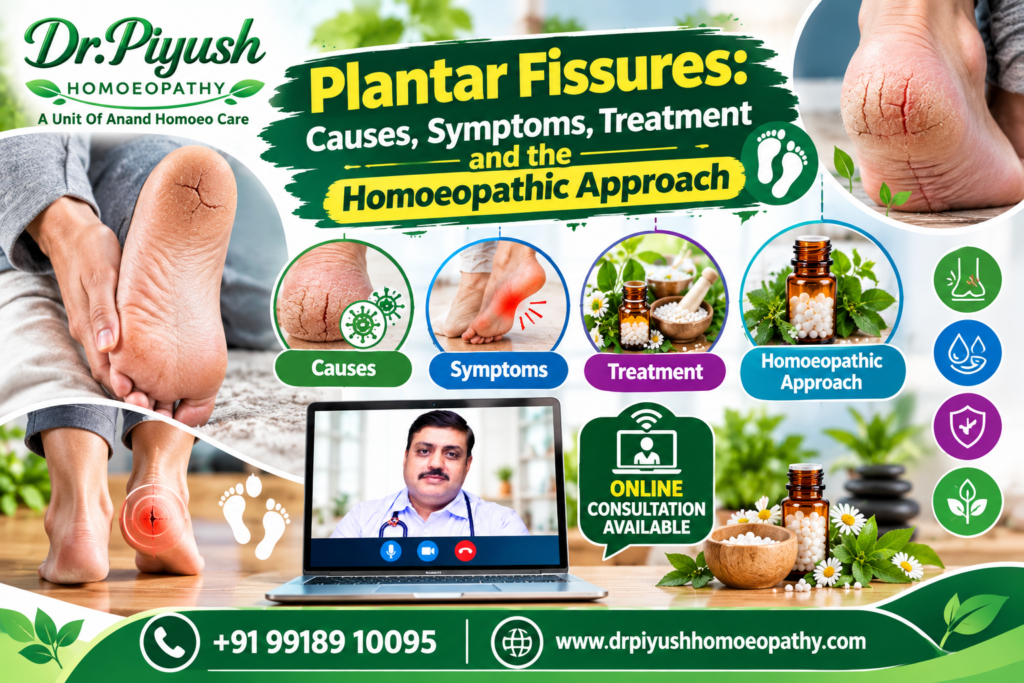
Cracked heels are more than just a cosmetic concern. When the skin on the heels becomes excessively dry, thick and hard, it may develop painful cracks known as plantar fissures. These cracks can make walking uncomfortable and, in severe cases, may lead to bleeding or infection.
Understanding the causes and choosing the right foot-care routine can help protect your skin and prevent the condition from worsening. This article explains the symptoms, common causes, treatment options and the traditional homoeopathic perspective on plantar fissures.
What Are Plantar Fissures?
Plantar fissures are cracks or splits that develop in the skin on the soles of the feet, particularly around the heels. They commonly occur when the skin becomes dry, thick and less flexible.
The skin around the heel is naturally exposed to pressure while standing and walking. When it loses moisture and elasticity, it may split under pressure.
Mild fissures may cause roughness and discomfort, while deeper cracks can become painful and may bleed.
Common Symptoms of Plantar Fissures
The symptoms can vary depending on the severity of the condition.
Common signs include:
- Dry, rough and thickened skin around the heels.
- Visible cracks or splits in the skin.
- Pain or discomfort while standing and walking.
- Redness or irritation around the affected area.
- Bleeding from deep cracks.
- Peeling or hardened skin around the heel.
Deep or persistent cracks require medical assessment, particularly if there are signs of infection.
What Causes Plantar Fissures?
Several factors can contribute to the development of cracked heels.
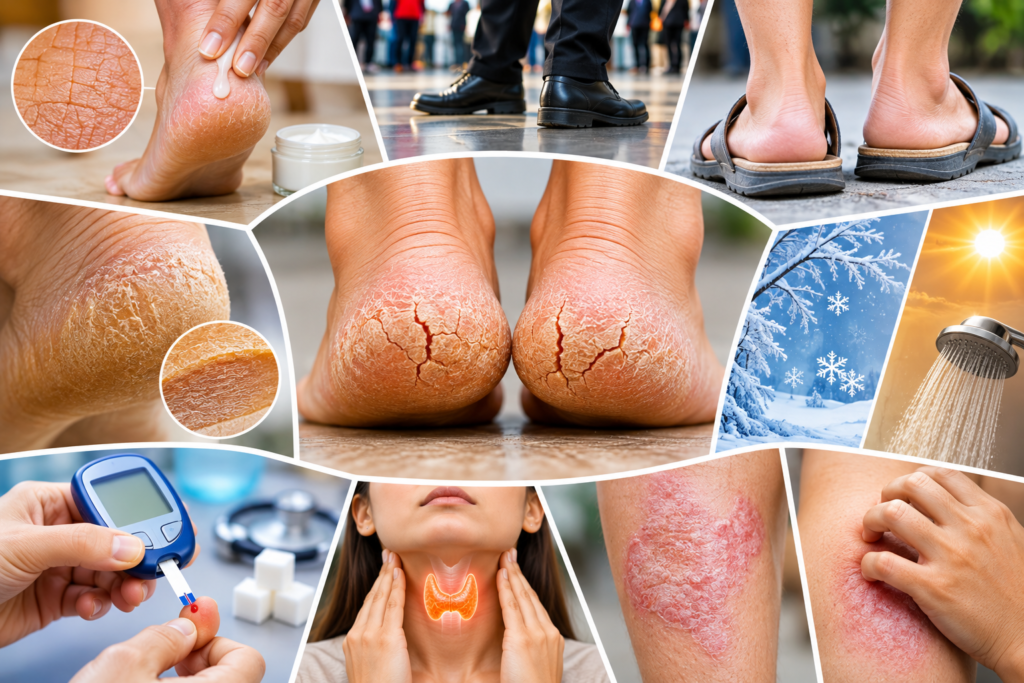
1. Excessively Dry Skin
Loss of moisture makes the skin less flexible and more likely to crack under pressure.
2. Prolonged Standing
Standing for long hours, especially on hard surfaces, can increase pressure on the heels.
3. Open or Unsupportive Footwear
Open-back sandals and poorly fitting footwear may allow the heel’s natural fat pad to spread sideways, increasing pressure on the skin.
4. Thickened Skin
The buildup of hard, dry skin around the heel can increase the risk of fissures.
5. Environmental Factors
Cold weather, dry air and frequent exposure to hot water or harsh soaps may worsen skin dryness.
6. Underlying Health Conditions
Certain conditions, including diabetes, eczema, psoriasis and thyroid disorders, may contribute to dry or cracked skin.
How Are Plantar Fissures Treated?
Treatment depends on the depth of the cracks and the underlying cause. The primary goals are to restore moisture, reduce pressure and protect the damaged skin.
1. Moisturise Regularly
Apply a thick moisturising cream, preferably one containing ingredients such as urea, to help soften rough and dry skin. Petroleum jelly can also help lock in moisture.
2. Choose Comfortable Footwear
Wear well-fitting shoes with supportive soles and closed backs to reduce pressure on the heels.
3. Avoid Harsh Scrubbing
Avoid cutting or aggressively removing hardened skin. Gentle care is safer, particularly when cracks are present.
4. Protect Deep Cracks
Deep or painful fissures may require professional treatment, protective dressings or other medical care.
5. Address Underlying Conditions
If cracked heels are associated with diabetes, eczema, psoriasis or another medical condition, treating the underlying problem is important.
The Traditional Homoeopathic Perspective on Plantar Fissures
Homoeopathy traditionally considers individual symptoms, general health and the patient’s overall condition when selecting a treatment approach.
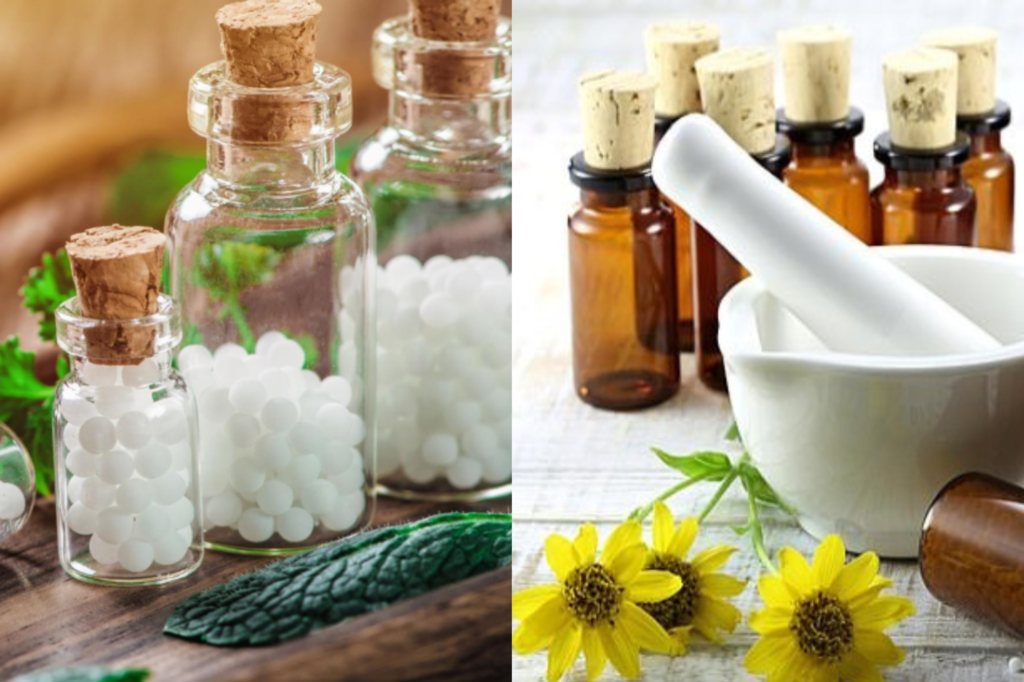
Some remedies are mentioned in traditional homoeopathic literature in connection with dry, rough or cracked skin. These include:
- Graphites: Traditionally associated with dry, rough and cracked skin.
- Silicea: Traditionally discussed in relation to certain chronic skin complaints.
- Calendula: Traditionally used in homoeopathic practice for skin-related complaints.
- Sulphur: Traditionally associated with itching, dryness and skin irritation.
- Urtica urens: Traditionally mentioned in relation to certain skin symptoms.
- Arnica montana: Traditionally associated with soreness and bruising.
These are traditional descriptions, not proof that the remedies can heal plantar fissures. There is currently no reliable scientific evidence establishing homoeopathy as an effective treatment for cracked heels.
Homoeopathic treatment should not replace evidence-based foot care or medical assessment. A qualified healthcare professional can help identify the cause and recommend appropriate treatment.
Home Care Tips to Prevent Cracked Heels
A consistent foot-care routine can help maintain healthy skin and reduce the risk of recurring fissures.
- Apply moisturiser to your heels every day.
- Use a gentle cleanser and avoid excessively hot water.
- Wear comfortable, supportive footwear.
- Avoid walking barefoot on rough surfaces.
- Do not cut or peel hardened skin yourself.
- Keep your feet clean and dry.
- Seek professional advice if cracks persist or become painful.
When Should You Consult a Doctor?
Do not ignore deep, painful or recurring heel cracks.
Consult a healthcare professional if you experience:
- Bleeding or deep cracks.
- Increasing redness, swelling or warmth.
- Pus or other signs of infection.
- Severe pain while walking.
- Cracks that do not improve with regular care.
People with diabetes, poor circulation or reduced sensation in their feet should seek medical advice promptly rather than attempting to treat deep cracks at home.
Key Takeaways
- Plantar fissures are cracks that develop when heel skin becomes dry, thick and less flexible.
- Prolonged standing, unsuitable footwear and underlying skin conditions can increase the risk.
- Regular moisturising and supportive footwear are important parts of prevention.
- Deep or infected cracks require timely medical attention.
- Homoeopathy has not been established by reliable scientific evidence as an effective treatment for plantar fissures.
- Consistent foot care and appropriate professional guidance can help protect your feet.
Conclusion
Healthy feet are essential for everyday comfort and mobility. Although cracked heels may initially appear to be a minor skin concern, ignoring deep or painful fissures can lead to complications.
A regular moisturising routine, suitable footwear and timely medical attention can make a meaningful difference to foot health. If you experience persistent or severe symptoms, consult a qualified healthcare professional for an appropriate evaluation and treatment plan.
Dr. Piyush Homoeopathy encourages awareness, responsible healthcare choices and personalised professional guidance for better overall well-being.