
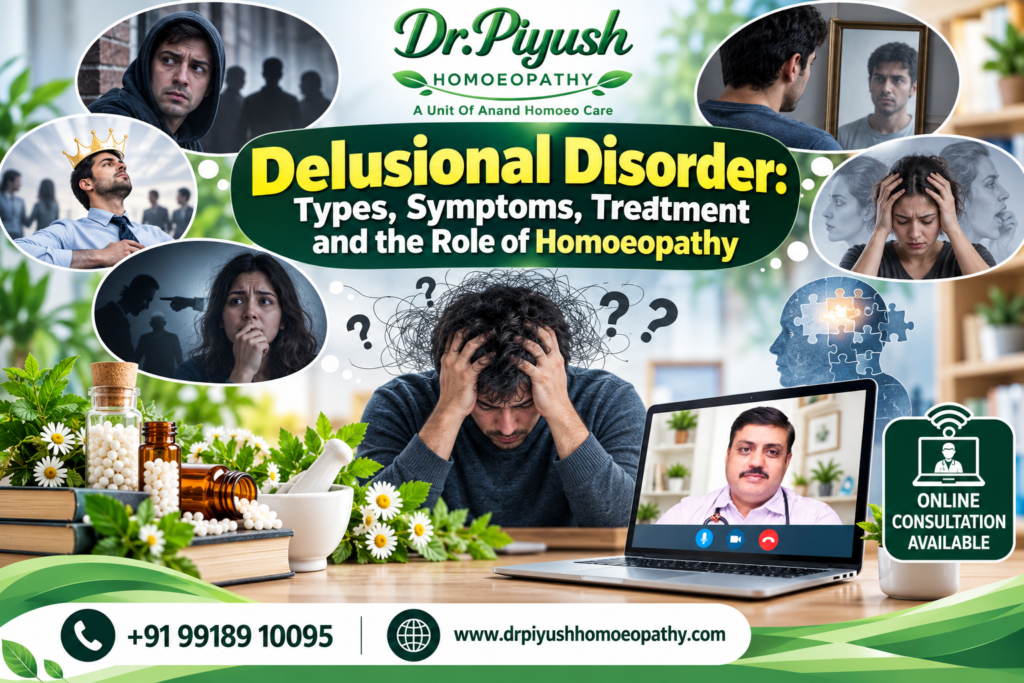
Delusional disorder is a mental health condition in which a person holds strong beliefs that are not supported by evidence and remain fixed despite clear information to the contrary. These beliefs may involve persecution, jealousy, love, personal importance, or physical health. They can cause distress and affect relationships, work, and daily life.
Understanding the signs of delusional disorder, seeking timely psychiatric care, and supporting the person with compassion are important steps towards better health. This article explains the main types of delusions, diagnosis, treatment options, and the role and limitations of homoeopathy in mental health care.
What Is Delusional Disorder?
Delusional disorder is a psychiatric condition involving one or more persistent delusions. A delusion is a firmly held belief that is not based on reality and is not adequately explained by a person’s cultural or religious background.
Some people with delusional disorder continue to manage many parts of daily life. However, their beliefs may cause serious problems in specific areas, such as family relationships, personal safety, or employment.
Delusional disorder is different from simply having an unusual opinion or a strong personal belief. A qualified mental health professional must assess the person’s symptoms, history, daily functioning, and possible medical causes before making a diagnosis.
Common Types of Delusions
Psychiatric descriptions commonly identify several types of delusional themes. These themes may overlap.
1. Persecutory Delusions
A person may believe that others are following, spying on, threatening, deceiving, or trying to harm them without reliable evidence.
These beliefs can cause fear, mistrust, social withdrawal, or conflict with other people.
2. Grandiose Delusions
A person may believe they have exceptional power, knowledge, status, wealth, or abilities that are not supported by evidence.
These beliefs may affect decision-making and relationships.
3. Jealous Delusions
A person may become convinced that their partner is unfaithful despite a lack of reliable evidence. This is sometimes called morbid or delusional jealousy.
It can cause severe distress and relationship conflict. If there is a risk of violence or harm, immediate professional support is important.
4. Erotomanic Delusions
A person may firmly believe that another individual, sometimes a public figure or someone they barely know, is in love with them.
This belief may lead to repeated attempts to contact the other person. Support from a mental health professional can help address the situation safely.
5. Somatic Delusions
A person may hold a fixed belief about a bodily problem, appearance, smell, infestation, or disease despite medical findings that do not support it.
Physical symptoms should still be taken seriously. A healthcare professional must assess possible medical causes rather than assuming that the concern is purely psychiatric.
6. Mixed Delusions
Some people experience more than one type of delusional belief. The content and impact may change over time, so regular professional assessment can be helpful.
Important: Nihilistic, referential, and other delusional themes may occur in different psychiatric conditions. They do not automatically indicate delusional disorder. Diagnosis requires a full clinical assessment.
Signs and Symptoms of Delusional Disorder
Symptoms vary from person to person. Possible signs include:
- Strong beliefs that remain fixed despite contrary evidence.
- Repeated suspicion or mistrust without clear supporting facts.
- Difficulty accepting alternative explanations.
- Anxiety, fear, anger, or distress linked to the belief.
- Arguments or relationship problems related to the belief.
- Repeated complaints about perceived threats or bodily problems.
- Changes in work, social activity, or everyday routines.
These signs alone do not confirm a diagnosis. Similar symptoms can occur in other psychiatric conditions, neurological disorders, substance-related conditions, or medical illnesses.
What Causes Delusional Disorder?
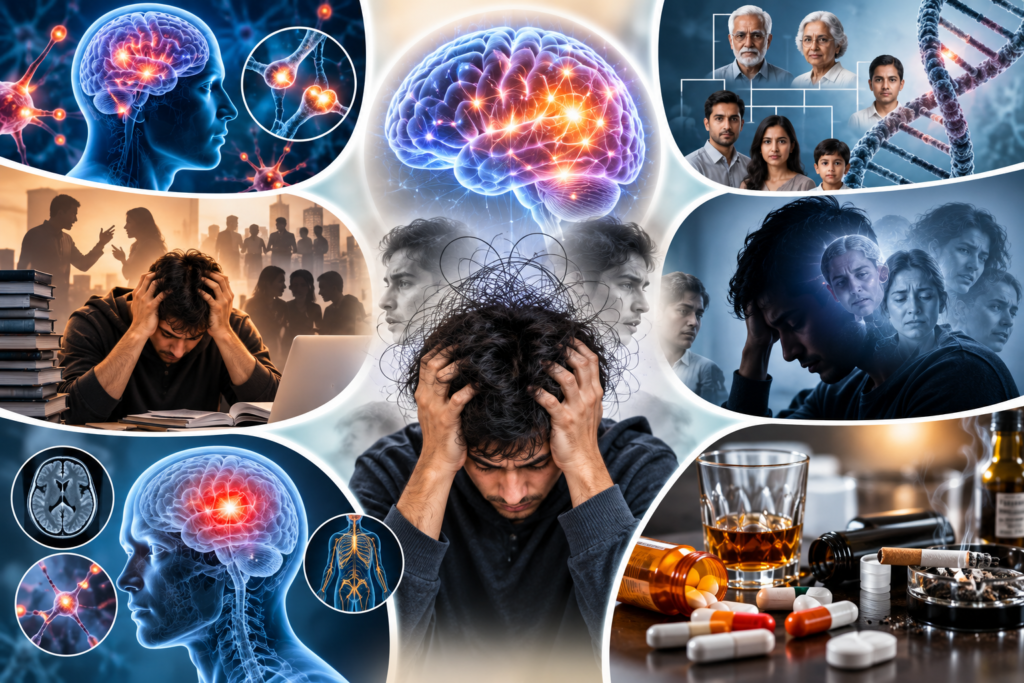
There is no single known cause. Several factors may contribute, including:
- Biological and brain-related factors.
- Family history and genetic influences.
- Psychological and social stressors.
- Other mental health conditions.
- Certain medical or neurological conditions.
- Substance use or the effects of some medicines.
A thorough assessment helps identify possible contributing factors and guides appropriate care.
How Is Delusional Disorder Diagnosed?
A psychiatrist or other appropriately qualified mental health professional may:
- Ask about the person’s beliefs, symptoms, and personal history.
- Assess how long the symptoms have been present.
- Review their effects on work, relationships, and daily functioning.
- Consider mood symptoms, hallucinations, and other psychiatric signs.
- Review medicines, substance use, and physical health.
- Arrange medical tests when indicated to investigate possible alternative causes.
Early assessment can help reduce distress, support safer decision-making, and identify the most appropriate treatment.
Evidence-Based Treatment for Delusional Disorder
Treatment should be individualised according to the person’s symptoms, health, needs, and preferences.
1. Psychiatric Care and Medication
A psychiatrist may recommend antipsychotic medication or other treatment based on the diagnosis and clinical needs. Medicines may help manage symptoms, but the response differs between individuals.
Patients should discuss benefits, possible side effects, and follow-up arrangements with their prescribing clinician. Prescribed medication should not be stopped or changed without medical advice.
2. Psychological Support
Psychological support may help a person manage distress, improve coping skills, and address the effect of symptoms on daily life.
The approach should be respectful and adapted to the person’s needs. It is generally more helpful to listen calmly than to argue aggressively about a fixed belief.
3. Family Education and Support
Family members and caregivers can play an important role by:
- Listening without ridicule or confrontation.
- Acknowledging the person’s distress without confirming an unsupported belief.
- Encouraging professional care and follow-up.
- Helping the person maintain healthy routines.
- Seeking guidance on how to respond safely when symptoms worsen.
4. Ongoing Monitoring
Regular follow-up helps the care team monitor symptoms, treatment response, side effects, daily functioning, and changes in safety needs.
The Role of Homoeopathy in Delusional Disorder
Traditional homoeopathy uses an individualised approach in which a practitioner considers a person’s reported symptoms, emotional state, general health, and medical history. In classical homoeopathic literature, this process is often described as considering the totality of symptoms.
However, traditional theory and clinical evidence are different. There is no reliable scientific evidence that homoeopathic medicines effectively treat delusional disorder or other primary psychotic disorders. They should not be used as a substitute for psychiatric assessment, prescribed medication, or psychological care.
How Can a Homoeopathic Consultation Contribute to Supportive Care?
A consultation may provide an opportunity to discuss general health concerns, sleep, stress, emotional distress, and questions about available care. These discussions may support communication and encourage appropriate referral, but they do not establish that homoeopathic medicines treat delusions.
Responsible homoeopathic health guidance should include:
- Clear information about the limits of scientific evidence.
- Recognition of symptoms that require psychiatric assessment.
- Referral to an appropriate mental health professional.
- Respect for prescribed treatment and the person’s informed choices.
- Follow-up that does not delay or interfere with effective care.
People seeking a trusted homoeopathic doctor or professional homoeopathic consultation should be encouraged to maintain contact with their psychiatric care team.
Homoeopathic Remedies Traditionally Mentioned in Classical Literature
Classical homoeopathic texts, including works by Kent and Boericke, describe remedies in connection with certain emotional and behavioural symptoms. Examples include Stramonium, Belladonna, Hyoscyamus, Platina, Lachesis, and Veratrum album.
These associations are historical descriptions from homoeopathic materia medica. They are not validated diagnostic tools, and they do not demonstrate that the remedies treat delusions or psychosis.
It would be unsafe to select a remedy based on a delusional theme alone. A person experiencing fixed false beliefs needs a proper psychiatric assessment, and treatment should be guided by qualified mental health professionals.
Can Homoeopathy Prevent Delusional Disorder?
There is no reliable evidence that homoeopathic medicines prevent delusional disorder, prevent psychosis, or stop delusions from returning.
Although no method can guarantee prevention, people can take practical steps to support mental health and seek help early.
Practical Steps for Mental Health Support
- Seek early professional advice: New or persistent unusual beliefs should be assessed by a qualified professional.
- Follow the treatment plan: Continue prescribed medicines and appointments unless the treating clinician advises otherwise.
- Maintain regular sleep: A stable sleep routine can support general mental well-being.
- Avoid recreational drugs: Some substances can cause or worsen psychotic symptoms.
- Limit alcohol and discuss substance use honestly: This can help the care team assess risks and plan treatment.
- Build a support network: Trusted family members and friends can help with appointments and daily routines.
- Monitor changes: Record changes in sleep, distress, behaviour, and daily functioning to discuss with the care team.
- Seek help during a crisis: Severe confusion, inability to care for oneself, or risk of harm needs urgent assessment.
These steps support general well-being and early intervention. They should not be presented as a proven way to prevent delusional disorder through homoeopathy.
When Is Urgent Help Needed?
Seek urgent professional help if the person:
- Threatens to harm themselves or another person.
- Is unable to meet basic needs or stay safe.
- Becomes severely confused or agitated.
- Experiences a sudden and major change in behaviour.
- Has new psychiatric symptoms alongside fever, confusion, or other signs of a possible medical emergency.
If there is immediate danger, contact local emergency services and avoid handling the situation alone.

Responsible, Patient-Centred Care at Dr. Piyush Homoeopathy
At Dr. Piyush Homoeopathy, responsible health education should encourage people to make informed decisions and seek the right care for their needs.
People exploring a trusted homoeopathic clinic, individualised homoeopathic consultation, or online homoeopathic consultation should receive clear information about what is and is not supported by evidence.
Homoeopathy has not been established as an effective treatment for delusional disorder. Psychiatric care remains essential. Any discussion of complementary care must respect the patient’s safety, treatment plan, and right to informed choices.
Conclusion
Delusional disorder involves persistent beliefs that can cause significant distress and affect relationships, work, and daily life. Recognising the signs and seeking timely psychiatric assessment are important steps towards appropriate care.
Traditional homoeopathic literature describes remedies in relation to certain mental symptoms, but these descriptions do not establish clinical effectiveness. Homoeopathy should not replace or delay psychiatric treatment. A safe, respectful, and evidence-based approach offers the best foundation for supporting people living with delusional symptoms.
Key Takeaways
- Delusional disorder involves persistent beliefs that are not supported by evidence and can affect relationships, work, and daily functioning.
- Common delusional themes include persecutory, grandiose, jealous, erotomanic, and somatic beliefs.
- Diagnosis requires assessment by a qualified mental health professional because similar symptoms can occur in other psychiatric or medical conditions.
- Evidence-based care may include psychiatric medication, psychological support, family education, and regular follow-up.
- Homoeopathic remedies described in traditional texts have not been established as effective treatments for delusional disorder.
- Early assessment, continued professional care, and urgent support when safety is at risk are essential.