Warts are common skin growths caused by certain types of human papillomavirus (HPV). They may appear on the hands, fingers, feet, face, or other parts of the body. Some warts disappear on their own, while others may last for months or return after treatment.
Many people look for trusted homoeopathic care when dealing with recurring warts. This article explains the causes, types, symptoms, treatment options, and preventive steps for warts. It also discusses the traditional homoeopathic approach and what scientific evidence says about its effectiveness.
What Are Warts?
Warts are small, non-cancerous skin growths caused by HPV. The virus enters the skin through tiny cuts or damaged areas. It can cause the skin to grow thicker in a small, localised area.
Warts may be rough, smooth, flat, raised, or hard. Their appearance depends on their type and location.
Warts can spread through direct skin contact or through contaminated surfaces in some situations. Scratching, biting, or picking a wart may also spread the virus to nearby skin.
Although most warts are harmless, not every skin growth is a wart. A medical assessment is important when a growth looks unusual or changes over time.
What Causes Warts?
The main cause of warts is infection with certain types of human papillomavirus (HPV).
Factors that may increase the chance of developing warts include:
- Direct contact with a wart.
- Picking, scratching, or biting the affected skin.
- Walking barefoot in shared, damp areas.
- Small cuts or cracks in the skin.
- Sharing items that have been in contact with affected skin.
- A weakened immune system.
- Close contact with infected people or contaminated surfaces.
Some people develop warts more easily than others. This may be related to differences in immune response, skin condition, and exposure to the virus.
Warts are common in children and teenagers, but adults can also develop them.
Types of Warts
Warts are classified according to their appearance and location.
1. Common Warts
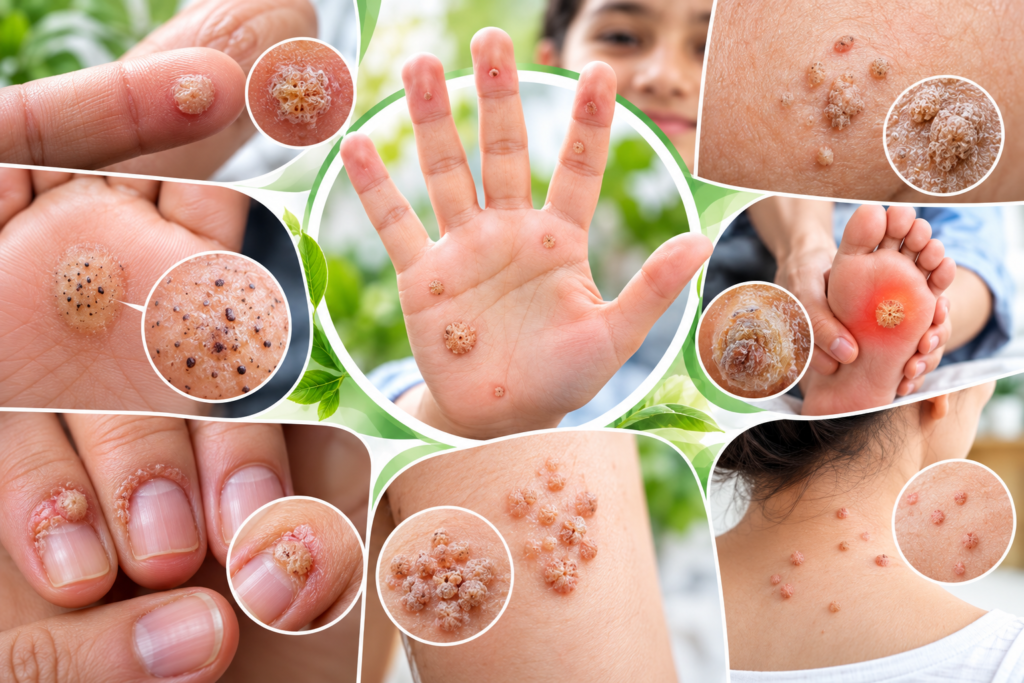
Common warts usually appear on the fingers, hands, and around the nails. They often have a rough surface and may look like small, raised bumps.
2. Plantar Warts
Plantar warts develop on the soles of the feet. Pressure from walking or standing may make them painful. They can sometimes be mistaken for corns or calluses.
3. Flat Warts
Flat warts are small, smooth growths. They may appear in groups on the face, hands, arms, or legs. They are often more common in children and young adults.
4. Filiform Warts
Filiform warts are narrow, finger-like growths. They often occur around the mouth, nose, or eyes.
5. Periungual Warts
These warts appear around or under the fingernails and toenails. They can affect nail growth and may be difficult to treat.
6. Genital Warts
Genital warts occur around the genital or anal area and are associated with particular HPV types. They require appropriate medical assessment. Common hand and foot wart treatments should not be used on genital skin.
Genital warts are sexually transmitted in many cases. A healthcare professional can explain assessment, treatment, and HPV vaccination options.
Symptoms of Warts
The symptoms depend on the type and location of the wart.
Common features include:
- Small, raised or flat skin growths.
- A rough, thickened, or smooth surface.
- Tiny dark dots within some warts.
- Pain or tenderness, especially on the soles of the feet.
- Growths around the nails.
- Several warts appearing close together.
- Recurrence after previous treatment.
Warts are usually harmless, but persistent pain, bleeding, rapid growth, or changes in colour require medical attention.
How Are Warts Diagnosed?
A healthcare professional can often identify a wart by examining the skin. In some cases, further assessment may be needed to distinguish a wart from another skin condition.
Consult a doctor or dermatologist if:
- You are unsure whether a growth is a wart.
- The growth bleeds, changes colour, grows quickly, or becomes painful.
- Warts appear on the face or genital area.
- You have diabetes, poor circulation, or a weakened immune system.
- Home treatment has not worked.
- The growth keeps returning.
Do not try to cut, burn, or remove a growth yourself. This can cause injury, infection, scarring, or bleeding.
Conventional Treatment Options for Warts
Not every wart needs immediate treatment. Some disappear naturally as the immune system responds to the virus. Treatment may be helpful when a wart causes pain, spreads, affects daily activities, or creates distress.
A healthcare professional may recommend:
Salicylic Acid
Salicylic acid preparations can gradually remove layers of thickened skin. They are commonly used for suitable common and plantar warts. Follow the product instructions and seek professional advice if you have diabetes, poor circulation, or sensitive skin.
Cryotherapy
Cryotherapy uses liquid nitrogen to freeze the wart. More than one treatment may be needed. Temporary pain, blistering, and changes in skin colour can occur.
Other Medical Procedures
Depending on the wart, its location, and previous treatment, a dermatologist may consider other methods. The best option depends on the patient’s age, health, skin type, and the nature of the growth.
Genital warts require specific medical care. Treatment removes visible growths but may not eliminate HPV from the body.
The Homoeopathic Concept of Wart Management
In traditional homoeopathy, practitioners often use an individualised approach. They may consider the person’s overall health, symptoms, medical history, and the appearance and location of a wart.
This is described in homoeopathic practice as the totality of symptoms. Traditional homoeopathic literature also discusses concepts such as constitutional prescribing and miasms, including the sycosis miasm.
These are concepts within homoeopathic theory. They are not established medical explanations for why HPV causes warts or why some people develop them more often.
Current scientific evidence does not reliably establish that homoeopathic medicines cure warts, remove HPV, or prevent warts from recurring.
How Can a Homoeopathic Consultation Help?
A professional homoeopathic consultation can provide an opportunity to discuss symptoms, concerns, medical history, and general health. A responsible practitioner should also recognise when a skin examination or referral to a dermatologist is necessary.
People considering individualised homoeopathic consultation should understand the limits of the evidence and should not delay proven wart treatments when treatment is needed.
Trusted homoeopathic care should involve clear communication about uncertainty, product safety, and the importance of medical assessment for unusual or changing skin growths.

Homoeopathic Remedies Traditionally Mentioned for Warts
Traditional homoeopathic materia medica describes several remedies in connection with different wart appearances. These descriptions reflect traditional practice, not proof that the remedies are effective.
1. Thuja occidentalis
Traditionally discussed in homoeopathic literature for different types of warts, including rough or clustered growths.
2. Causticum
Traditionally associated with hard or raised warts, including growths around the fingers and nails.
3. Dulcamara
Traditionally mentioned for flat or hard warts, including those on the hands and face.
4. Nitricum acidum
Traditionally described for warts that may be rough, cracked, painful, or prone to bleeding.
5. Calcarea carbonica
Traditionally discussed in relation to certain thickened or horny skin growths.
6. Natrum muriaticum
Included in traditional materia medica for some wart patterns, including growths on the hands and fingers.
These traditional descriptions should not be used to diagnose a wart or select a remedy without medical advice. There is no reliable evidence that these remedies remove HPV or consistently cure warts. Do not use them instead of recommended care.
What Does Scientific Evidence Say About Homoeopathy for Warts?
Research on homoeopathy for warts is limited. A randomised, placebo-controlled study of homoeopathic medicines for plantar warts did not find a meaningful benefit over placebo.
Individual reports describing improvement cannot establish that a treatment caused the improvement. Warts can disappear naturally, and they may also respond to conventional treatments.
For this reason, claims that homoeopathy permanently removes warts, treats their underlying cause, or prevents recurrence are not supported by reliable evidence.
A responsible homoeopathic health consultation should explain these limitations and support timely referral when appropriate. Evidence-based wart treatments should remain available to patients.
Can Homoeopathy Prevent Warts?
There is no reliable evidence that homoeopathic medicines prevent HPV infection or stop warts from developing or spreading.
Prevention should focus on reducing exposure, protecting the skin, and avoiding the spread of the virus.
Practical Ways to Help Prevent Warts
- Avoid picking or scratching warts. This can spread the virus to nearby skin.
- Wash your hands regularly. This supports general skin and infection hygiene.
- Keep cuts and scrapes clean and covered. Damaged skin can make it easier for infections to enter.
- Avoid sharing personal items. Do not share nail clippers, files, towels, or other items that touch affected skin.
- Wear footwear in shared wet areas. Use sandals in communal showers and changing rooms.
- Keep affected skin care items separate. Avoid using the same file or pumice stone on a wart and healthy skin.
- Do not bite your nails or pick cuticles. These habits can damage the skin around the nails.
- Seek advice for genital warts. A healthcare professional can discuss appropriate treatment and HPV vaccination.
No prevention method offers complete protection against all warts. HPV vaccination protects against selected HPV types, including types responsible for most genital warts, but it does not prevent every type of common skin wart.
When Should You Seek Professional Care?
Consult a dermatologist or other qualified healthcare professional if a wart is painful, persistent, spreading, or difficult to identify.
Medical assessment is especially important for growths that:
- Bleed without a clear reason.
- Change rapidly in size, shape, or colour.
- Look like an open sore or have irregular features.
- Occur on the face, around the eyes, or in the genital area.
- Develop in a person with diabetes, poor circulation, or reduced immunity.
An accurate diagnosis helps ensure that the growth is not another skin condition that requires different treatment.
Responsible, Patient-Centred Care at Dr. Piyush Homoeopathy
At Dr. Piyush Homoeopathy, patient education should encourage informed choices and appropriate medical care. People seeking a trusted homoeopathic doctor, homoeopathic clinic consultation, or online homoeopathic consultation should receive clear information about treatment options and the limits of current evidence.
An online consultation may help discuss concerns and determine whether an in-person skin examination is needed. However, a remote consultation cannot always confirm the diagnosis of a skin growth.
Patients should not be promised a cure or advised to delay dermatological care. A responsible approach places patient safety, honest communication, and timely referral first.
Conclusion
Warts are common skin growths caused by certain types of HPV. They may disappear naturally, but some require treatment. Recognising their type, avoiding habits that spread the virus, and seeking medical advice when necessary can help manage the condition.
Homoeopathy traditionally uses an individualised approach, but reliable evidence does not establish that homoeopathic medicines cure or prevent warts. For safe and effective care, patients should understand the available evidence and consider established treatments with a qualified healthcare professional.
Key Takeaways
- Warts are usually harmless skin growths caused by certain types of human papillomavirus (HPV).
- Common types include common warts, plantar warts, flat warts, filiform warts, and genital warts.
- Homoeopathic remedies such as Thuja occidentalis, Causticum, and Nitricum acidum are mentioned in traditional materia medica, but reliable evidence does not establish them as effective wart treatments.
- Avoid picking warts, sharing personal grooming tools, and walking barefoot in shared wet areas.
- Established options include salicylic acid and cryotherapy for suitable warts, depending on their location and the patient’s health.
- Seek medical advice for painful, bleeding, changing, recurring, or uncertain skin growths.